Too Many Manual Processes: The previous environment involved a lot of paperwork more especially on invoicing, claims and even financial issues. Such dependency resulted in time wastage and rendered chances of making mistakes high, therefore, having a negative impact on service provision.
Data is Scattered: Pharmacy, doctor, drug, and claim information was distributed over several systems. The decentralization of work meant that it was challenging to acquire an integrated picture of the processes that needed to be addressed so as to support effective decision making.
Lack of Real-Time Updates: A lack of real-time data collection also denied the client the ability to track KPIs such as billing prescription numbers and other potential issues in real-time and therefore hindered proactive decision-making.
Hard to Scale: As the number of records in the firm expanded, the current system was slow in executing data tasks thereby producing bottlenecks and slowness.
Automation of Processes: Implementing automated workflows for invoicing, claims management, and financial tracking to minimize manual intervention and reduce errors.
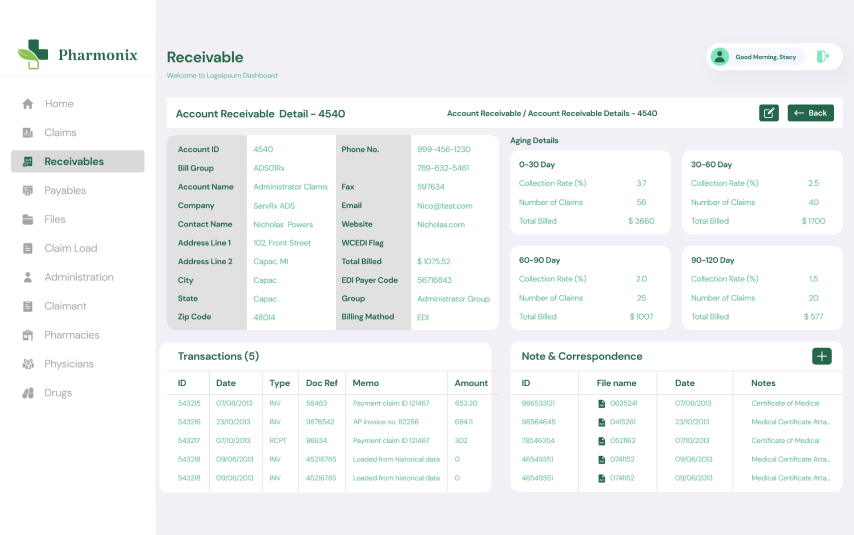
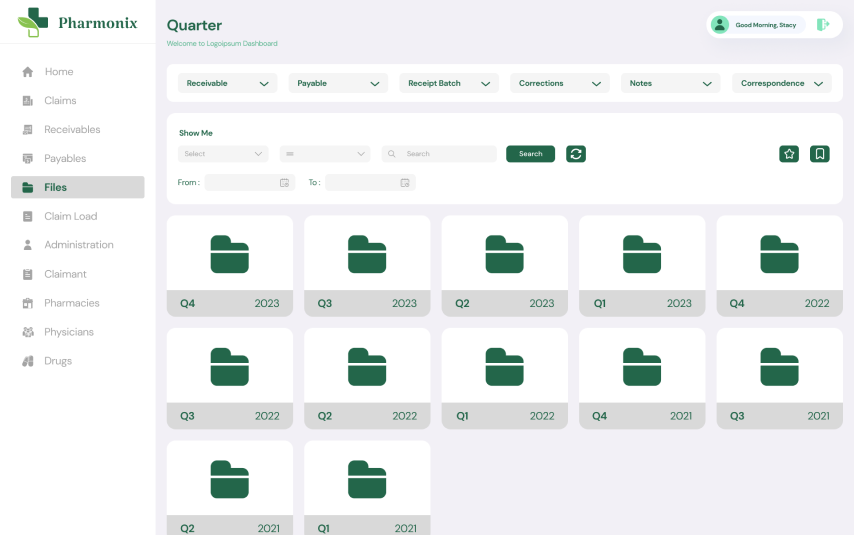
Unified Data Management System: Developing a centralized database that consolidates all relevant information about pharmacies, doctors, drugs, and claims, enabling easy access and analysis.
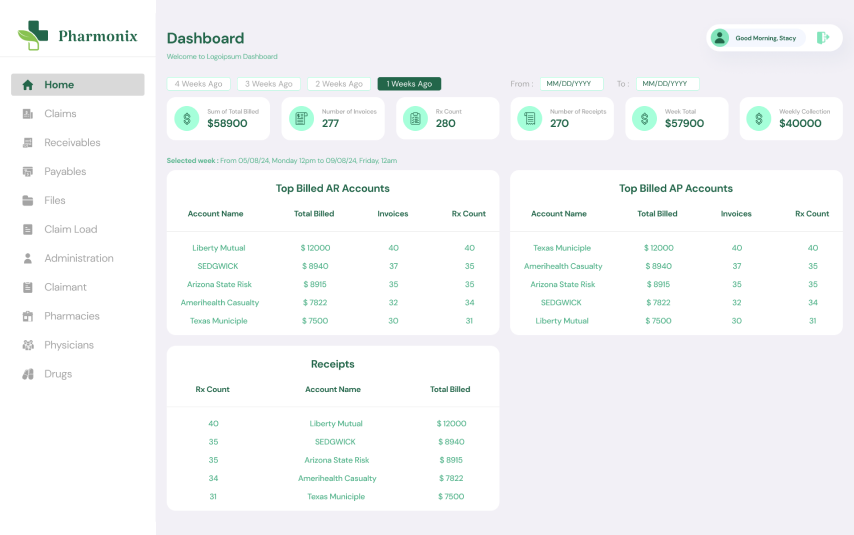
Real-Time Analytics Dashboard: Creating a real-time analytics dashboard that offers key insights into billing, prescription counts, and other critical metrics, allowing for prompt decision-making.
Scalable Architecture: Designing a scalable system architecture that can accommodate growing data volumes without compromising performance, ensuring that the system remains efficient as the business expands.
Customer Satisfaction Ratio: New customer satisfaction figures were recorded of up to 30% following enhanced effectiveness of claims processing and accurate billing.
Performance Improvement: The new system reduced claims processing time by 40%, allowing for quicker responses to customer inquiries and a more efficient overall workflow.
Out-of-Pocket Costs: On average, patients pay around 12% of the total prescription drug cost out-of-pocket, with insurance covering the remaining balance. This includes co-pays, deductibles, or full payment for uncovered drugs.
Prior Authorization Delays: Studies show that 70% of prior authorization requests for medications are approved, but 20-30% of patients experience delays in getting their prescriptions due to this process.
Claim Approval Speed: Most pharmacies submit insurance claims electronically, with 90% of claims being processed within seconds. However, complex claims requiring manual review can take days or even weeks.
Pharmacy Benefit Managers (PBMs): PBMs control around 80% of all prescriptions filled in the U.S., influencing how pharmacies interact with insurance claims and negotiating the drug prices on behalf of insurance companies.
Claim Rejection Rate: Roughly 10-15% of pharmacy claims are initially rejected due to various reasons, such as missing prior authorizations or incorrect patient information. Pharmacies must resolve these issues by resubmitting or coordinating with healthcare providers.