From Manual Processes to Smart...
22 Oct 2026

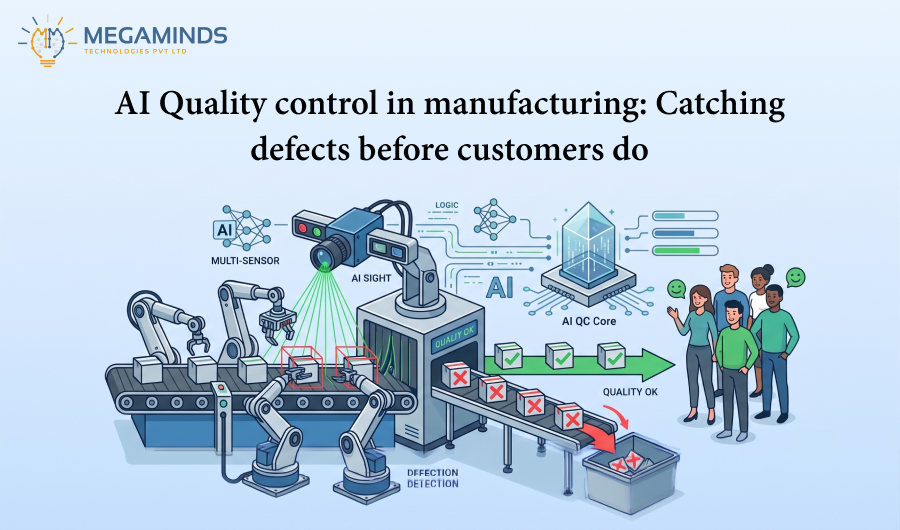
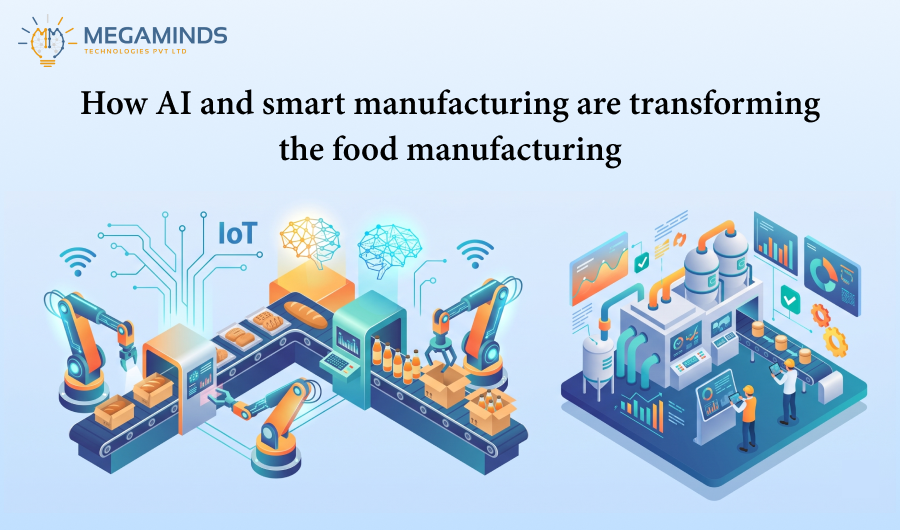
AI can analyze visual data and detect anomalies in industrial processes. This, in addition to other machine learning and deep learning technologies, can be used to improve quality control in manufacturing. By using these techniques, manufacturers can eliminate wasteful and expensive scratch and rework processes. Better quality control also means that manufacturers can deliver better products to their customers.
In traditional inspection, many defects can be identified. However, in modern, high-speed manufacturing, both manual and rule-based methods are inadequate.
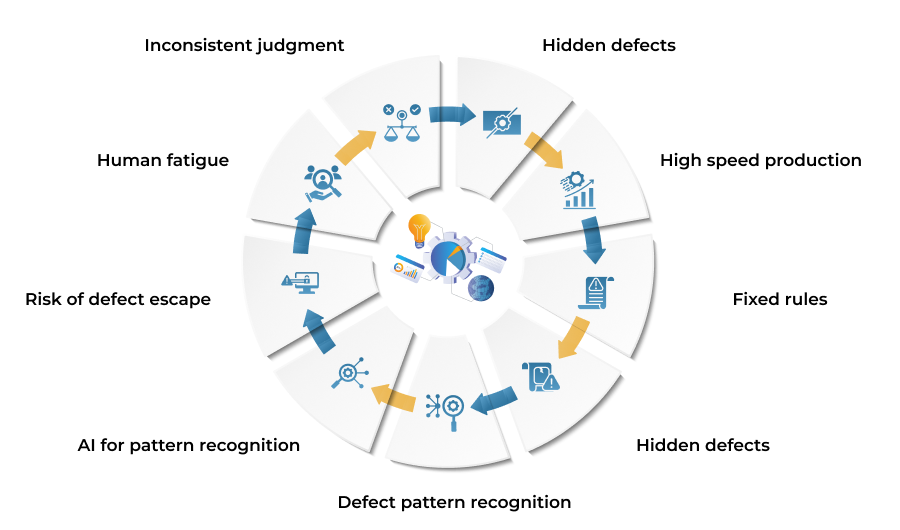
AI-enabled visual inspection integrates industrial cameras and CFV to automate product inspection. Unlike manual inspection, this method can locate various defects such as scratches and cracks, missing or incorrect product assembly, defects on product surfaces, and defects in product packaging.
AI allows manufacturers to enhance the quality of their products and efficient in the process by inspecting their products in real time. AI is valuable to manufacturers focused on high volume product by accurately detecting defects.
Many AI based inspection systems have been developed and used in various industries to improve defects identification and production. NIST and Siemens have developed AI based systems to help manufacturers with inspection.
In general, companies in the manufacturing industry can benefit from AI based inspections to identify product defects and improve their production process.
Currently, defects identified during production pose immense costs on both producers and consumers in the form of increased waste, longer lead times, disrupted production schedules, and dissatisfied customers. AI Quality Control, in contrast, works to monitor production in real time and identify defects as they occur. In this way, Quality Control tools shift from working reactively to working proactively.
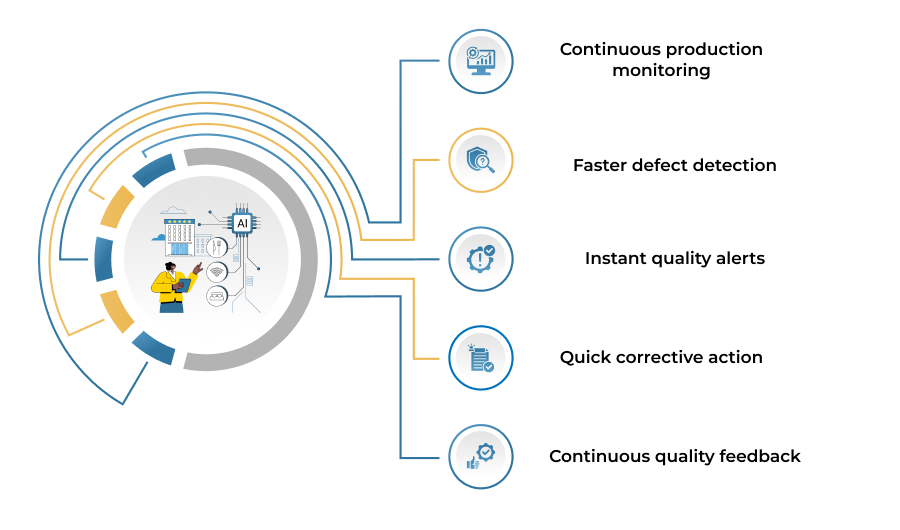
AI enhanced Manufacturing processes are the focus of NIST’s latest research. This research focuses on ways to leverage AI to reduce lead times and better detect anomalies in complex manufacturing processes. NIST also acknowledges the importance of AI on manufacturing processes in the U.S. and its growing role in production efficiency and quality control.
Inspecting product quality traditionally happens after or during a production process, and is primarily used to determine the rate of defects in a product. As such, it is primarily reactive.
The goal of predictive quality is to be proactive and use artificial intelligence to detect defects before they occur. To do this, AI uses a variety of data streams to identify possible patterns that lead to defects.
The aim of traditional quality inspection is to identify defects. Predictive quality, however, is focused on preventing defects. In addition, with predictive quality, manufacturers have the opportunity to adjust their processes to remove defects and vary their product quality.
NIST has several resources, including manufacturing case studies, that use artificial intelligence to monitor and diagnose potential defects before they occur.
There are many costs associated with poor quality.
If a defect is found during the production process, that defect can still be corrected. On the other hand, if a defect is discovered after production, that product is scrap. Finally, if a defect is found by the end-user, this can lead to returns, warranty claims, and/or loss of customer trust.
AI quality control can help catch defects early and reduce scrap rate.
Now, consider a case where a manufacturer is producing 10,000 units in a given day. If there is a process defect that is not caught for several hundred units, the cost impact can be substantial.
When quality process controls are closely aligned with business process controls, these benefits are realized more quickly.
AI can transform manufacturing inspection, but businesses need to overcome a few practical challenges to achieve reliable and scalable results.
IBM discusses data quality, integration, skills, cybersecurity, and implementation costs as important considerations for AI adoption in manufacturing. IBM – AI in Manufacturing Microsoft also explains how integrating IT and OT data supports intelligent manufacturing operations. Microsoft – Intelligent Factories
The ROI of AI quality inspection should be measured through real production and business outcomes, not just model accuracy. Manufacturers should evaluate whether AI improves quality while reducing operational costs.
Key metrics include defect detection rate, first-pass yield, scrap, rework costs, inspection time, downtime, product returns, and warranty expenses. Tracking these KPIs helps businesses understand the financial impact of intelligent inspection.
Real-world adoption also shows measurable results. Siemens and Procter & Gamble reported 10–20% scrap reduction in certain AI-based quality inspection applications. Siemens & P&G – AI-Based Quality Inspection
Beyond direct savings, AI can improve traceability, root-cause analysis, production visibility, and quality consistency. Siemens – Computer Vision for Product Quality
The goal: Measure whether AI helps reduce quality costs, improve production performance, and deliver a measurable return on investment.
Manufacturing quality is moving from final inspection to continuous, predictive quality control. AI will combine computer vision, sensors, machine learning, robotics, digital twins, and production data to detect risks and identify process problems earlier.
As these technologies become more connected, factories can predict quality issues, respond faster, reduce waste, and improve production consistency.
Siemens highlights digital twins as a way to connect real-time production data with simulation, while the World Economic Forum identifies intelligent and increasingly autonomous operations as a key direction for industrial transformation. Siemens – Digital Twin Technology World Economic Forum – Intelligent Industrial Operations Outlook 2026
The next step is simple: move from detecting defects to preventing them.
Manufacturing quality control has traditionally relied on inspection to identify defects. Now, with machine data and other data sources, quality control can take a more proactive approach to prevention. Quality control can use computer vision and other technologies to identify potential quality issues and implement corrective actions. AI can also help with predictive analytics.
Ultimately, the goal should be to eliminate defects by better designing and manufacturing products. By improving processes and using AI to eliminate quality issues, business should be able to further improve their profitability.
19 Oct 2026
15 Oct 2026