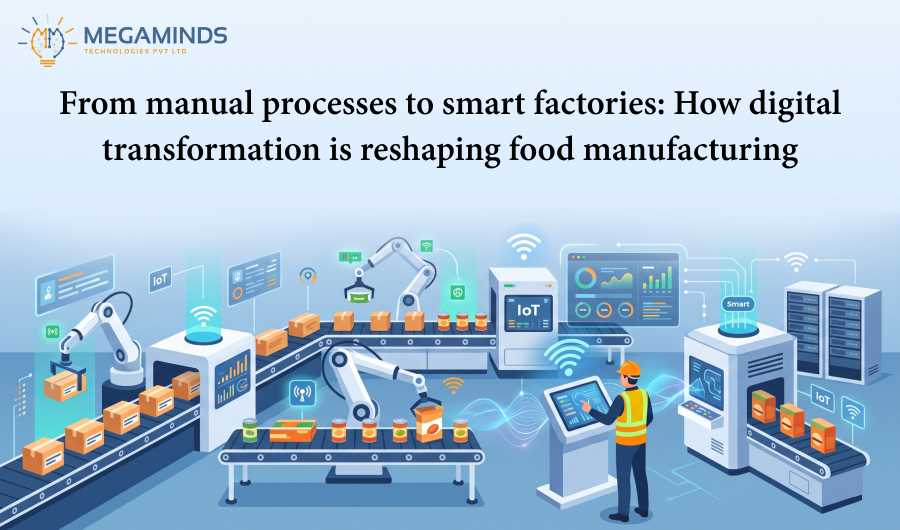
Is your food factory ready...
02 Nov 2026

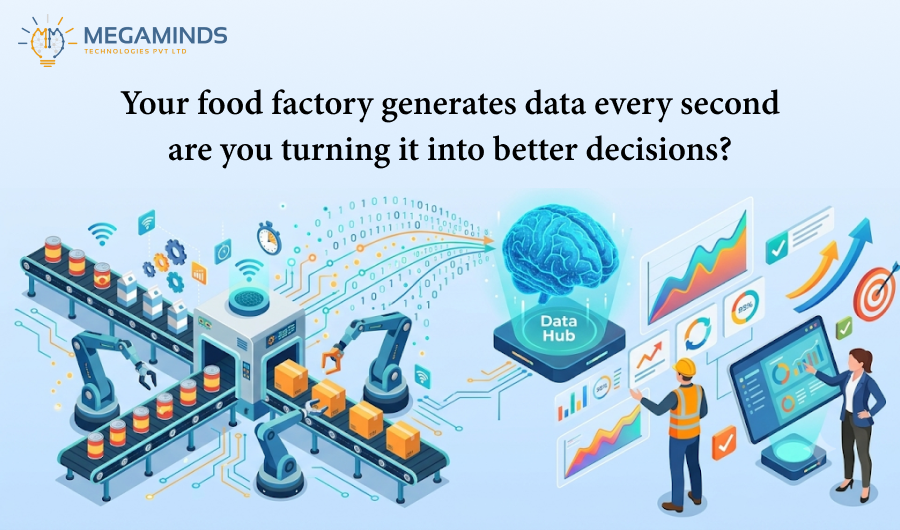
Food manufacturers can turn real-time factory data into smarter business decisions by combining AI, IoT, predictive analytics, and connected manufacturing software. These technologies help businesses monitor production performance, identify equipment issues early, maintain consistent product quality, reduce material waste, and control operational costs.
The payoff is measurable. According to Deloitte’s 2025 Smart Manufacturing Survey of 600 manufacturing executives, companies that implemented smart manufacturing reported a 10% to 20% improvement in production output, a 7% to 20% gain in employee productivity, and 10% to 15% in unlocked capacity.
By transforming raw factory data into actionable insights, manufacturers can gain better visibility across operations, predict potential disruptions, optimize production processes, and respond to challenges faster. The result is a smarter, more efficient, and connected food factory that improves productivity, strengthens profitability, and supports long-term business growth
Most manufacturers are not short of data; they are short of usable, connected data. In PwC’s 2026 Digital Trends in Operations Survey of 767 US operations and supply chain leaders, 89% said their tech investments haven’t fully delivered the expected results, and 87% said poor data quality has hurt their ability to get value from digital initiatives. Integration complexity topped the list of obstacles.
The Rockwell Automation 2025 State of Smart Manufacturing Report (CPG Edition) shows the same gap: only 44% of CPG manufacturers say they use their data to guide decision-making, up from 40% in 2024.
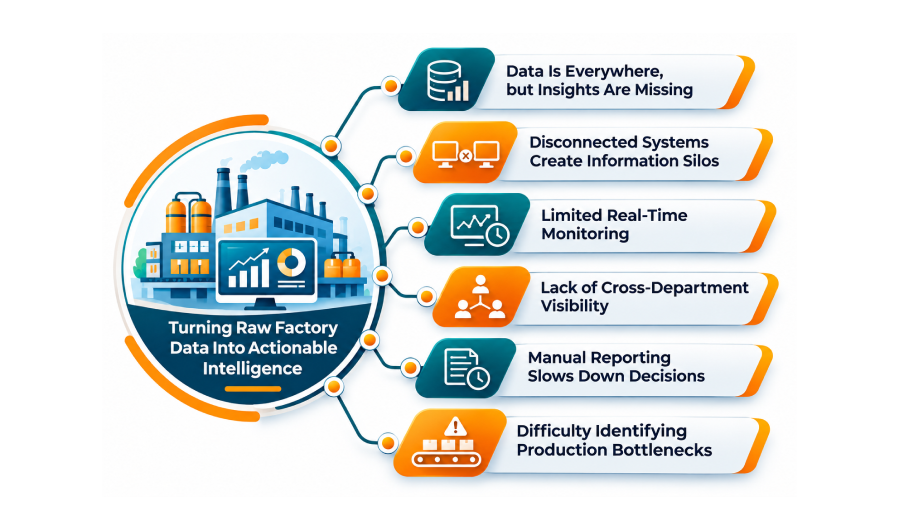
Food manufacturing facilities often rely on multiple systems to manage production, inventory, quality control, maintenance, and supply chain activities. However, when these systems operate independently, valuable information remains scattered across departments. This creates data silos, making it difficult for managers to understand overall factory performance and make timely decisions.
For example, production teams may track machine performance separately, while inventory managers monitor raw materials through spreadsheets. Without proper system integration, businesses may experience communication gaps, production delays, and inefficient resource planning.
Connecting manufacturing systems helps businesses overcome these challenges through:
By integrating ERP, MES, IoT, and quality management systems, food manufacturers can replace disconnected workflows with connected operations. This creates better visibility, improves coordination, and helps businesses make smarter, data-driven manufacturing decisions.
Artificial intelligence (AI) and predictive analytics help food manufacturers identify production problems before they become costly disruptions. By analyzing historical and real-time factory data, these technologies can detect unusual patterns, predict equipment failures, and support faster operational decisions.
The cost of reacting too late is high. ABB’s Modernization for Resilience report (2025), a survey of 3,600 senior decision-makers across 14 industries (including food and beverage), found that unplanned downtime costs an average of about $170,000 per hour. 7% of respondents reported costs above $500,000 per hour, and nearly half face equipment disruptions every month.
Unlike traditional monitoring systems, AI-powered solutions go beyond showing current machine performance. They help manufacturers understand potential risks and take preventive action. For example, if a packaging machine develops unusual vibration patterns, AI can identify early warning signs and alert maintenance teams before an unexpected breakdown occurs.
With reliable data and properly integrated systems, manufacturers can use AI to reduce production risks, improve product quality, minimize waste, and increase operational efficiency.
Real-time production data helps food manufacturers maintain consistent product quality, reduce material waste, and control operating costs. By monitoring machine performance, ingredient consumption, and processing conditions, businesses can identify inefficiencies and make better production decisions.
With real-time analytics, manufacturers can detect temperature fluctuations, identify quality variations, and prevent defective batches before they affect production. Analyzing ingredient usage and production output also helps reduce material losses, improve production yield, and optimize resource utilization.
Additionally, monitoring energy consumption, equipment performance, and machine utilization helps businesses reduce unnecessary expenses and minimize unexpected downtime. Connected production records also improve food traceability by making it easier to track ingredients, manufacturing activities, and finished product batches.
According to the 2025 State of Food Manufacturing Report, manufacturers are increasingly adopting digital technologies to improve production visibility, quality management, and operational efficiency. By transforming factory data into actionable insights, food manufacturers can reduce waste, improve productivity, maintain quality standards, and achieve better business profitability.
Building a connected food factory requires technologies that can collect, manage, and analyze production data efficiently. IoT, cloud platforms, and smart manufacturing software help businesses connect machines, improve operational visibility, and make faster, data-driven decisions.
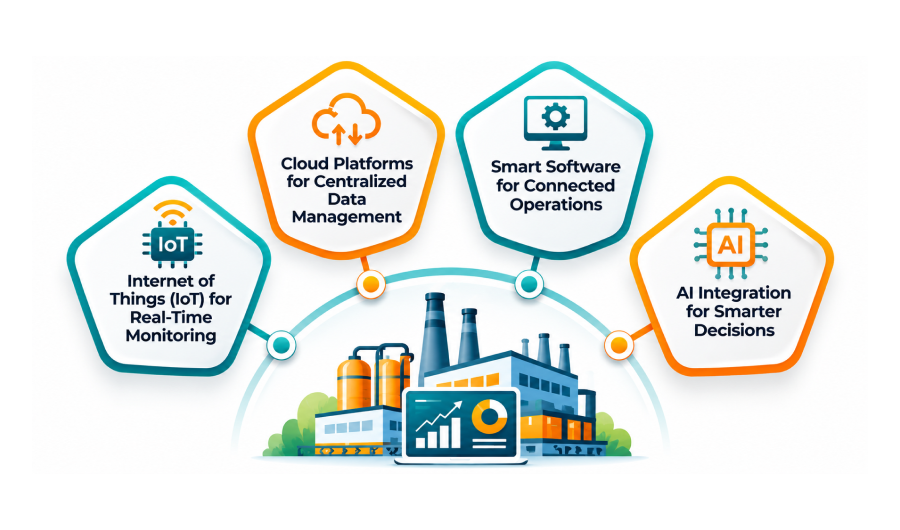
Together, these technologies help food manufacturers build connected operations, improve productivity, reduce costs, and maintain consistent product quality.
Collecting factory data is only the beginning of digital transformation. The real business value comes from converting that information into actionable insights that help manufacturers improve production efficiency, reduce operational costs, and make smarter decisions.
Food manufacturers need a clear strategy that connects technology investments with measurable business goals. By combining connected manufacturing systems, business intelligence dashboards, and AI-powered analytics, businesses can gain better visibility into daily operations and identify opportunities for improvement.
To build a smarter manufacturing strategy, businesses should focus on:
According to Rockwell Automation’s 2025 State of Smart Manufacturing Report – Consumer Packaged Goods Edition, 70% of respondents identified long-term business impact as their primary driver for technology investment.
By aligning digital technologies with business objectives, food manufacturers can move beyond basic data collection and build an intelligent, connected, and scalable manufacturing environment that supports long-term growth.
Food factories generate valuable data every second, but the real advantage comes from turning that information into smarter business decisions. By adopting AI, IoT, predictive analytics, and connected manufacturing software, businesses can improve production efficiency, reduce waste, maintain product quality, and control operational costs.
Digital transformation helps manufacturers build smarter, more connected, and competitive operations. Ready to make your food factory more efficient and data-driven? Contact us today to explore intelligent technology solutions that can transform your manufacturing processes and support long-term business growth.
26 Oct 2026