Is Your Food Factory Losing...
26 Oct 2026

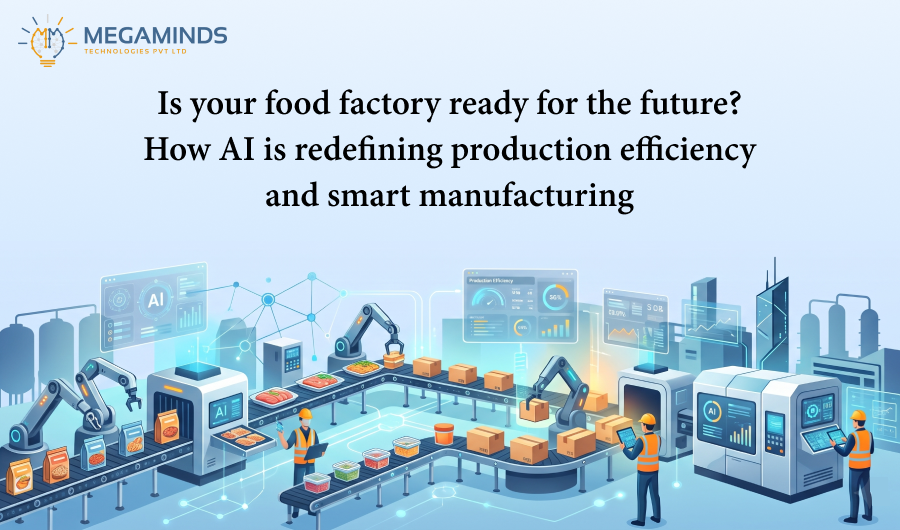
AI is transforming food manufacturing by using real-time data, predictive analytics, and automation to reduce downtime, minimize waste, improve product quality, and increase production efficiency. AI-powered systems help manufacturers predict equipment failures, detect quality defects, optimize production schedules, and make faster, data-driven decisions. By integrating AI with IoT sensors and manufacturing software, food factories can improve productivity, reduce operational costs, and build smarter, more competitive manufacturing operations.
Most of the money a food plant loses doesn’t show up as one big disaster. It leaks out in small, everyday ways that are easy to shrug off. How big is the leak? A 2025 Fluke survey of 600 manufacturers (including food and beverage) found that 61% suffered unplanned downtime in the past year, with an average cost of $1.7 million per hour and losses of up to $852 million a week across the sector (Fluke Reliability, Oct 2025).
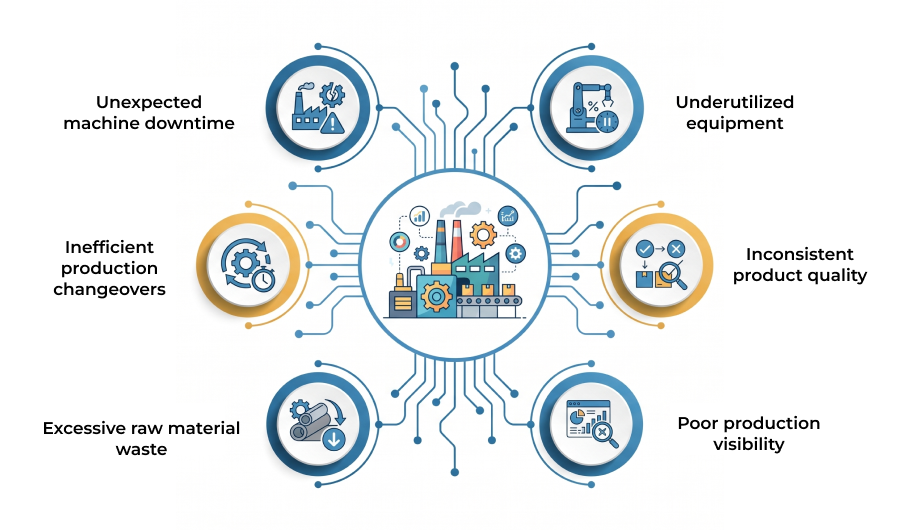
How AI Makes a Difference: AI-powered analytics helps manufacturers detect inefficiencies, identify root causes, monitor production performance, and make data-driven decisions to reduce costs and improve operational efficiency.
From Machine Breakdowns to Predictive Maintenance: Preventing Downtime Before It Happens
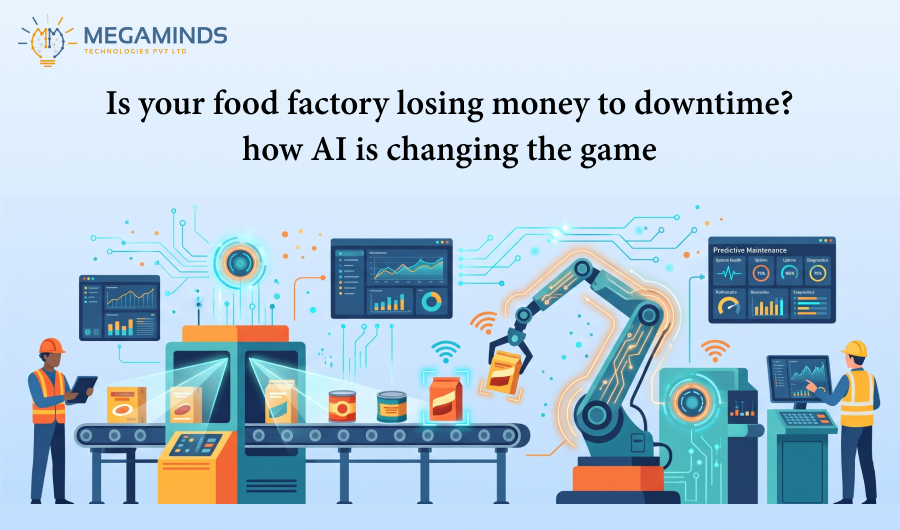
AI-powered predictive maintenance helps food manufacturers detect potential equipment failures before they disrupt production. By analyzing real-time sensor data, such as temperature, vibration, and pressure, AI identifies unusual machine behavior and alerts maintenance teams.
Unlike traditional maintenance, which relies on scheduled servicing or repairs after breakdowns, predictive maintenance enables earlier intervention. This helps manufacturers reduce downtime, lower repair costs, extend equipment life, and maintain consistent production efficiency.
AI helps food manufacturers minimize material waste, detect product defects, and maintain consistent quality through automated inspection and real-time production monitoring.
Business Impact: Combining AI with established quality control procedures helps food manufacturers reduce waste, improve product consistency, lower operational costs, and maintain food safety standards.
Planning in food manufacturing is a juggling act. Demand swings with seasons and promotions, ingredients are perishable, and you’re always balancing the risk of running out against the cost of making too much.
AI makes this a lot less of a guessing game. It looks at sales history, open orders, inventory levels and line capacity together, then suggests schedules that make sense. Think of a beverage maker heading into summer, or a bakery before the festive season: AI can forecast the spike early, so raw materials, staff and line time are lined up before the rush, not during it.
When AI is connected to your manufacturing execution system (MES) and ERP, the benefits stack up. Changeovers can be sequenced to cut cleaning time, idle equipment gets put to work, and fewer products end up expiring in the warehouse.
This isn’t a future idea anymore. Rockwell Automation’s 2026 survey of 1,560 manufacturers across 17 countries found that 34% of operations are already AI-augmented, and companies expect more than half to be AI-supported by 2030 (Rockwell Automation, May 2026).
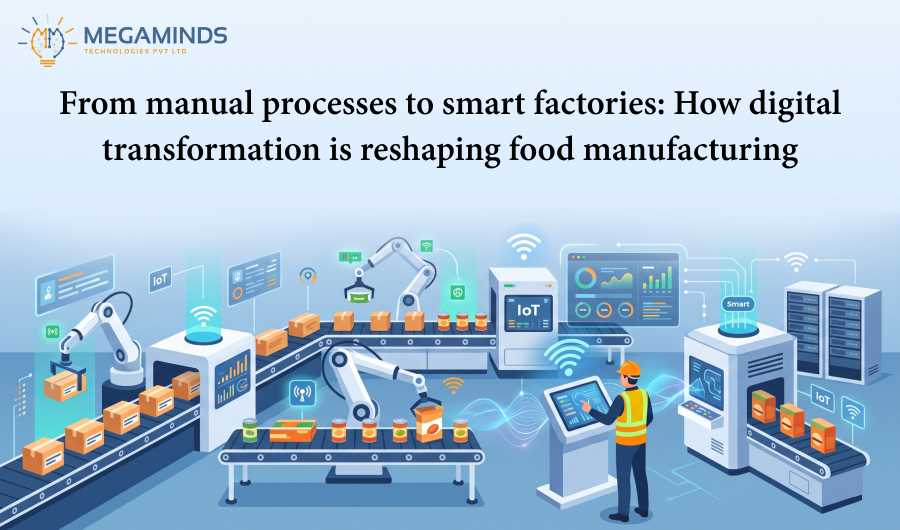
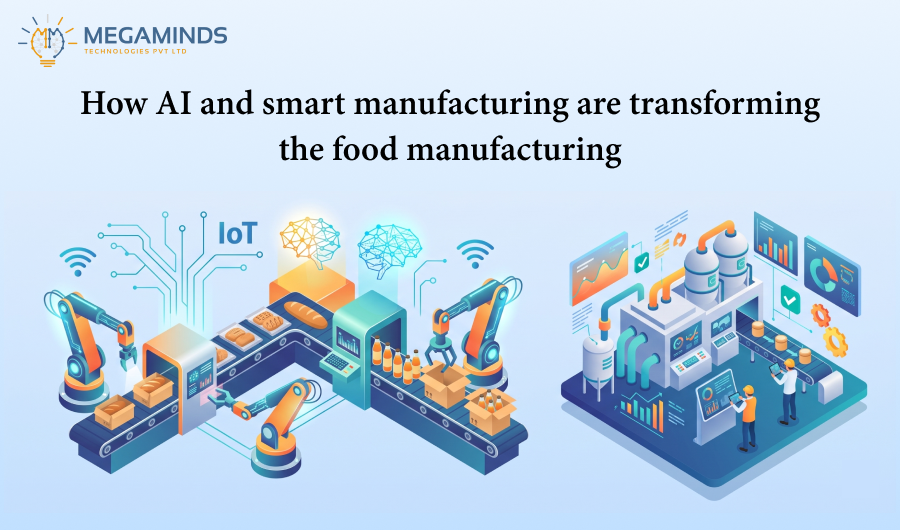
Connected food factories combine AI, IoT sensors, and real-time data analytics to monitor production, improve decision-making, and increase operational efficiency.
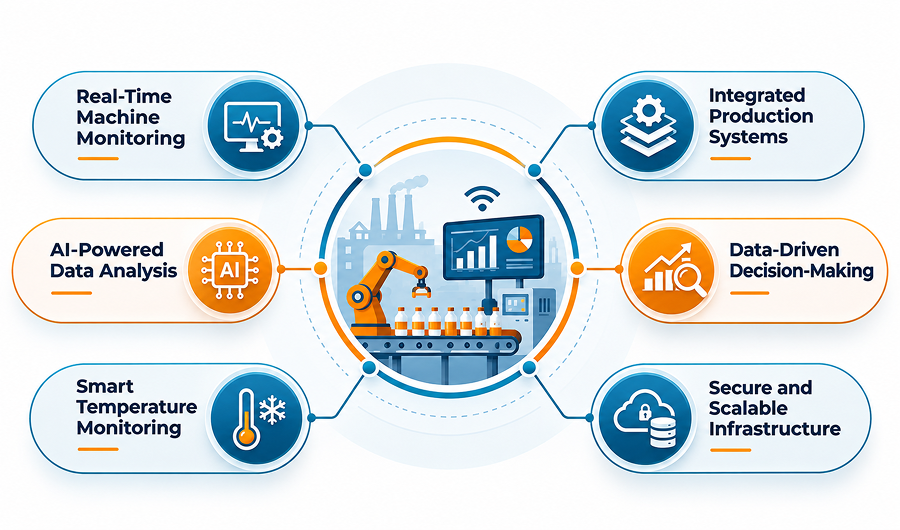
There’s a catch worth knowing about, though. Collecting data is the easy part. Rockwell’s 2026 report found that manufacturers are using only 43% of the data they collect effectively (Rockwell Automation, May 2026). The real value comes from connecting that data and acting on it.
The good news for food makers is that they’re ahead of many other sectors here. Augury’s 2025 State of Production Health survey found that 16% of food and beverage leaders have scaled more than half of their AI projects across all sites, second only to pharma, and 83% planned to increase AI spending in 2025 (Augury, Nov 2025).
Let’s be honest: AI isn’t plug-and-play. Upfront costs, messy data, older equipment that doesn’t “talk”, cybersecurity risks and a shortage of in-house skills can all slow things down. Security deserves special attention. In Rockwell’s 2026 survey, 46% of manufacturers had at least one cyber incident in the past year, a reminder that every new connected device needs protecting (Rockwell Automation, May 2026).
The encouraging part is that the industry is getting better at moving past the pilot stage. Across all manufacturing sectors, the share of companies that scaled more than half of their AI pilots more than tripled, from 4% in 2024 to 14% in 2025 (Augury, Nov 2025).
If you’re wondering where to begin, this simple path works for most plants:
Start with clear goals, grow step by step, and AI investments tend to pay for themselves through lower costs and higher output
AI is transforming food manufacturing by helping businesses reduce downtime, minimize waste, improve product quality, and optimize production planning. By combining AI, IoT, and real-time data analytics, manufacturers can identify inefficiencies, make smarter decisions, and improve overall operational performance.
For long-term success, businesses should start with clear goals, integrate reliable technologies, and measure results consistently. Investing in AI-driven manufacturing today can help food factories reduce costs, increase productivity, and build a smarter, more resilient, and competitive future.
26 Oct 2026
19 Oct 2026