From Manual Processes to Smart...
22 Oct 2026

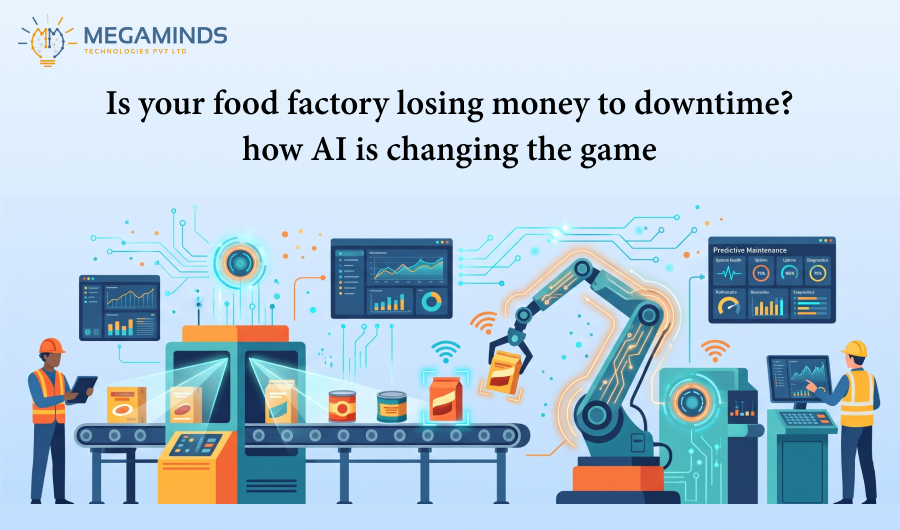
AI helps food manufacturers reduce downtime, minimize waste, improve product quality, and optimize production schedules. By analyzing real-time data, AI enables predictive maintenance, faster decision-making, and more efficient, cost-effective manufacturing operations.
The results are no longer theoretical. In Deloitte’s AI in Manufacturing 2026 survey of 140+ manufacturers, 84% said they already get measurable value from AI, with average improvement potential of around 20% across core operational KPIs. Yet only about 1 in 5 AI use cases has been scaled across sites, so the real advantage now goes to manufacturers who execute well.
Not every production loss comes from a major equipment failure. In many food factories, small operational inefficiencies accumulate throughout the day, increasing costs and reducing overall productivity.
Identifying these hidden problems is essential for manufacturers who want to improve profitability without immediately investing in additional machinery.
Common sources of manufacturing inefficiency include:
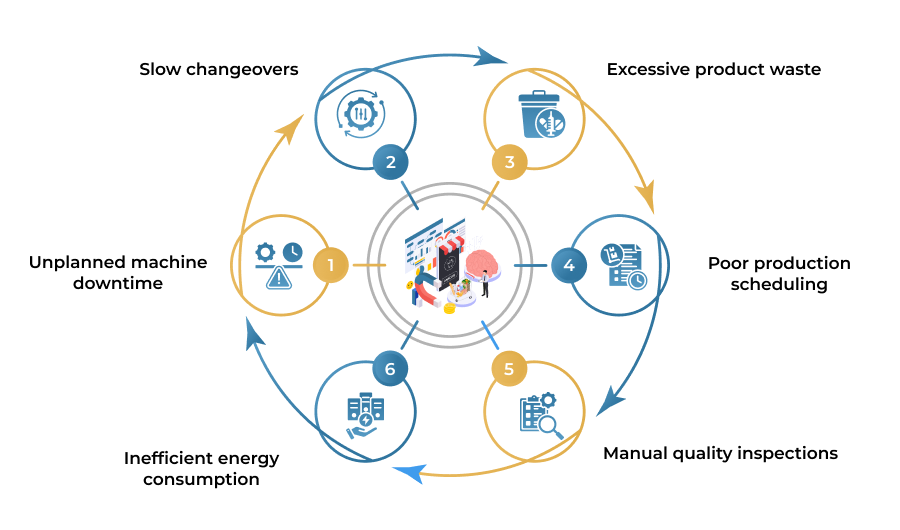
These problems often remain unnoticed because production data is scattered across spreadsheets, machine logs, maintenance records, and separate business applications.
AI-powered analytics can bring this information together to identify recurring production losses. For example, a manufacturer might discover that packaging errors increase after a specific changeover or that a particular machine consistently slows down before scheduled cleaning.
Instead of treating these incidents as isolated problems, managers can investigate their underlying causes and take corrective action.
The first practical step is to measure overall equipment effectiveness (OEE), which combines availability, performance, and quality. Monitoring these three factors helps manufacturers understand whether production losses originate from downtime, reduced operating speed, or defective output.
By addressing the largest sources of lost production first, food businesses can improve efficiency while making better use of existing resources.
Unexpected equipment failures can disrupt food production, increase repair costs, waste perishable ingredients, and delay customer deliveries. When critical machines such as mixers, conveyors, refrigeration units, or packaging systems stop working, the entire production line may be affected.
Traditional maintenance methods often rely on repairing machines after breakdowns or servicing them at fixed intervals. AI-powered predictive maintenance offers a smarter approach by analyzing real-time sensor data and historical maintenance records to identify early warning signs of equipment failure.
By monitoring machine vibration, temperature, pressure, and performance, AI can detect unusual patterns and alert maintenance teams before problems become serious. This allows manufacturers to schedule repairs during planned production breaks, reduce unexpected downtime, and improve equipment reliability.
For food manufacturers, combining AI with proper maintenance planning, sanitation procedures, and safety standards helps create more reliable, efficient, and cost-effective production operations.
AI helps food manufacturers minimize waste, detect defects early, and maintain consistent product quality. By monitoring production conditions and analyzing real-time data, businesses can reduce costly errors and improve manufacturing efficiency.
AI-Powered Quality Inspection: Computer vision detects packaging defects, incorrect labels, uneven product sizes, and visible surface imperfections.
Early Defect Detection: AI identifies production inconsistencies before they affect large batches, reducing rework and product rejection.
Smarter Process Optimization: Analyzing temperature, moisture, mixing speed, and cooking time helps maintain consistent product standards.
Reduced Food Waste: AI identifies waste patterns and helps manufacturers optimize ingredient usage and processing conditions.
Better Demand Forecasting: Predictive analytics helps align production with customer demand, reducing overproduction and spoilage.
Improved Food Safety Monitoring: AI supports quality monitoring and preventive controls, while validated testing remains essential for detecting microbial and chemical hazards.
The Business Impact: By combining AI-driven quality inspection with process optimization, food manufacturers can reduce material losses, improve consistency, and protect profitability without compromising food safety.
AI helps food manufacturers forecast customer demand, optimize production schedules, and manage resources more efficiently. By analyzing sales trends, inventory levels, machine capacity, and product shelf life, AI enables businesses to reduce overproduction, prevent stock shortages, and minimize production delays.
For example, a dairy manufacturer can use AI to predict demand for milk and yogurt, adjust production quantities, and reduce spoilage. AI-powered scheduling also helps factories optimize machine utilization, allocate labor effectively, and reduce unnecessary energy consumption, resulting in smoother production and more reliable deliveries.
Recent industry insights (2025–2026): Digital transformation research highlights the growing importance of data analytics and AI in improving manufacturing visibility, forecasting demand, and identifying production bottlenecks. ReFED also explores how AI can support food waste reduction and smarter operational decisions.
By integrating AI into production planning, food manufacturers can make informed decisions, reduce operational costs, minimize waste, and build more productive and competitive manufacturing operations.
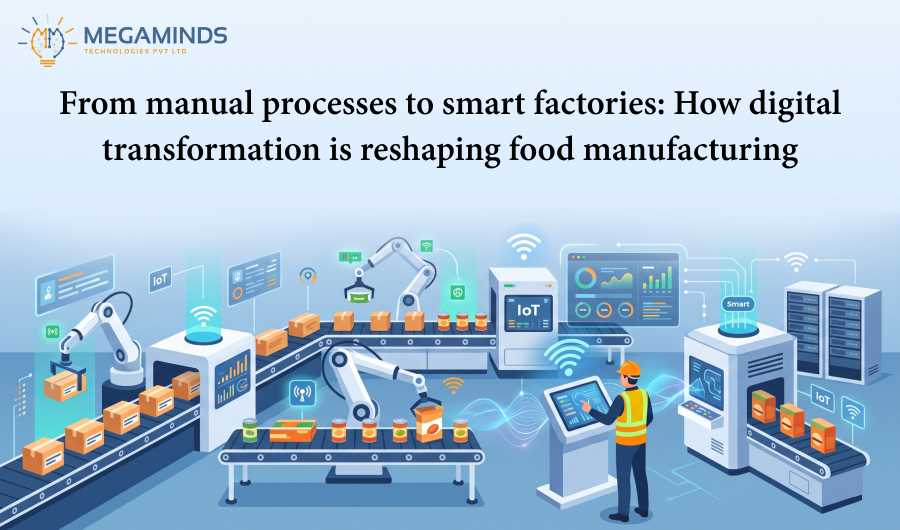
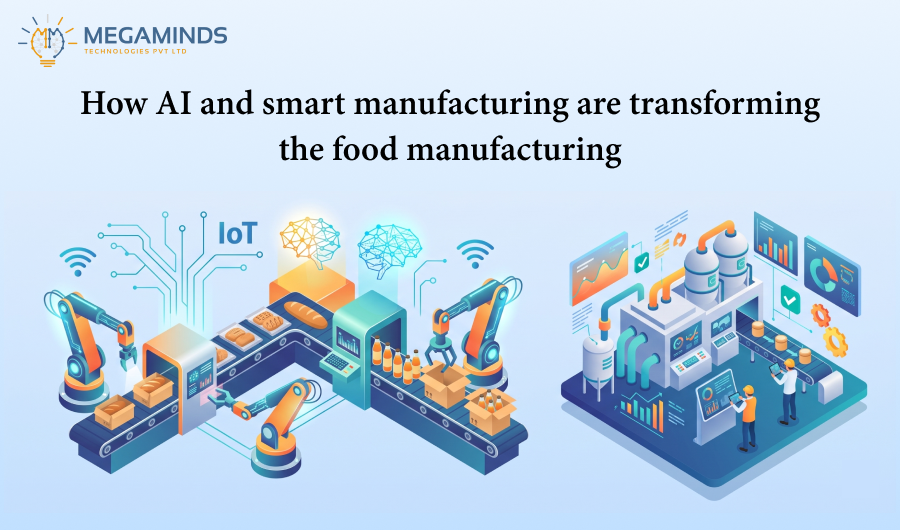
Connected food factories combine AI, IoT sensors, cloud platforms, and real-time analytics to improve production visibility, detect operational issues, and support faster decision-making. These technologies help manufacturers connect machines, monitor performance, and reduce inefficiencies across production lines.
AI can help food manufacturers reduce downtime, minimize waste, and improve productivity. However, successful implementation requires reliable data, suitable infrastructure, employee training, and a clear business strategy.
Common Challenges in AI Implementation
A Practical Roadmap for AI Implementation
AI is helping food manufacturers reduce unexpected downtime, minimize waste, maintain consistent product quality, and improve production efficiency. By combining predictive maintenance, intelligent quality inspection, and real-time data analytics, businesses can identify operational problems earlier and make smarter decisions.
Successful AI adoption starts with understanding the factory’s biggest challenges, improving data quality, and implementing solutions that deliver measurable results. Custom software and AI integration can also connect existing machinery with modern technologies without requiring a complete infrastructure replacement.
Ultimately, investing in AI enables food manufacturers to reduce operational costs, improve resource utilization, and build more reliable, competitive, and future-ready production operations.
19 Oct 2026
15 Oct 2026