How AI and Smart Manufacturing...
19 Oct 2026

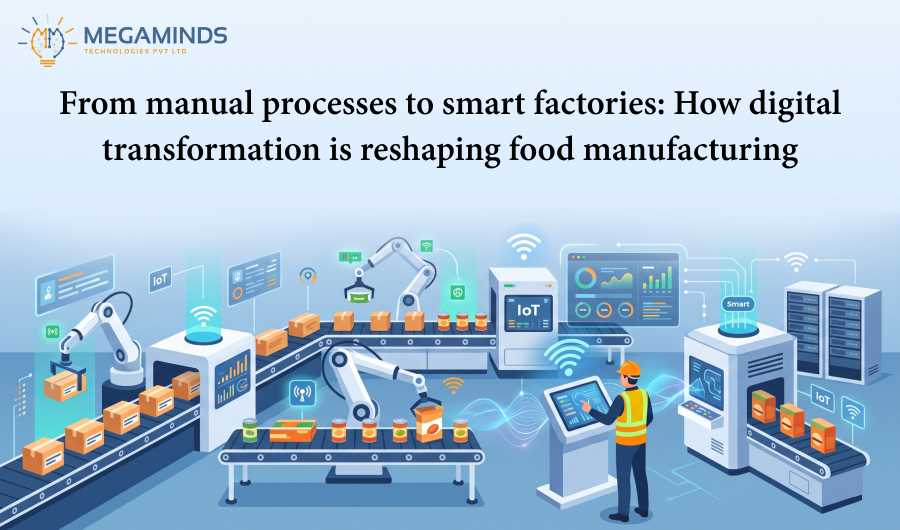
Yes, AI can help food manufacturers cut production costs, prevent equipment failure, decrease food waste and improve product quality. Implementing AI through automation, predictive maintenance and real-time data analytics enables companies to make more intelligent manufacturing decisions and get the most value from their resources.
The industry is investing accordingly. Mordor Intelligence estimates the AI in food and beverages market will grow from USD 13.39 billion in 2025 to USD 18.34 billion in 2026, reaching USD 88.37 billion by 2031 (Mordor Intelligence, 2026). In Food Engineering’s 2025 State of Food Manufacturing survey, 35% of respondents named AI and automation a major trend, up from 27% in 2024 (Food Engineering, 2025).
Food production involves a range of issues impacting food quality, yields, and business profitability. As a food producer, it is helpful to identify the most critical aspects of the operation to determine where digital transformation and AI can offer the most benefit.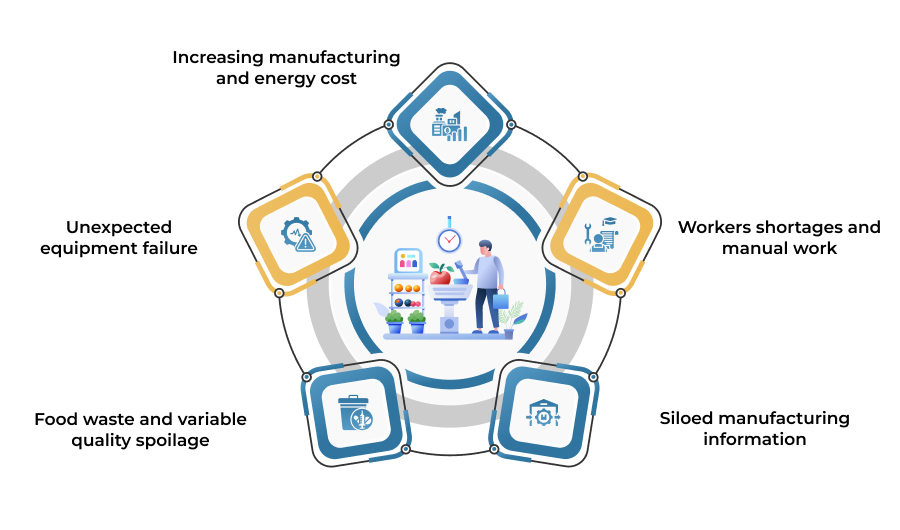
These issues tend to compound each other. In many instances, a machine breakdown that initially results in contaminated product also leads to a rise in energy use, order delays and additional labor. AI is allowing manufacturers to identify and ease these problems before they lead to more costs.
How AI and Automation Improve Production Efficiency on the Factory Floor
Artificial Intelligence (AI) and automation offer great assistance in improving food manufacturers’ efficiency by minimizing manual errors, optimizing processes, and upholding the product consistency. Such technologies allow businesses to scale up while minimizing wear of other resources.
Automated tasks such as sorting, weighing, filling, labeling, and packaging are performed using AI and computer vision. In addition, these technologies also help locate visible manufacturing defects in the products or errors in the packaging which in turn assists in better monitoring quality control and reduction of waste.
AI subscribers also assist in processing order details while taking note of what in what surplus the key ingredients and machines are relegated, and lastly result in making a schedule which would provide efficiency as well as enhance time-oriented services. This further goes on to reduce unnecessary changeovers and time consuming slotting of products.
Artificial intelligence interacts through the company’s domain’s manufacturing systems with the analytics of real-time data of the business corporation in which all combined facilitate the easy identification of product rejection, downtime operations, and percentage of the idle time which would intern help in locating the production problems and suggest solutions, so in the end optimum operations are ensured and efforts are not wasted.
Unexpected equipment failures can disrupt food production, increase maintenance costs, and lead to ingredient waste. AI-powered predictive maintenance helps manufacturers identify early warning signs, prevent avoidable breakdowns, and keep production lines running smoothly.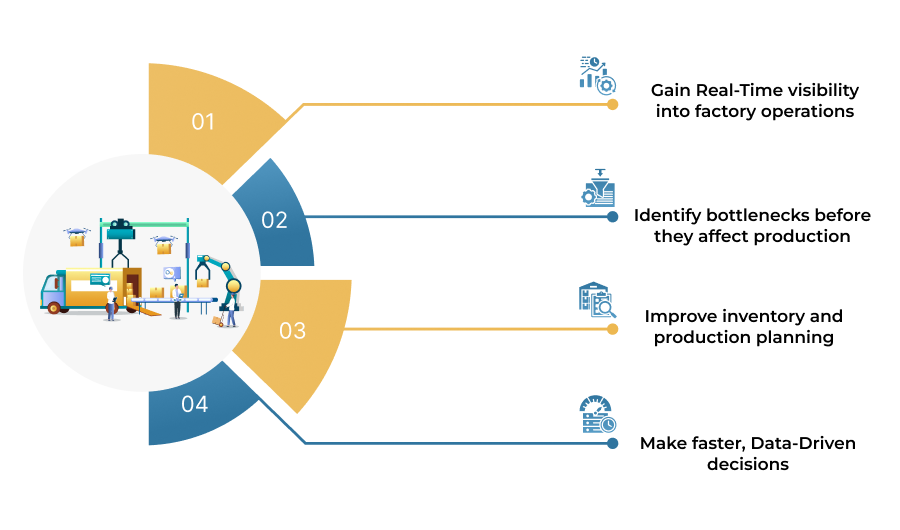
Predict Equipment Failures Before They Happen
AI analyzes sensor data such as temperature, vibration, pressure, and motor performance to detect unusual equipment behavior. This allows maintenance teams to identify potential problems and schedule repairs before they cause major disruptions.
Turn Smart Maintenance Into Cost Savings
Instead of relying only on fixed maintenance schedules, AI helps manufacturers prioritize equipment that needs attention. This reduces unnecessary servicing, improves spare-parts planning, and helps maintenance teams use their time more effectively.
Schedule Repairs Without Stopping Production
AI-powered alerts help managers plan maintenance during scheduled shutdowns or quieter production periods. This minimizes unexpected interruptions and helps businesses maintain production schedules and delivery commitments.
Track the Metrics That Matter
Manufacturers can measure the impact of predictive maintenance by monitoring unplanned downtime, mean time between failures (MTBF), mean time to repair (MTTR), and maintenance costs per production unit.
The business benefit: AI cannot prevent every breakdown, but it helps food manufacturers detect risks earlier, reduce avoidable downtime, and improve equipment reliability.
Real-time data analytics helps food manufacturers monitor production performance, identify problems and make faster, data-driven decisions. Manufacturers are backing this with budget: in Deloitte’s 2025 survey of 600 manufacturing executives, 80% planned to put 20% or more of their improvement budgets into smart manufacturing, led by automation, advanced analytics, cloud and agentic AI.
The business benefit: Real-time data analytics gives food manufacturers better operational visibility, faster problem detection, and actionable insights to improve productivity and make smarter manufacturing decisions.
Having a custom software program enables food manufacturers to link production equipment, inventory systems, and business applications. This, in turn, results in improved business intelligence and justification across operations of the factory.
Customized computing solutions enable reporting, business processes control and performance monitoring, have attention to business specifics. Cloud services consolidate the data generated during the processes allowing the members of the teams located in various locations to have clear communication and data interaction, which facilitates the agility of the business process.
AI can combine information and enable better performance forecasting, enable better schedule optimization and perform quality analysis to predict where machines can fail so that quality products can be made. For instance, by the integration of inventory software, sensors on the machines and plants and quality management systems, the manufactures can make good decisions on planning of the production and distribution of the resources.
However, the correct data collation, correct IT Systems security, proper muscularization of IT Systems and employee IT training are required to guarantee implementation smoothly. For a start, food manufacturers need to identify a particular operational problem, measure the effects and in stages implement solutions based on AI in order to develop smarter, more effective and cheaper plants.
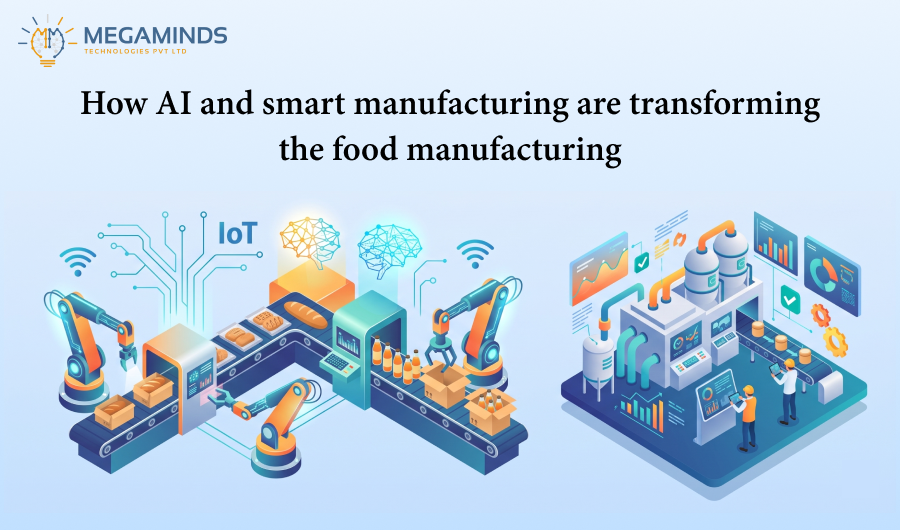
AI technology is assisting food companies in cutting down the operational costs in production, ensuring the system does not have any faults, eradicating the cause of food wastage, enhancing the quality of the production. A combination of three technologies, namely automation, predictive maintenance, and real-time data analytics, will enable a company to integrate and harness its resources efficiently and make informed business decisions.
In addition to the above, the combination of custom made softwares, use of cloud platforms, and implementation of AI in the case of Connected Factories has also How Yes Improved Operational Visibility and How Better Optimised the operational workflows of the food manufacturers Based from the first strategy formulated Clear outset commercial aims and then measure results, it should allow food manufacturers to reduce the food manufacturing costs, more efficiently manage the operations, and to Establish more sustainable future.
19 Oct 2026
15 Oct 2026
12 Oct 2026