From Manual Processes to Smart...
22 Oct 2026

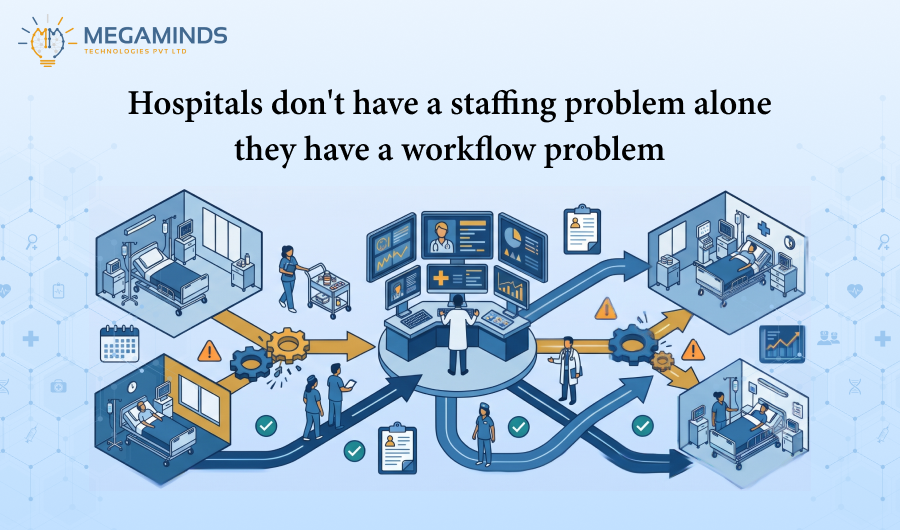
Workflows that require time for nurses, doctors, and admin staff to work with paper and answer phones, or to enter data or search for information, take time away from doing what they should be focusing on – patient care.
There are some cases where it is not about hiring, but more so optimizing workflows for the staff that already exists. Some workflow challenges include communication silos, disconnected systems, manual document, etc.
Improving workflows helps speed up and shorten all the administrative delays that nurses, doctors, and staff members face on a daily basis. With process improvement through automation, AI, and real time data, these challenges are easily addressed.
Why are hospitals under increasing pressure to adapt in their operations? Hospitals deal with the increased demand of patients, shortages of their available staff, additional administrative work, and complex patient pathways. There are five main pressure points that compound on hospitals. 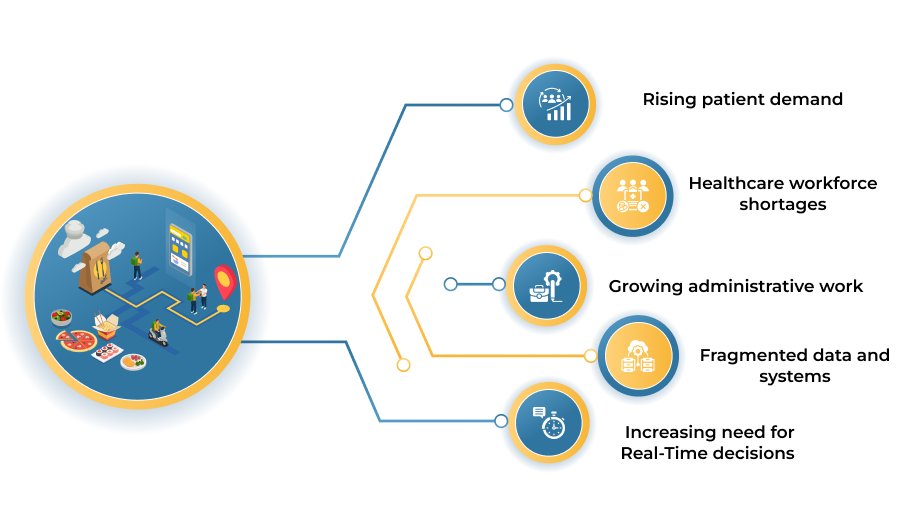
1. Rising Patient Demand
The Emergency Department and inpatient beds, diagnostics, and clinical demand continue to stretch. The focus for any hospital is how to optimize the flow of patients through the system.
2. Healthcare Workforce Shortages
The World Health Organization projects a global shortfall of 11.1 million health workers by 2030, concentrated in low- and lower-middle-income countries but felt everywhere. Where staff are stretched, existing employees spend more time on repetitive administrative and coordination work, reducing time for direct patient care.
3. Growing Administrative Work
Clinical time is lost to documentation and administrative work; the American Medical Association reports that the most important opportunity of AI for 57%of surveyed physicians was to reduce administrative work.
4. Fragmented Data and Systems
When staff are required to navigate multiple systems, they spend significant time searching for, verifying, or transferring data and making decisions.
5. Increasing Need for Real-Time Decisions
Hospitals must continuously manage beds, staff, diagnostics, admissions, and discharges. NHS England’s Federated Data Platform now includes an AI tool that forecasts A&E admissions up to three weeks ahead, alerting trusts to upcoming surges so they can plan staffing and bed capacity. As of January 2026 it was in use at around 50 NHS organisations.
What impact do inefficient workflows have on hospital staff? With these four common problems, even limited staff capacity is elevated.
1. Excessive Administrative Work
Documentation time comes straight out of patient time. A Stanford Health Care pilot found ambient AI scribes cut daily EHR time by about 20 minutes, and a multi-site study of 263 clinicians saw burnout fall from 51.9% to 38.8% in 30 days. But adoption decides the outcome: across 1,800+ clinicians, heavy users saved roughly twice as much time as average — yet only 32% used the tool in more than half their encounters.
2. Manual Coordination Between Departments
Phone calls, messages, verifying bed availability, organizing transport, and follow-ups for test results are just some of the things that staff may spend time on. Repetition of things like this leads to delays.
3. Disconnected Information
When data systems are disconnected, staff may need to search for and verify data multiple times increasing the workload and time it takes to make critical decisions.
4. Repetitive Tasks Reduce Staff Capacity
Tasks that are done once are not usually a big deal, but tasks done thousands of times by hundreds of employees are a huge tally. The answer is not always more employees, it is eliminating things that don’t need to be done.
Hospitals typically experience multiple workflow issues rather than just one. Challenges to the patient flow occur throughout the patient journey.
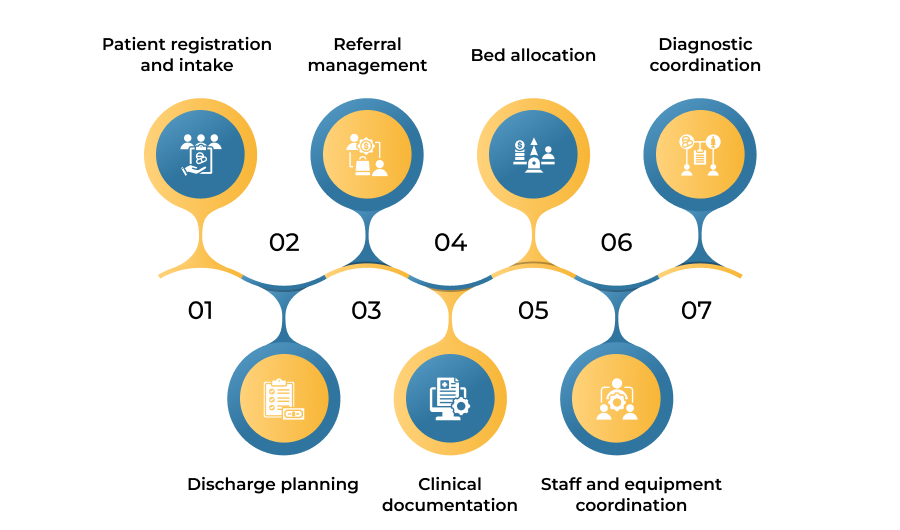
Workflow challenges are inter-connected. Delays that occur in one workflow area create pressure in other areas.
Not all manual processes are bad. Indeed, some degree of human engagement is expected in health services. However, there is no good reason to have staff do things that a computer or machine could do.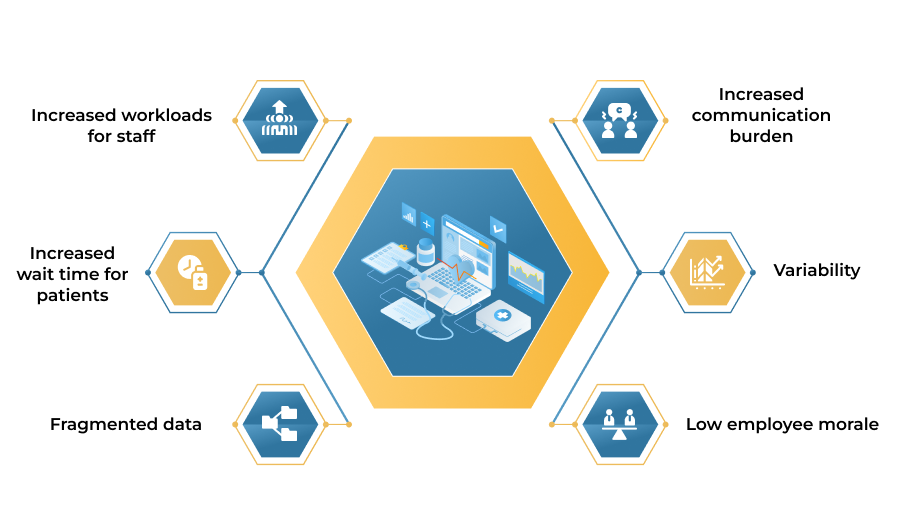
Manual workflows create:
NHS England documented some of the administrative burdens on staff in its reporting including manual booking of appointments, scheduling of theater and procedures, staff overbooking, conflicts in allocating staff, and inefficient distribution of resources.
We are not trying to eliminate humans from the workflow. We are trying eliminate unnecessary friction that humans experience in the workflow.
AI and automation are revolutionizing the hospital industry, improving efficiency, and minimizing time spent on unnecessary tasks. AI is capable of predicting demand, optimizing bed placement and distribution, prioritizing referrals, and drafting discharge plans. These technologies can also handle repetitive tasks that were previously performed by administrative staff.
The impact is measurable. In North Central London, an end-to-end automation of the chronic kidney disease referral pathway processed 4,289 CKD referrals between go-live in April 2024 and March 2026. At roughly 30 minutes saved per referral, that returned 2,144 hours — about 286 working days to the CKD team. The project met the DCB0160 clinical safety standard and completed a full DPIA, which matters as much as the hours saved.
Hospital teams are able to monitor patient flow at any given moment. Dashboard technology has the ability to reduce prescription time, optimize hospital staff distribution, and move hospital services to a more proactive model of service distribution.
What are the advantages of optimized workflows on hospital operations? Efficient workflows minimize unnecessary delays, maximize staff productivity, and improve the overall responsiveness and focus of hospitals on providing care to patients.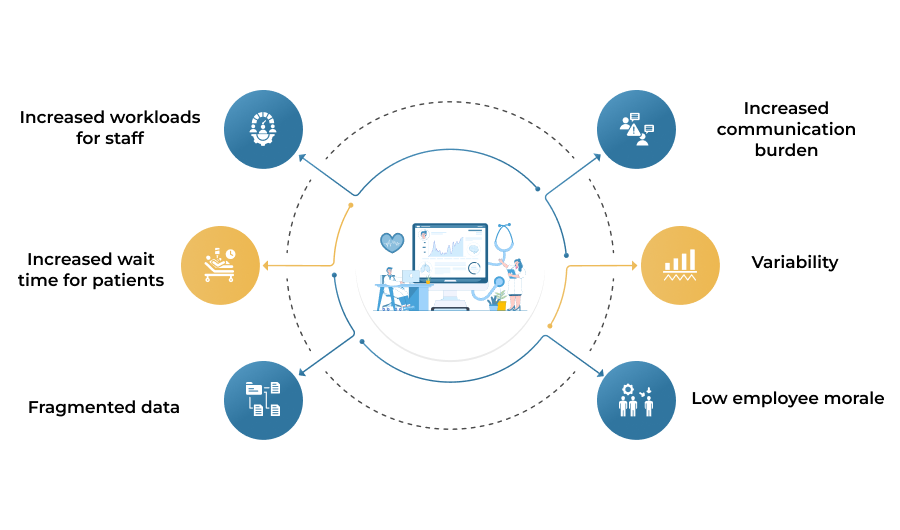
1. Better patient experience
Optimizing workflows helps eliminate unnecessary delays, repetition, and wasted time for patients from repeated processes.
2. Lower staff workload
Process automation eliminates the need for staff members to perform repetitive tasks, so staff members can perform more patient care related tasks.
3. Increased operational capacity
Optimizing workflows decreases waste and delays. This leads to increased operational capacity of beds, equipment, staff, and facilities.
4. Increased operational performance
Operational and clinical staff have rapid access to information. This leads to rapid adaptation to meet changing needs.
5. Improved operational efficiency
Optimized linked workflows allow hospitals to efficiently allocate resources.
6. Lower operational expenditure
Improvements in operational efficiencies leads to a decrease in operational costs.
Healthcare workflow transformation is not as simple as purchasing an AI platform.
Hospitals often operate with legacy systems, multiple vendors, disconnected databases, and complex compliance requirements.
Common challenges include:
The most successful transformation programs therefore begin with the workflow itself.
Hospitals should first identify where delays, duplication, manual work, and information gaps occur. Then they can determine where automation or AI actually adds value.
Gloucestershire Hospitals NHS Foundation Trust. In 2022/23 the trust had more than 250 patients medically ready for discharge still occupying beds, and average ambulance waits above 80 minutes. Its clinically led Clinical Vision of Flow programme targeted emergency departments, short-stay units, specialist wards, and frailty services. Per NHS England, ambulance delays fell from 3,343 hours per month in 2023 to 1,106 in 2025, and the number of patients ready for discharge but still in hospital fell 30%, from 169 to 118. The trust’s mortality indicator also improved.
The University Hospitals of Leicester focused on improving discharge workflows, and as a result, there was a 10.3% improvement in the number of patients discharged before noon. This positively impacted the availability of beds and patient flow.
Clinical documentation is also benefiting from AI. From a Stanford study of 45 physicians, reduction in documentation time and after-hours EHR work was attributed to the use of ambient AI.
While other hospitals are improving staff efficiency and reducing delays by implementing solutions to workflow disruptions, the ability of AI, automation, and real time data to improve flow, increase staff capacity, and enhance patient care makes it a valuable addition to hospitals.
Hospitals struggle with staffing, but also with workflow. Automated systems will ease the burden placed on medical staff by outdated, inefficient systems and processes.
Through real-time data, automation, and AI, productivity can be boosted, and patient throughput can be simultaneously increased. The goal is to use technology to create a more efficient system that improves the methodology of hospital operations rather than just an expedited system.
Flow automation is a win-win for healthcare staff. Staff are able to provide a higher quality of care more efficiently. Resources that were previously underutilized or allocated inefficiently are able to be utilized properly, providing better care overall.


19 Oct 2026
15 Oct 2026