The healthcare frustration nobody talks...
05 Oct 2026

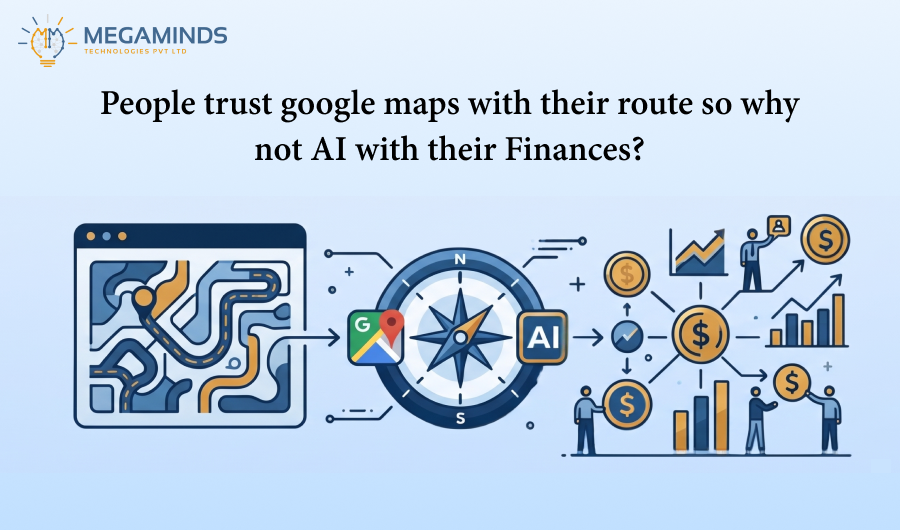
Billions visit Google Maps daily for personalized directions. AI is poised to offer similar guidance as financial assistance.
AI is currently in the early stages of becoming a financial assistant. It’s able to process the data, envision future outcomes, and propose the next best course of action. This assistant will change the way people handle their finances on a day-to-day basis.
AI could gain Google Maps level trust; however, this requires exactitude and transparency. Most people do not trust AI to make financial decisions on their behalf at this time.
TD’s 2026 AI Insights Report says that 62% of Americans trust AI to be honest and correct, whereas only 18% of survey participants said they trust AI to make financial decisions for them, a percentage which has not changed in the last few years. Narrowing that 44% gap trust level is the primary concern.
Consumer interest in AI across all sectors is on the rise. In finance, this trend is attributable to:
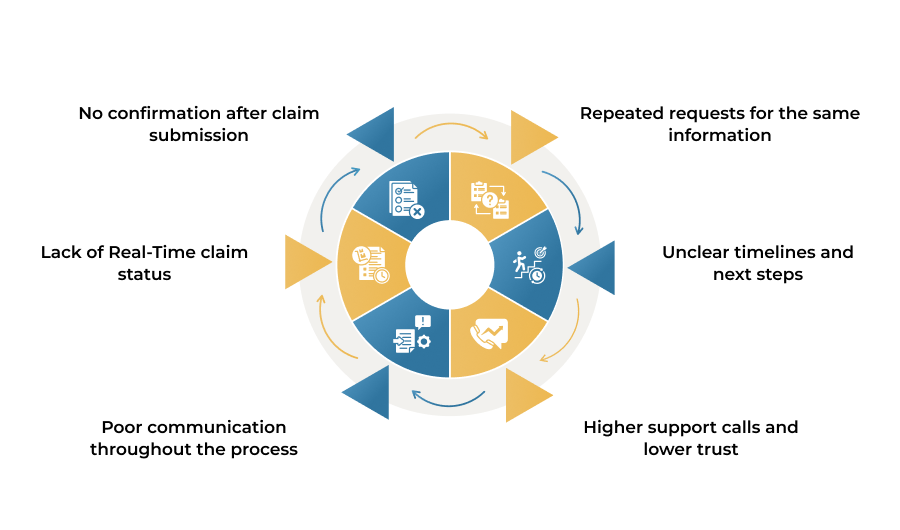
Previously, financial systems only recorded data from the past using statements, dashboards, and data that was static and required manual interpretation. This created slow, reactive responses since decisions depended on slow human analysis.
The game has changed with AI. Users can now make decisions with financial data that has processed AI into a time-sensitive recommendation, meaning decisions can be made with value and sense up to the second.
The predictive capabilities of modern financial systems based on the fact that many systems now process data in real time and produce data outputs according to what is required in the moment, and use AI to interpretation processing of the data. This is made possible by Machine Learning, NLP, and predictive analytics, which enable AI to identify and analyze past patterns, forecast future scenarios, and generate a range of recommendations tailored to the context.
McKinsey estimates that AI has the ability to enhance financial institutions’ decision-making capabilities by 40% illustrating that the effects of AI on the industry have only begun.
Financial data has become the equivalent of a real-time recommendation engine and allows consumers to proactively respond to the needs of the moment in the same way that Google Maps recommends the best travel routes to its users given that the traffic condition is constantly changing.
AI enables hyper-personalized financial guidance by analyzing massive datasets and delivering tailored insights for each user. Key capabilities include:
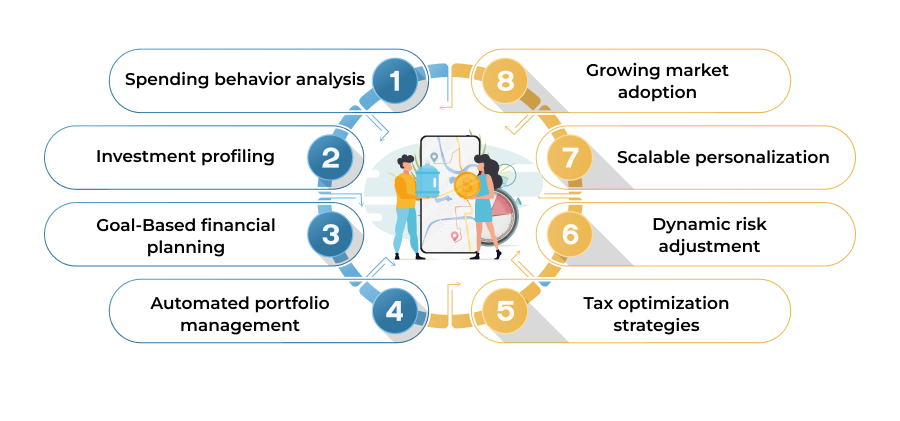
Financial services have become highly competitive, but AI is changing the game. By using AI, firms can make decisions in real time. AI systems can evaluate data and make recommendations orders of magnitude faster than the systems we have now.
AI is also capable of providing support and analysis 24 hours a day, 7 days a week, to any number of clients simultaneously. This means that clients are no longer held captive to the availability of human advisors, allowing a much preferred and more efficient method of time management.
The strongest argument is economics. BCG predicts the potential profit edge for all retail banks from large-scale deployment of AI by 2030 could reach $370 billion every year. Within specific functions of the bank, measurable savings have already been reported.According to BCG, banks set targets of 50 percent savings in the Know Your Customer process, which accounts for 5 percent of the total banking costs.
AI improves speed, efficiency, and cost savings, and financial intelligence is now available to more people.
In nearly every industry, AI’s biggest successes are in fraud detection. Mastercard states that generative AI has doubled the time to detect fraudulent cards, nearly eliminated false positives, and cut the time to locate potentially risky merchants by 300 percent. Its Decision Intelligence system evaluates transactions within 50 milliseconds on the roughly 150 billion transactions Mastercard processes each year. Decision Intelligence even helps process transactions instantaneously.
Fraud stopped lost revenues. Mastercard, in conjunction with FT Longitude, estimates that 42 percent of the issuers and 26 percent of the acquirers avoided $5 million in payment fraud losses over a two-year period due to AI implementation. AI significantly decreased false positives for 83 percent of the industry executives, and fraud costs were on the rise. In 2024, the total estimated loss from fraud was over $485 billion, with an average loss of $60 million for each organization.
AI can help consumers save money all day. Apps help users track their spending, help user’s maximize savings opportunities, and help users secure their funds from theft in real-time.
Investing can be instantaneous. Due to automation, portfolio management and trading are executed at lower costs, higher speed, and with less money required to participate.
This innovation is redefining credit scoring. Due to lack of a formal credit scoring system, alternative data allows previously unbanked populations credit scoring opportunities for the first time, over 400 million people are served by this line of credit.
Robo-advisors are making advisor equity obsolete. Forty-six percent of advisors equate AI assist technologies to the tools they cannot afford to ignore, and the systems most advisors requested are already being used.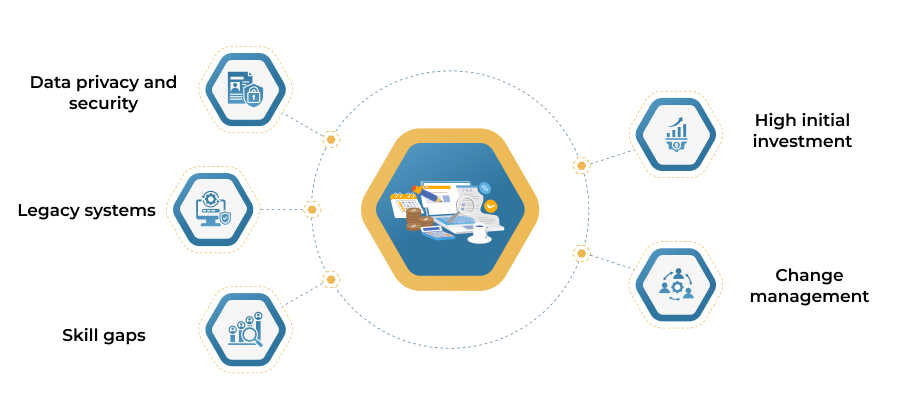
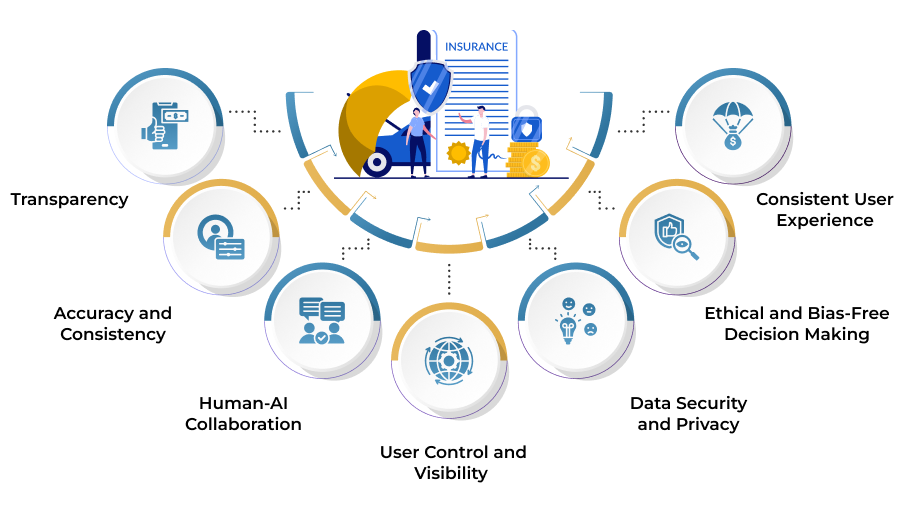
1. Data Privacy and Security Financial data is highly sensitive, and firms must meet obligations under GDPR and sector-specific rules to retain user trust.
2. Algorithmic Bias AI learns from historical data. Where that data encodes bias, outputs reproduce it. This requires ongoing demographic parity testing, not one-time certification.
3. Lack of Explainability Opaque recommendations don’t get followed. Users need reasons they can evaluate.
4. Over-Reliance on AI People may defer to AI without understanding its limits. Human judgment remains essential which is exactly what the 18% figure reflects.
5. Changing Regulations The rules are tightening fast. Under the EU AI Act, high-risk obligations covering creditworthiness assessment and insurance risk pricing took effect on 2 August 2026. Non-compliance carries fines up to €15 million or 3% of global annual turnover. A proposed “Digital Omnibus” delay to late 2027 has been floated but not enacted, so August 2026 remains the operative date.
6. Trust Issues Where AI is inconsistent or unexplained, users hesitate — and in finance, hesitation is the default state.
The coexistence of artificial intelligence and human input will define the future of finance. Humans process data and offer guidance. AI provides insights and suggestions. A balance between the two is critical.
The scaling of services and impacts on the quality of experience for clients is directly related to the symbiosis of the two.
AI is able to construct strategies at the level of the finance industry as a whole. These strategies may be personalized, but human advisors are needed to provide this level of personalization. Forrester suggests this method may increase customer satisfaction.
AI will be a coach rather than a competitor and will improve the decisions of the financial clients.
People trust Google Maps because it delivers accurate, real-time, and personalized guidance. AI in finance is moving in the same direction, helping users make smarter and faster financial decisions.
As AI continues to evolve, it will become more transparent, accurate, and user-friendly. But technology alone is not enough—trust will depend on consistent performance, ethical use, and the right balance between AI and human expertise.
For businesses, the focus should be on building AI systems that prioritize transparency, deliver real value, and support human decision-making. When done right, AI will not just assist—it will become a trusted financial co-pilot for the future.
05 Oct 2026
01 Oct 2026
28 Sep 2026