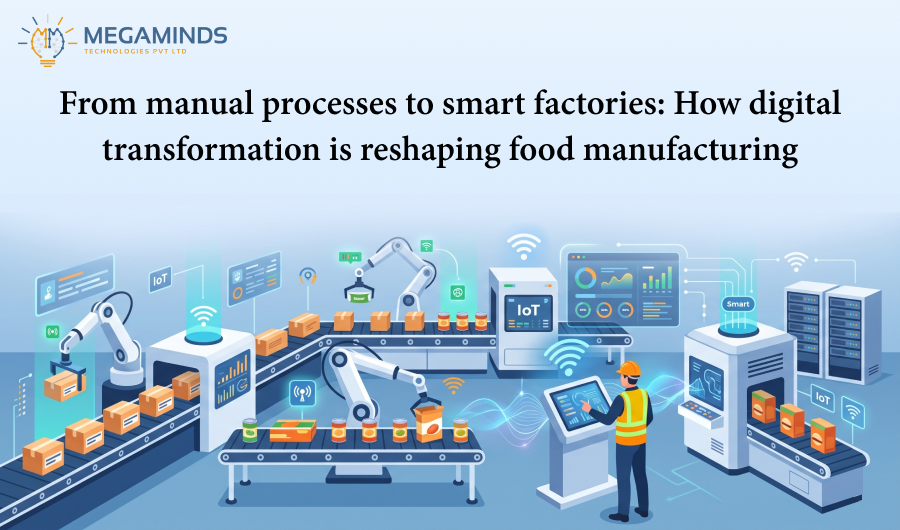
From Manual Processes to Smart...
22 Oct 2026


Real-time data has become an indispensable tool for today’s manufacturing industry. Inefficiencies such as production delays, quality issues, or even unexpected downtime days can easily cost these factories millions of dollars every year. Conventional means of KPI tracking, like spreadsheets and some periodic reports, or dashboards that are not integrated into the main operational tools, simply do not provide instant access to insights that manufacturers require in order to actively and effectively optimize their operations.
Here is where Microsoft Power BI steps in to make a difference in factory performance: With real-time data monitoring, manufacturers can assess key performance indicators (KPIs), such as Overall Equipment Effectiveness (OEE), production yield, downtime, and inventory levels, through a single, user-friendly dashboard.
If your factory is still working on delayed or static reports, it is high time you reconsidered your strategy. Real-time KPI monitoring via Power BI is the key to enhancing efficiency, minimizing costs, and promoting data-driven decision-making.
From supply chain fluctuations to changing demands, today’s dynamic market imposes varied challenges on the manufacturers. While operations tracking is, therefore, the primary goal, many manufacturers still opt for traditional performance-monitoring methods, operating effectively almost in the dark. Here are a few of the challenges they typically face:
Did you know?
McKinsey demonstrated that companies utilizing real-time data analytics can realize up to a 20% integrity improvement in their operational performance. If your competitors are leveraging real-time insights, can you afford to lag behind?
The only realistic incurable cost is not to monitor KPIs in real time. Some likely losses include:
Because they are not seen until huge slowdowns occur and the entire onset of machine failures and bottlenecks passes unnoticed, they cannot be detected in real-time monitoring.
Inefficiencies within the production process – like excess energy consumption, inventory mismanagement, or superfluous labor charges – sum up so fast that they wouldn’t wait for real-time insights to frustrate your profit.
The consequence of poor products is increased scrap rates and rework costs. A manufacturer programs through Power BI its quality metrics (defect rate, percentage rework and yield analysis) into real-time monitoring to observe the errors and to meet customer satisfaction.
Factory executives will not be able to act on critical insights the instant they form if they do not wait for reports that are issued weekly or monthly. With Power BI, managers identify immediately corrective action possibilities through real-time alerts, followed by visual dashboards.

Power BI transforms manufacturing performance by providing:
Power BI connects with any data sources, such as ERP, IoT sensors, SQL databases, SCADA, etc., doing away with data silos and upholding one version of the truth.
Design factory-specific dashboards that monitor production efficiency, machine health, supply chain patterns, and workforce productivity.
Via AI capabilities, Power BI can predict maintenance needs and optimum inventory levels, and proactively determine production trends before these escalate to problems.
Monitor factory KPIs anytime and anywhere on a desktop, tablet, or mobile, so the managers remain in the know even when off the production floor.
Establish real-time alerts for machine failures, slowing production, or critical breaches of thresholds, facilitating prompt decision-making and immediate intervention.
A well-designed Power BI dashboard for factory performance should include:
Real-time KPI monitoring investments through Power BI can lead to its own sizable share of dividends. Here are some benefits:
The emerging trends are shaping one’s view about the present and future of real-time KPI monitoring:
Those industries that will adapt to this adjustment of the game will continue to be ahead of the rivaling pack. Those that turn their backs on real-time analytics will consider waking up very soon and realize that they are becoming extinct.
Real-time KPI monitoring with Power BI will help your manufacturing business ditch the old-style delayed reporting. Immediate insights, predictive analytics, and smooth data integration are what Power BI can provide to optimize efficiency, cut costs, and push profitability.
Do you wish to revamp factory performance with Power BI? Contact us today for experienced Power BI consultants who can help design, implement, and tailor real-time KPI dashboards as per your manufacturing requirements.
19 Oct 2026
28 Sep 2026