Why Today’s Customers Expect Insurance...
12 Oct 2026


In today’s highly competitive manufacturing environment, factories must improve efficiency, minimize downtime, and respond quickly to operational changes. Traditional plant management methods often struggle to keep pace with growing assets, complex machinery, and increasing operational demands. IoT-powered factory dashboards provide real-time visibility and remote monitoring from any location. They help manufacturers detect problems early, optimize production, and make faster, data-driven decisions. As a result, organizations can accelerate their Industry 4.0 transformation and improve overall operational performance.
Traditional factory oversight methods result in a complicated array of problems that seriously affect the operational efficiency, safety, and profitability of the factory. These problems are: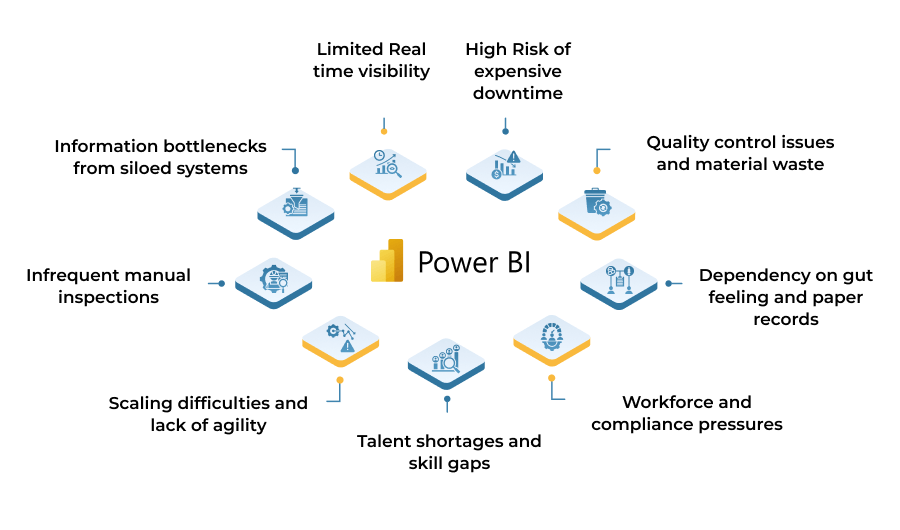
Manufacturers often rely on manual inspections, disconnected systems, and outdated processes that limit operational efficiency. These challenges make it difficult to maintain product quality, reduce costs, and respond quickly to production issues.
Together, these challenges reduce product quality, increase costs, affect workforce safety, and limit operational agility. Manufacturers must embrace digital transformation to overcome these obstacles and remain competitive. Real-time, integrated monitoring solutions provide the visibility needed to make faster decisions, respond quickly to changing market demands, and improve overall operational performance.
It monitors temperature, pressure, vibration, and energy consumption, giving teams complete visibility into production. With continuous monitoring, manufacturers can detect issues early, reduce downtime by 35%, and lower defect rates by up to 65%. This leads to higher productivity, better product quality, and more efficient operations.
Predictive maintenance is another major benefit of IIoT. AI-powered sensors continuously monitor equipment health and alert maintenance teams before failures occur. This reduces unexpected downtime and lowers maintenance costs by up to 30%. Manufacturers also use IIoT data to optimize workflows, improve equipment utilization by 25%, and reduce energy consumption by 20–30%.
When manufacturers combine IIoT, edge computing, and AI, they gain faster insights and make smarter decisions. These technologies support digital twins, predictive analytics, and scenario planning while enabling real-time responses. With the global IIoT market expected to exceed $514.39 billion, manufacturers have a strong opportunity to improve productivity, quality, and sustainability while accelerating their Industry 4.0 journey.
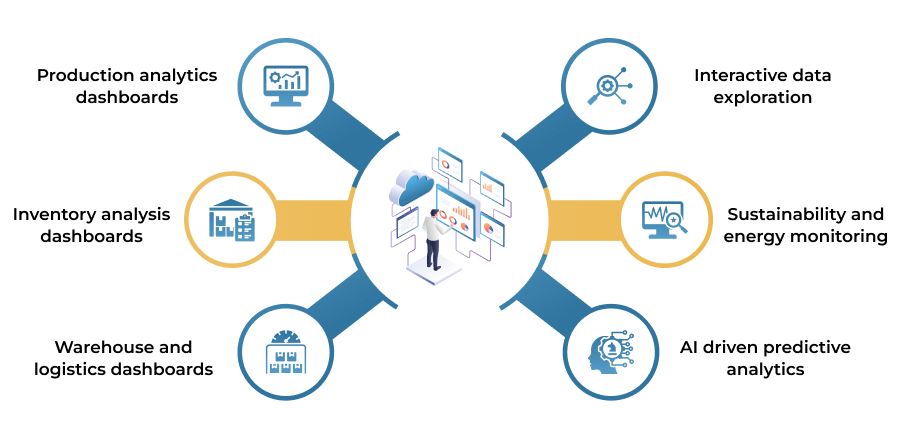
Production Analytics Dashboards: Real Time Monitoring of Yields and Equipment
Power BI dashboards fetch and display data about production in real time, such as yield rates, machine operational status, and Overall Equipment Effectiveness (OEE). These visualizations allow factory managers to follow production progress on their screens, spot quickly what limits production, and, in the case, also locate the initial cause of machine malfunction for time and production loss reduction and quality sustention of output.
Inventory Analysis Dashboards: Demand Forecasting and Stock Optimization
These dashboards have a very important supply chain role: they optimize raw material and finished goods inventory by providing data driven demand forecasts. By forging a close relationship between stock levels, production schedules, and customer demand, manufacturers can eliminate stockouts and lower inventory carrying costs, thus improving supply chain efficiency and cash flow management.
Warehouse and Logistics Dashboards: Streamlining Material Flow and Workforce Productivity
Logistics dashboards, focusing on the tracking of inbound/outbound shipments, resource utilization, and labor productivity, create a comfortable space for operational transparency and agility in the company. They become instruments of scheduling improvements, delay reduction, and overall better coordination of warehouse activities linked to manufacturing.
Interactive Data Exploration: Customizable Insights and Root Cause Analysis
Power BI interactive features offer users the possibility to separate data according to the production line, different shifts, or periods of time and get a more detailed insight that helps to understand the root causes of production losses. This not only aids in recognizing the management problem quicker but also gives them the ability to take corrective actions on time thus improving operational effectiveness.
Sustainability and Energy Monitoring: Tracking Environmental Impact
Among the data displayed by the dashboards are energetic consumption and pollution measurements which are helpful for the manufacturing industry in their sustainability pursuits. Moreover, manufacturers can not only check their carbon footprints but also keep track of their compliance with the imposed regulations and find new ways to lower their resource consumption.
AI Driven Predictive Analytics: Proactive Maintenance and Quality Assurance
The extra intelligence inside the dashboards comes with advanced analytics capability and can foresee the time when the equipment will fail and suggest maintenance schedules accordingly, thus on one hand, unexpected breakdowns will be rare and on the other, the machine will always be in good condition. The AI easiness and quickness in spotting deviations also help in quality control and enable companies’ transition to continuous improvement schemes.

Real Time Anomaly Detection
Contrary to the previous style, where the technicians could do nothing but wait for breakdowns to happen, now they have the power to solve an issue even before they have a chance to see it occur, thus considerably cutting the number of emergency repairs and also making production schedules steadier.
Maintenance Optimization
By monitoring equipment health continuously, manufacturers can perform maintenance at the right time without interrupting production. This strategy maximizes equipment availability, improves resource utilization, and extends machinery life. As a result, manufacturers increase reliability, reduce operating costs, and maintain consistent production performance.
Reduced Costs and Extended Equipment Lifespan
Overall, predictive analytics helps manufacturers replace reactive maintenance with proactive, condition-based maintenance. This approach lowers operating costs, increases equipment reliability, and keeps production running smoothly. It also strengthens customer trust by supporting consistent product quality and on-time deliveries.
IoT platforms transform manufacturing data into actionable intelligence that improves operational efficiency. By combining IoT sensors with advanced analytics, manufacturers can automate resource allocation, streamline quality control, and continuously optimize production workflows. This data-driven approach reduces operating costs, improves productivity, and increases manufacturing efficiency.
Real-time insights also help manufacturers respond quickly to changing production demands. They improve product quality, extend equipment life, and reduce maintenance costs, enabling smarter and more resilient manufacturing operations.
.
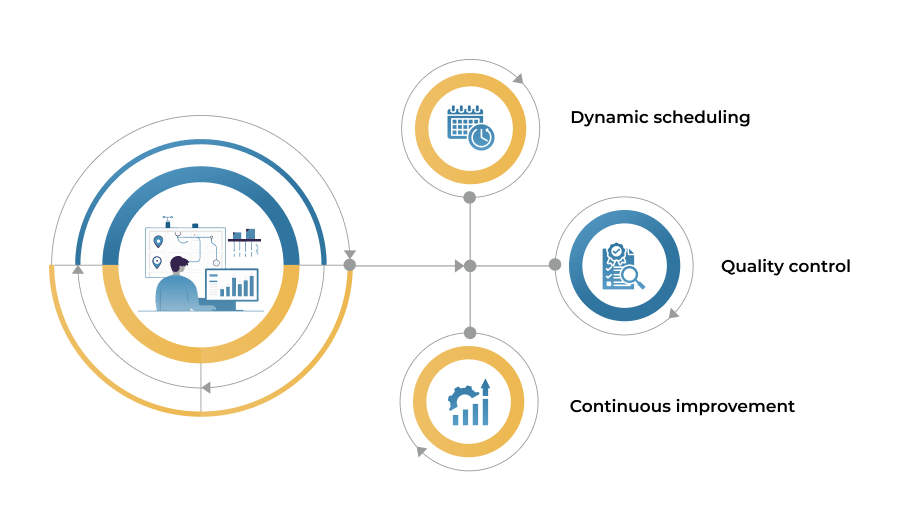
Industry reports show that manufacturers using real-time IoT insights can improve equipment effectiveness by up to 25% while reducing maintenance costs by as much as 40%. These results demonstrate the value of connected, intelligent manufacturing systems.
Automated alerts and notifications help manufacturers detect issues before they disrupt production. IoT sensors continuously monitor machine performance and overall equipment health in real time. When the system detects abnormal conditions, it instantly notifies maintenance teams so they can take immediate action. This proactive approach reduces downtime, prevents costly interruptions, and keeps production running smoothly. As a result, manufacturers improve operational efficiency, minimize losses, and maintain consistent production performance.
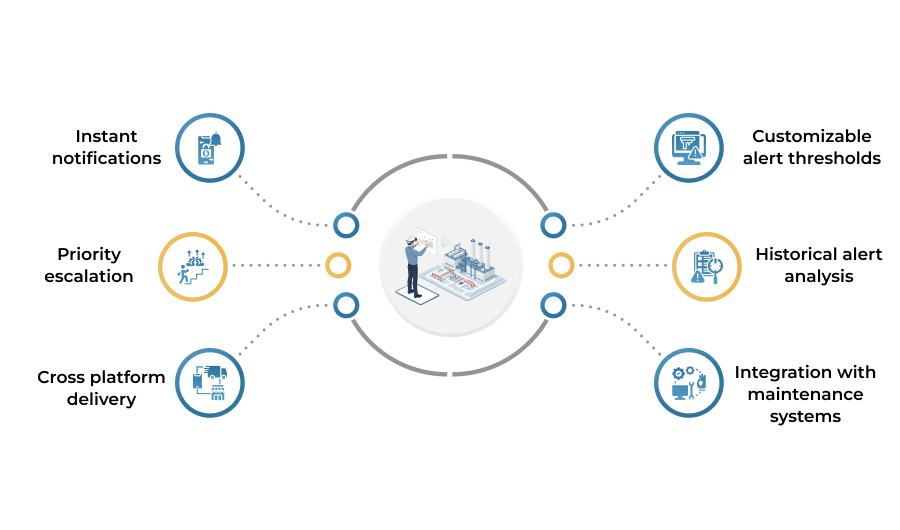
In combination, such capabilities allow manufacturers to take advantage of a proactive maintenance strategy that leads to less unplanned downtime through early detection of faults, resource deployment optimization as well as increased production reliability. Automated alerts are a must have instrument for smart factories that are striving for operational excellence and a competitive advantage.
Manufacturers gain the most value from IoT when they integrate it with existing manufacturing systems. Connecting IoT platforms with Manufacturing Execution Systems (MES), Enterprise Resource Planning (ERP) software, and legacy equipment creates a unified data environment. This integration eliminates data silos and improves process visibility across the factory. It also enables real-time decision-making at every level of manufacturing operations, helping organizations increase efficiency, agility, and productivity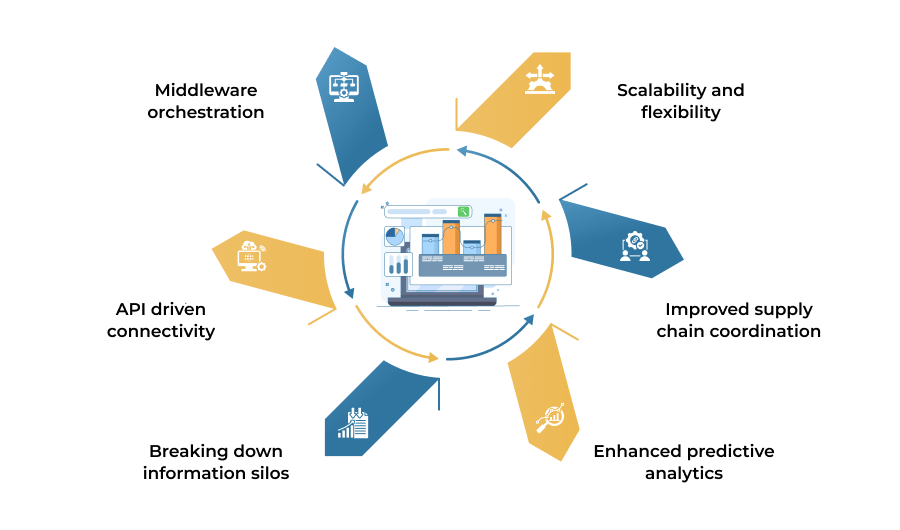
Such multi dimensional integration is the driving force by which companies are empowered to fully leverage the potential of the IoT, quickening the pace of innovation, cutting down on costs, and opening the gates for operational excellence.
An OEM that was focused on thermal processing changed its maintenance department by the use of IoT dashboards:
This instance from the life is a powerful demonstration of how remote monitoring can be a major factor in the improvement of asset reliability and customer satisfaction.
Manufacturing Internet of Things should follow tight security and regulated standards: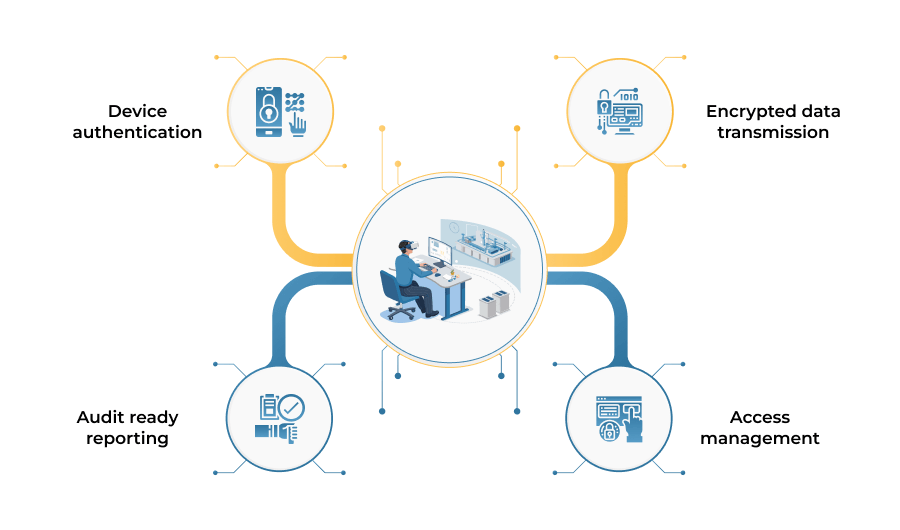
It is very important that the manufacturing IoT complies with NIST, GDPR, and industry frameworks in order to protect the operations and be far from legal risks that might cost a lot.
Automated factories of tomorrow will use AI and robotics to manage production that adjusts itself:
Such innovations will become the main drivers to deepen efficiency, agility, and scalability, thus, enabling manufacturers to be at the leading edge of Industry 5.0.
Manufacturers that utilize real time monitoring, predictive analytics, and remote control will be the ones to dominate the market in the future. MegaMinds offers comprehensive solutions that enable your factory to go beyond the limits of efficiency, strength, and quality. Learn how intelligent, connected processes can give you a competitive advantage get in touch with us if you want to make your manufacturing journey resistant to the future.
12 Oct 2026

08 Oct 2026
05 Oct 2026