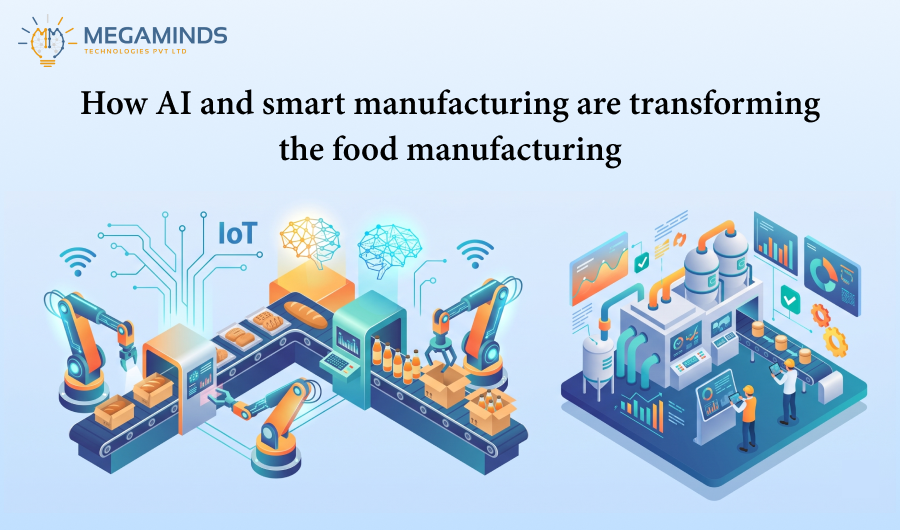
How AI and Smart Manufacturing...
19 Oct 2026


Traditional ways of organizing information no longer cut it with the fast moving, complex demands of modern business. Financial information is decoupling from traditional systems of reporting. Heavily reliant on the agility of real-time reporting, contemporary businesses are opting for increasingly intelligent tools that help them make informed business decisions. Real-time reporting is no longer enough. Power BI with the support of AI, is helping businesses leverage financial information that is more predictive and prescriptive. AI financial analytics is helping businesses forecast revenues, identify and manage the financial and operational constraints and provide support for investment decisions. The businesses that embrace the AI analytics are thriving and are better positioned to capitalize on opportunities in their respective markets than those that are hesitant.
For a very long time, corporate finance leaders relied on static dashboards, devices that just summarized what took place the day before and made it necessary for leaders to respond instead of forecast. However, in a very unstable business environment of today, which is still influenced by changing consumer demand, regulations, and disruptive technology, it is out of the question to use reactive reporting as the only method. A completely new era of finance, one that is no
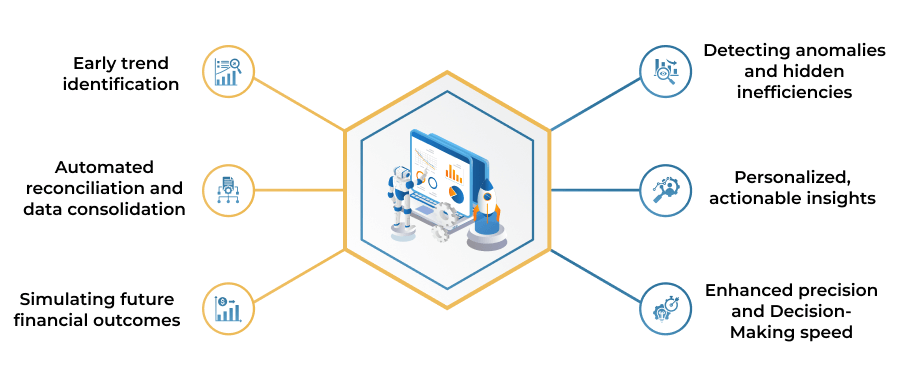
Early Trend Identification
AI-driven analytics empower our systems to observe trends and concerns that might not even make it to monthly reports. In fact, surveys indicate 78% of organizations have integrated AI into one or more of their finance departments so they can accurately predict the future and adapt their business strategies accordingly in order to gain a competitive edge.
Automated Reconciliation and Data Consolidation
Manual data wrangling is time-consuming, and reporting is still at risk of errors. However, AI fully automates the merging of complicated financial data, easing employee workloads while simultaneously cutting the operational costs of a company by up to 25 percent, thereby liberating finance teams for higher-level analysis activities.
Simulating Future Financial Outcomes
Standard dashboards are limited to showcasing past events, while AI models facilitate “what, if” experiments. Through scenario modeling, which is 10–20% more accurate than manual methods, CFOs can instantly grasp the side effects of market volatility, regulatory changes, or new investments on their forecasts.
Detecting Anomalies and Hidden Inefficiencies
Intelligent pattern recognition programs can find fraud, resource bottlenecks, or even discrepancies that cannot be detected by humans. Presently, more than 85% of the financial institutions have turned to AI for solutions in fraud detection and risk modeling, thus vastly improving their prevention of financial losses.
Before the integration of Azure OpenAI, Copilot, and Azure Machine Learning, Microsoft Power BI was a leading platform for business intelligence. However, Power BI becomes a central hub for AI, driven finance, which is one of the main effects of this integration, resulting in a great speed change of how companies turn data into action.
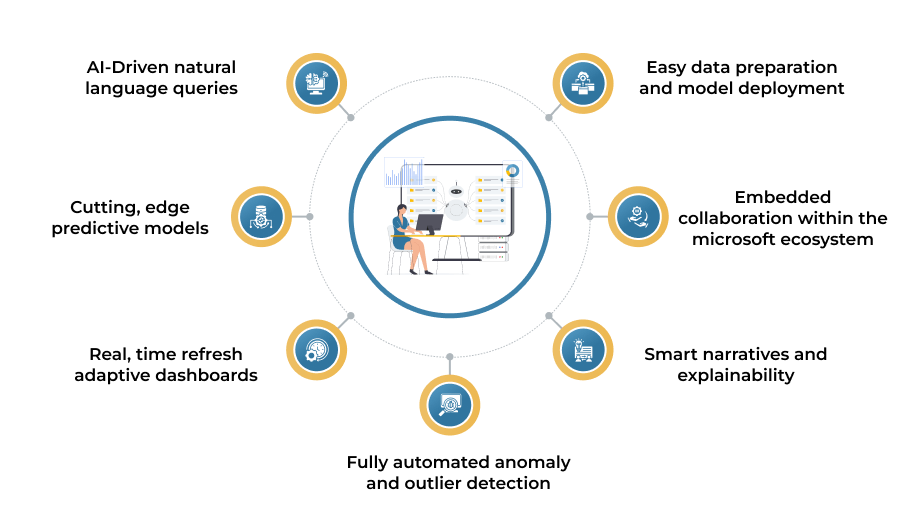
Organizations in almost every industry are faced with an overwhelming amount of data coming from various sources such as large data lakes, ERP systems, and operational platforms. However, just possessing huge amounts of data is not the goal anymore; it is the process of converting that raw data into understandable, actionable intelligence that actually generates business value.
The use of AI, enabled Power BI is a major change in this transition as it completely automates and speeds up the way an organization moves from having too much data to obtaining accurate, predictive insights that lead to better financial decision, making.
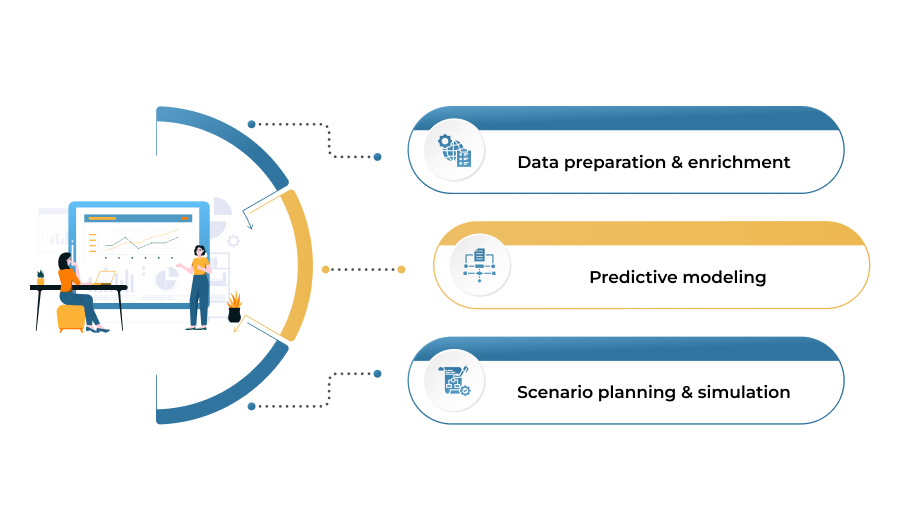
A manufacturing company used Power BI AutoML to analyze five years of supplier payment data. The AI identified a recurring pattern: payment delays consistently occurred before logistics bottlenecks. The company used these insights to predict cash flow disruptions and adjust supplier strategies in advance.
The results were impressive. Within one quarter, overdue receivables dropped by 22%, improving both liquidity and operational stability.
AI-powered finance goes beyond faster calculations. It transforms raw financial data into predictive insights that help organizations identify risks, uncover growth opportunities, and make proactive decisions. As markets become more volatile, predictive intelligence gives finance leaders a clear competitive advantage.
With Power BI, organizations replace guesswork with data-driven decision-making. Finance teams gain greater confidence, improve forecasting accuracy, and make strategic decisions with clarity and foresight.
Conventional financial reporting is based on monthly or quarterly cycles, which are great for looking back but are too slow for today’s rapidly changing markets. In a digital, first world, finance leaders simply cannot keep the old waiting game. They require live telemetry, or “insights in motion, ” to be able to react immediately to changes in the market, operational challenges, and new opportunities.
Power BI has changed to fulfill this requirement by being able to connect directly to streaming data sources such as IoT sensors, ERP systems, payment gateways, and cloud applications, thus generating a continuously updated “live data fabric” that is the source of real, time financial intelligence.
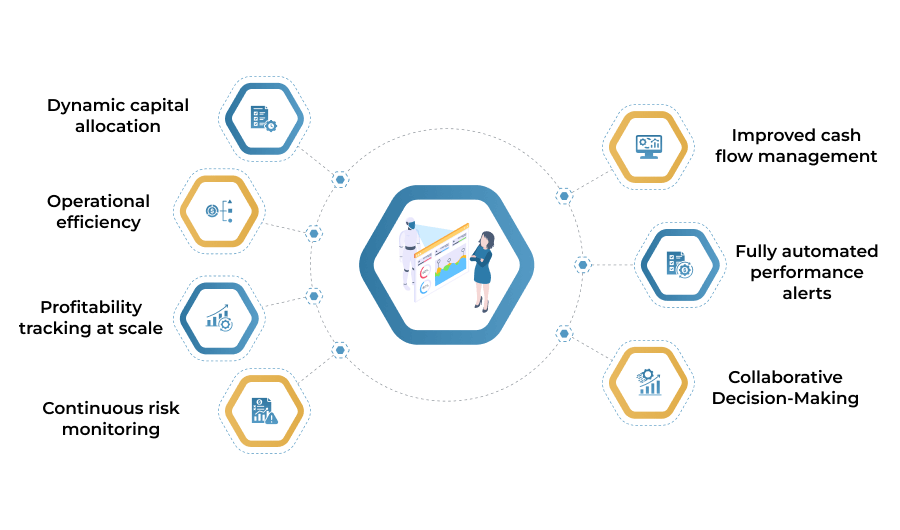
Risk management has evolved from a reactive process to a proactive, data-driven strategy. Instead of responding only after problems arise or regulations change, organizations now use AI to identify, predict, and manage risks in real time. This helps businesses make faster, more accurate, and more confident decisions.
Power BI with AI enables organizations to strengthen risk management through advanced analytics and predictive insights. Finance and risk teams can identify emerging threats earlier, respond proactively, and improve decision-making across the organization.
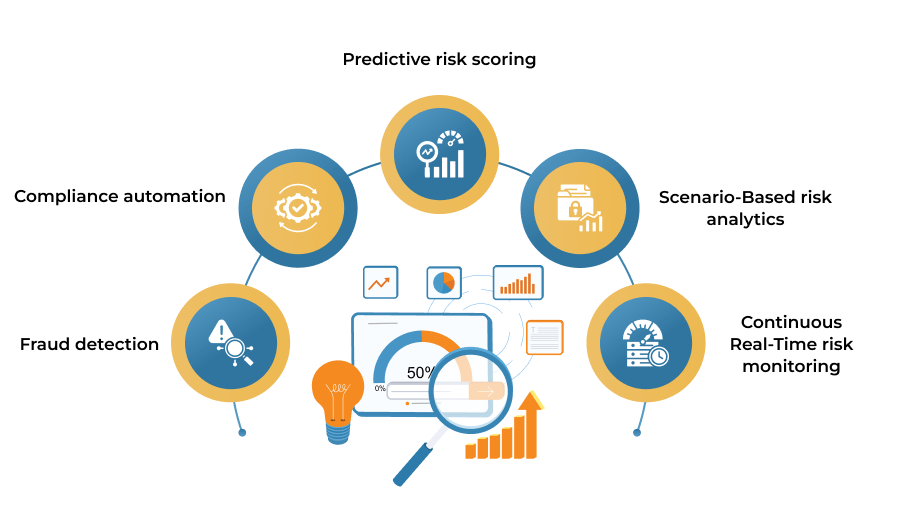
Banks and fintech companies using Power BI with AI have reduced false fraud alerts by up to 31%. This improvement increases operational efficiency, strengthens regulatory compliance, and enables faster fraud investigations. Across the financial industry, organizations are adopting AI-powered risk management to move beyond fraud prevention. It also helps them make faster, more confident, and data-driven decisions that support long-term growth and business resilience.
The direct integration of AI models into finance dashboards is a major change to intuitive intelligence that is driven by the workflow. Basically, the seamless integration is a game changer on how data and analytics become continuous intelligence that is readily available and actionable by the finance teams. Now, these teams have the power of anticipation, reaction, and optimization at their fingertips within one interface.
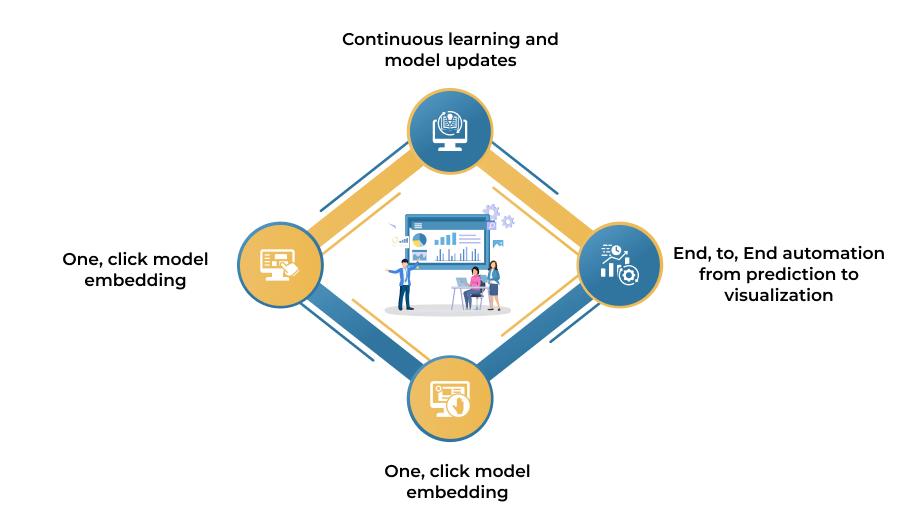
Power BI with AI transforms finance from traditional reporting into intelligent decision-making. Organizations gain real-time insights, automate routine analysis, and turn predictions into business actions. As a result, finance teams become more agile, strategic, and data-driven.
Kraft Heinz
The finance team got real-time profitability and market metrics through unified Power BI and Azure data streams. As a result, they made rapid operational changes and used their capital in a more intelligent way.
Jacobs
With Power BI, centralized financial oversight provided live, transparent views of project costs, resources, and budgeting, thus fast, accurate reporting and forecasting were made possible.
Marks & Spencer
By automating financial processes with Power BI and Synapse Analytics, the company was able to speed up its revenue trend insight, thus strengthening risk management and increasing profitability.
Meijer
The company converted its abundant data into a valuable resource that allowed it to efficiently conduct trend analysis and manage inventory through Power BI’s AI capabilities.
Metro Bank
The bank automated its data consolidation and reporting processes with Power BI. As a result, strategic decisions are now taken on the basis of timely, actionable, and reliable insights.
The major change in finance is autonomous systems that learn, adapt, and optimize with very little human intervention.
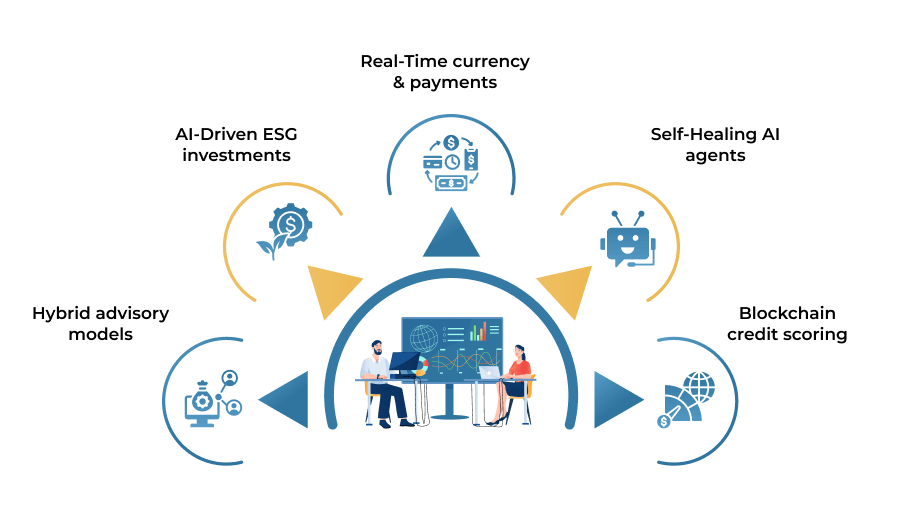
The integration of machine learning for planning and quarterly predictions is now seen in one in four finance departments. Autonomous finance and embedded AI have moved past buzzword phases and are disrupted on a new level enterprise.
Companies can no longer afford to treat AI-driven finance technology as an optional benefit for their customers; they must adopt it to remain relevant. The combination of Power BI and AI creates predictive analytics and intelligent automation for enterprise-wide financial decisions. The accelerated pace at which markets are changing means that companies that embrace new technologies will have the strongest competitive advantage and the most opportunities with the least amount of risk.
At MegaMinds, our mission is the same as yours: make your financial data more valuable. Specifically, we focus on interactive dashboards, AI analytics, and smarter financial technology to help your company make decisions and achieve optimal performance and growth, even with the increased and continuing data deluge.
19 Oct 2026
15 Oct 2026
12 Oct 2026