How Power BI’s AI capabilities help OEMs optimize production planning?

OEMWeb development
Apr 21, 2025
6 Min Read
How Power BI’s AI capabilities help OEMs optimize production planning?

OEM pressure for the improved quality of products at faster speeds and lower costs with less waste is intense. But instead of producing predictable demand, unpredicted downtimes, fragmented data, and quality issues, profit is undermined. 

Power BI fully utilizes AI-driven analytics and proves to be the game-changer Manufacturing (OEMs). Instead of just raw data, Power BI promises actionable insights such as demand forecasting, downtime prevention, data silo unification, and broadens the quality scope. In this blog, we take you through the journey of leveraging this capability to optimize production planning, reduce costs, and outperform competitors.

Unpredictable Demand Fluctuations

Problem

Demand unpredictability is one critical issue faced by OEMs across industries:

  • Inventory imbalances leading to stock outs or excess inventory (estimated at an average of 25% of inventory value per annum)
  • Production scheduling inefficiencies compelling orders to be rushed or causing idle capacity
  • Resource misallocation in terms of inefficient labor, material, and equipment utilization
  • Cash flow constraints due to production not in sync with actual market demand
Power BI AI Solution

Sophisticated AI in Power BI helps complete OEMs in having tools for approaching and fighting against volatility in markets. Time series forecasting algorithm analyzes historical patterns and simultaneously considers parameters like seasonality, market trends, and external variables to make it possible to generate fairly accurate predictions regarding the demand.

Some important AI features that OEMs use to find work around with demand fluctuation are:

  • Advanced Forecasting Models: From the usage of the machine algorithms which improve with time when they use more data, the results reveal forecast accuracy between 85 and 95 % varying according to particular industries.
  • Anomaly Detection: It ensures that the overall could sense abnormality in their demands, so when time, it can automatically notify managers about those impending hazards before they hit production.
  • What-if Analysis: The production planners are successful in using the interactive scenario modeling, allowing them to simulate different demand scenarios and prepare contingency plans.
  • Natural Language Query: Business users ask a question about their demand trends using more common language and get answers immediately in visualized insights.

Downtime & Maintenance Issues

Problem

Unplanned downtime represents a massive drain on OEM productivity and profitability. Industry research indicates that unplanned downtime costs industrial manufacturers approximately $50 billion annually. For a typical OEM:

  • Each hour of unexpected downtime can cost between $10,000 and $250,000, depending on the operation
  • Equipment failures cause approximately 42% of all unplanned downtime
  • Traditional reactive maintenance approaches result in maintenance costs 3-5 times higher than predictive approaches
  • Mean time to repair (MTTR) averages 4-6 hours without advanced diagnostic tools

These statistics highlight the critical need for smarter maintenance strategies that prevent issues before they disrupt production schedules.

Power BI AI Solution

According to Power BI, the AI introduction in the system allows monitoring by well predictive maintenance with dramatically reduced downtimes and costs. It connects with IoT sensors, production systems, and historical maintenance records: a brainier maintenance intelligence platform.

The Answer is Incorporating AI methods in Maintenance:

  • Predictive Maintenance Algorithms: given the operational data, Power BI would be able to predict failure 1-3 weeks before the event with an accuracy level of 85-90%.
  • Anomaly Detection for Equipment Performance: Real-Time Identification of Unusual Behavior Patterns from Equipment Real-Time.
  • Maintenance Optimization: AI Discovering from maintenance history and suggesting minimizing disruption in productive time.
  • Visual Process Mining: generated visual representations of maintenance workflows to provide insight into bottlenecks and inefficiencies.

Data Silos & Inefficient Decision-Making

Problem

Manufacturing organizations still suffer from fragmentation due to their distributing different systems for production, inventory, quality control, and supply chain functions. The consequences are disastrous:

  • 30-40% of time spent seeking information from disparate systems by decision-makers.
  • 47% of manufacturing executives claim that they make critical decisions based on outdated or incomplete data.
  • Cross-functional visibility gaps lead to 23% average efficiency loss in production planning.
  • 3-5 days more time-consuming for a response to market changes or disruption while working in isolation with data.

Such fragmentation leads to blindness in OEMs’ real understanding of setting production plans, which could result in missed opportunities and poor resource allocation.

Power BI AI Solution

Power BI is all about breaking down the silos of the data because it combines information from many sources to produce intelligent, coherent dashboards. The AI capabilities of the same platform change this fused into actionable information that helps drive informed decision-making.

Key capabilities for addressing data fragmentation include:

  • Unified Data Model: Power BI integrates ERP, MES, CRM, Supply Chain, and IoT systems data into a single source model by creating the unified truth.
  • Automatic Data Refresher and Process: Ensures decision makers will always be accessing the best fresh current information at any time without preparation with manual data processing.
  • AI-Powered Insight Discovery: Automatically generates correlations, trends, or outliers from once disparate data sets.
  • Smart Narratives: Takes complex patterns of data and turns them into written explanations for easy digestion by business users.

Poor Quality Control & Waste

Problem

Quality issues and material waste represent significant drains on OEM profitability and reputation. The cost implications are substantial:

  • Quality-related issues cost manufacturers an average of 15-20% of sales revenue
  • First-time quality rates below industry standards lead to rework costs of 25-40% of production labor hours
  • Material waste averages 12% in traditional manufacturing environments
  • Each percentage point of scrap reduction can improve gross margins by 1-2%

Beyond the direct costs, quality problems damage brand reputation and customer relationships, with potential long-term revenue impacts that far exceed the immediate costs.

Power BI AI Solution

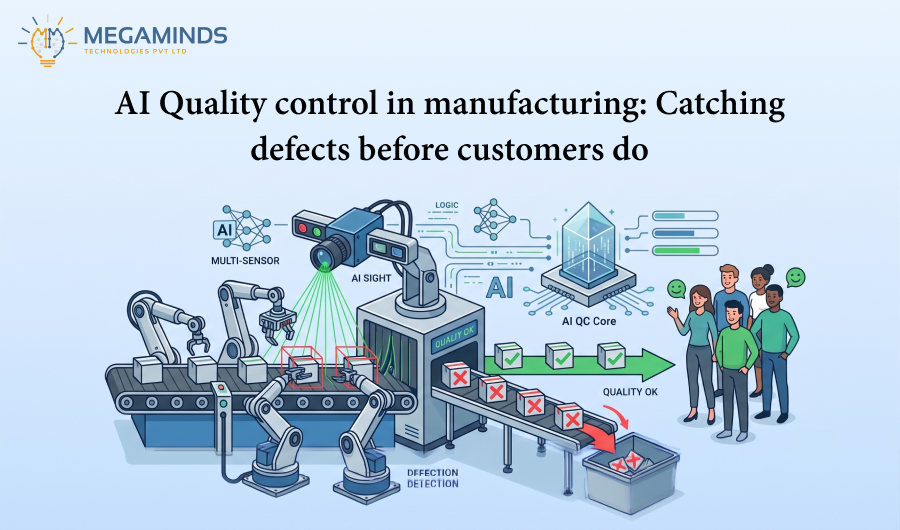
The transformation from a reactive approach to a proactive one in quality control is gifted by this feature of Power BI. In that regard, the predominant source of the analysis derives information about report results and production parameters to identify quality issues set in the process part of production even before a defective product is produced.

Key AI features for quality and waste reduction include:

  • Statistical process control (SPC) visualization with real-time monitoring of process parameters and automatic alerts when processes tend toward out-of-spec conditions.
  • Root causes analysis and identification of correlations by an algorithm-based AI between process variables and quality outcomes, tracking down the sources of quality issues.
  • Defect pattern recognition using computer vision techniques to discover very subtle patterns in visual inspection data that would tend to escape normal scrutiny.
  • Material utilization: Optimization by advanced analytics that will yield the best recommendations on making adjustments in a process that could minimize waste while still meeting quality standards.
Conclusion

In the manufacturing sector, the difference between thriving and merely surviving lies in how quickly businesses can adapt, optimize, and innovate. Power BI’s AI-driven solutions empower OEMs to not only predict challenges but also capitalize on opportunities with precision.

From navigating unpredictable demand fluctuations to ensuring consistent quality control, Power BI transforms production planning into a data-driven, proactive process. Contact us today , specializes in helping OEMs unlock the full potential of Power BI to drive operational excellence and long-term growth.
FAQs

Can Power BI help reduce production downtime?

How does Power BI break down data silos in manufacturing organizations?

Is Power BI suitable for real-time monitoring of manufacturing KPIs?

How does Power BI support anomaly detection in production data?

Is Power BI customizable for different manufacturing processes and requirements?

Can Power BI integrate with existing ERP and manufacturing systems?

Related Posts