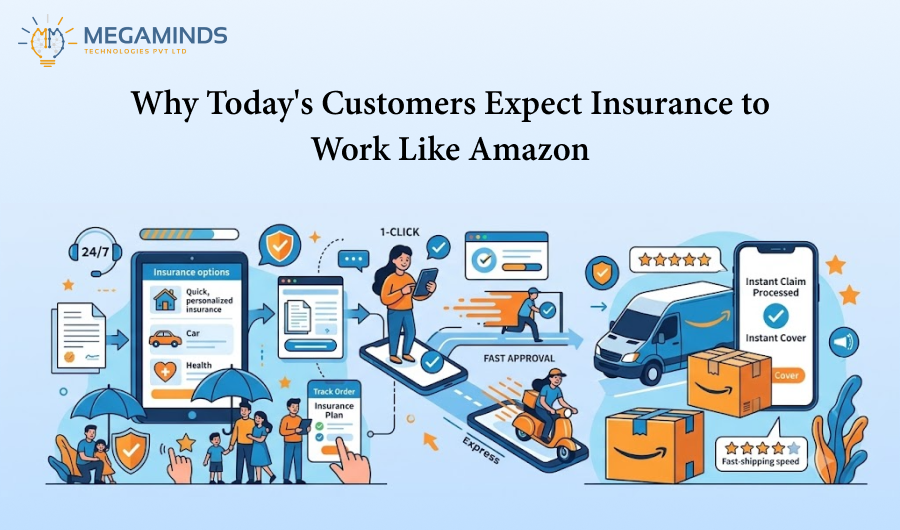
Why Today’s Customers Expect Insurance...
12 Oct 2026

Insurance companies can minimize losses and create safer operational areas through predictive analytics. Systems integrate historical data and real-time data to define risk, underwrite and make claims assessments, and even identify and intercept the potential risk of fraud. Through predictive analytics, forecasts and risks are transformed into proactive steps to lower the financial impact and increase operational efficiency of insurance carriers.
Nowadays, businesses are clearly overwhelmed by AI in 2026 operations. The number of models keeps increasing, dashboards become more and more, and pilots take up the resources without bringing any steady returns.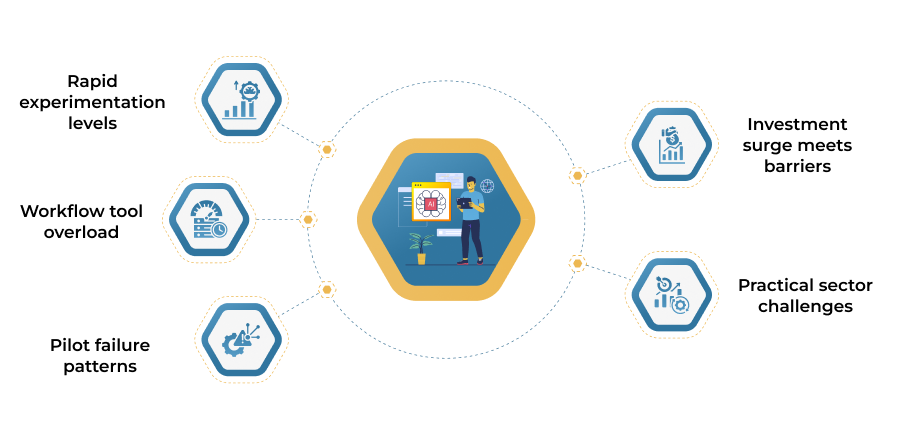
Traditional business intelligence focused on answering the question:
What happened?
AI expanded this to:
What will likely happen?
But enterprises in 2026 must answer a far more critical question:
What should we do now—and why?
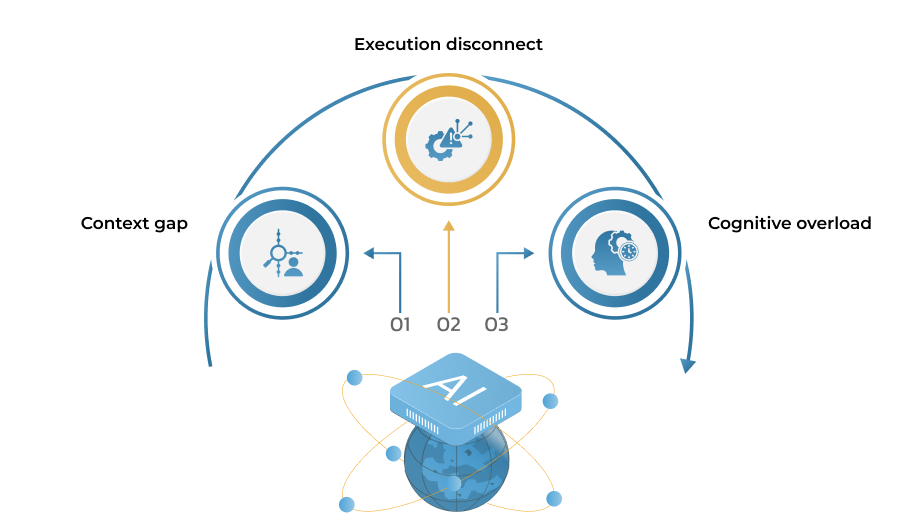
Most analytical tools only show numbers, charts, and trends, but these don’t always reflect actual business conditions. These tools rarely consider factors like risk appetite, compliance regulations, supply shortages, or the work experience of the frontline teams. Therefore, although leaders can see the data, they still have to work out what it really means for their situations.
Insights are typically presented through separate dashboards that are not integrated with the systems where the work actually takes place such as ERP, CRM, or logistics. This necessitates the teams to be constantly switching between tools, delayed decisions, and generally, it becomes more difficult to act promptly.
Leaders may get a little lost amidst a sea of reports, forecasts, and KPIs. Overabundance of information can sometimes block the path to “action” and eventually cause “analysis paralysis” where the decision, making is deferred.
Decision Intelligence solutions help to overcome these issues by integrating insights into daily work processes, aligning suggestions with business objectives, and providing decision, makers with clarity and confidence thereby enabling them to make the best decisions.
Decision Intelligence is more than just a new iteration of analytics; it is a field that integrates data science, behavioral science, and operational systems to support and improve decision, making at the organizational level.
By 2026, Decision Intelligence entails: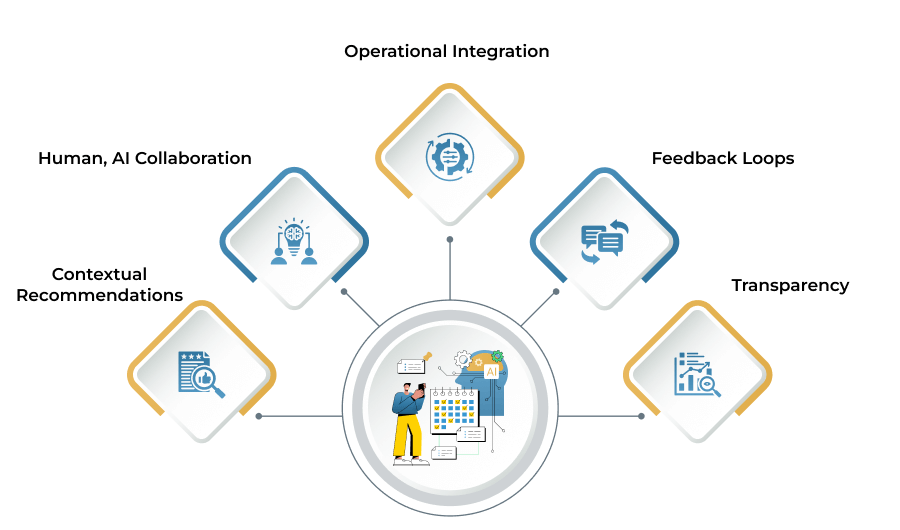
Consider Decision Intelligence as the difference between:
The trajectory of Power BI tools basically mirrors how our interaction with data has changed over time. At first, Power BI changed the game for businesses by explaining “What happened?” via visually engaging, interactive dashboards. Then, it incorporated AI, using tools such as Azure Machine Learning and Cognitive Services to answer the question “What could happen?” through predictive forecasting, thus making the leap from descriptive to predictive analytics.
Currently, we are on the cusp of the next stage: giving decision, making the right context. This change is driven by a closer connection of the entire Power Platform ecosystem. The intention is no longer just to present a graph showing a drop in sales. A regional manager not only sees the sales decline but also, through the embedded AI model, the manager can identify the most probable cause (for example, a competitor’s promotion) and immediately be able to interact with a small Power App, which is integrated in the report.
Such a transformation makes Power BI a tool that actively helps you to interact with your data instead of just being a passive window into it. It reduces the time taken to move from insight to action from days down to minutes and, in essence, turns every report into a potential intervention point.
AI is shining in 2026 by reducing decision uncertainty rather than automating humans out of it. Predictive models provide 85% confidence scores, scenario simulations test “what, ifs, ” and anomaly detection flags risks.
Supply chain companies use simulation technology to evaluate disruptions and discover alternate routes within seconds while e, commerce adjusts inventory instantly.
It gives power to making decisions: AI as a co, pilot gives insight, people contribute ethics and subtlety. Probabilistic AI and reinforcement learning develop better models of complexity, thus, increasing confidence in tricky sectors like healthcare.
Did You Know? 35% efficiency gains come from AI slashing manual analysis in Accenture-studied firms deploying DI.
Another significant factor that will facilitate Decision Intelligence in 2026 is the exponential expansion of low-code and no, code platforms. These solutions allow enterprises to implement insights into actions at a greater speedwithout having to go through lengthy development cycles or getting the IT department heavily involved.
How Low-Code Supports Decision Intelligence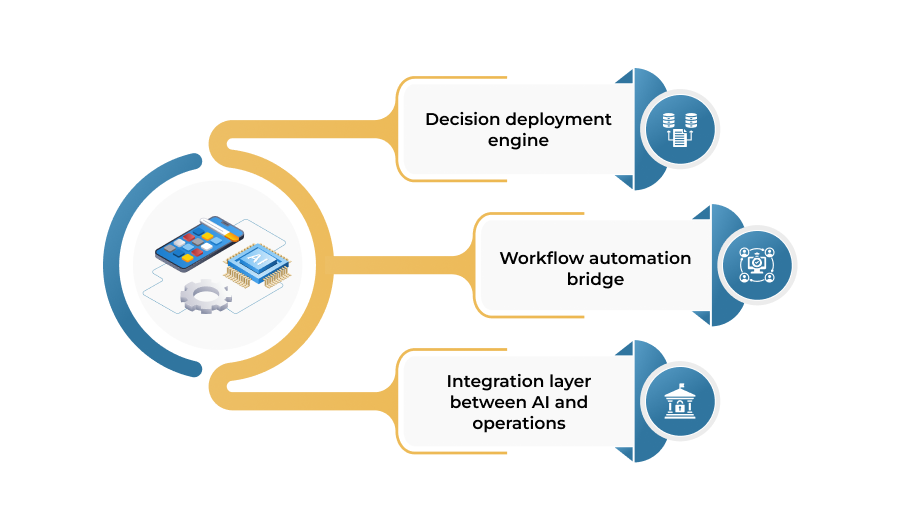
Enables companies to rapidly turn analytics and AI insights into tangible, increasingly decision, making tools.
Brings insights straight into daily operations so employees can take action without changing systems.
Connects AI models to businesses applications such as ERP, CRM, and supply chain platforms.
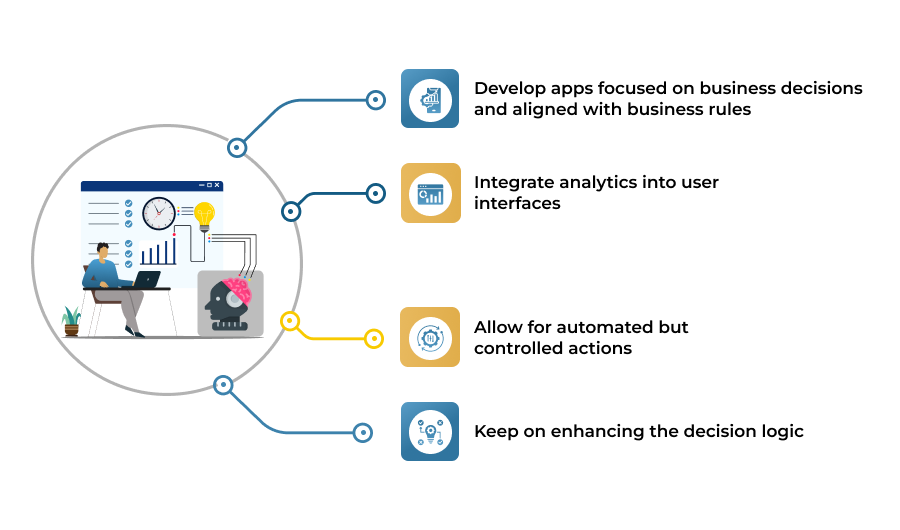
Make decision support tools that help employees to know what actions should be taken based on the data.
Present the insights within the applications that users are already familiar with, rather than separate dashboards.
Facilitate automation without losing control, approvals, and compliance.
Modify the workflows easily and frequently as the business requirements, data, or strategies change.
Why This MattersBusiness professionals, not just developers, can create and improve decision-making processes with low-code. This guarantees that intelligence is used where it matters most and expedites adoption across departments.
Low-code is no longer just about building apps faster.
It’s about turning insights into action faster.
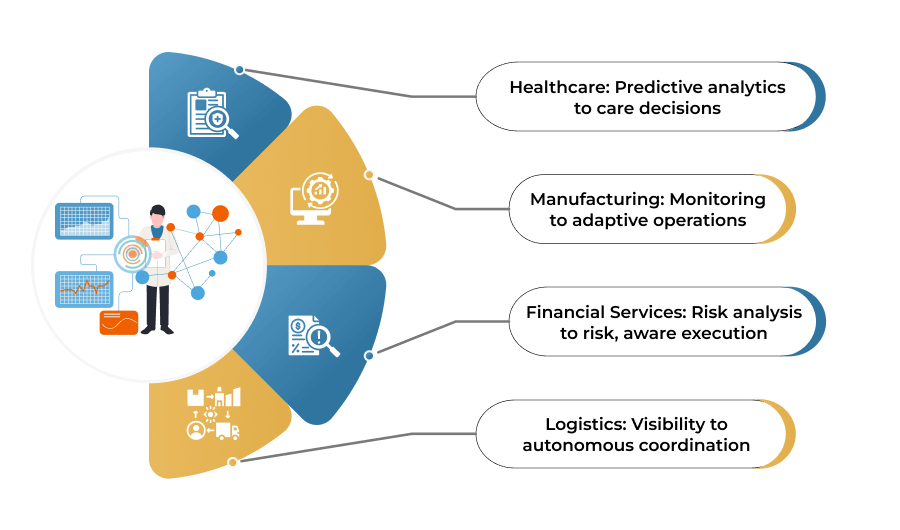
Healthcare: Predictive Analytics to Care DecisionsInitially, hospitals used analytics only for predicting patient demand. At present, Decision Intelligence systems are capable of recommending in detail staffing models, treatment prioritization, and resource allocation based on real, time clinical and operational signals.
Manufacturing: Monitoring to Adaptive OperationsFactories are stepping out of the scope of predictive maintenance dashboards and into automated decision environments that can dynamically adjust production schedules, supply sourcing, and quality interventions.
Financial Services: Risk Analysis to Risk, Aware ExecutionBanks no longer simply rely on risk scoring. Decision Intelligence platforms help to determine lending strategies, fraud mitigation responses, and portfolio changes with embedded governance.
Logistics: Visibility to Autonomous CoordinationLogistics companies, instead of shipment tracking dashboards, are developing decision, driven orchestration systems that can decide about routing, fuel usage, and delivery prioritization optimization in real time.
Across sectors, the competitive edge is no longer determined by the possession of AI but by the ability to make faster and more confident operational decisions.
As artificial intelligence gets more deeply integrated into critical decision, making processes, issues of trust, accountability, and governance become the focus of attention. Decision Intelligence doesn’t treat this as an afterthought, rather it is one of the main pillars of the framework. A decision made “in a black box” is a decision that is not reliable and cannot be justified.
That is the point where the idea of Explainable AI (XAI) becomes a must. Any AI model that influences a high, stakes business decision should be able to explain its reasoning. In case a loan application is rejected the system must be able to point out the main reasons behind the decision. Such transparency is a great trust builder among users and is one of the key factors for meeting regulations.
In order to establish distinct lines of accountability, a robust governance framework is also required. Even though AI might recommend a course of action, humans must always be “in the loop” and ultimately make the final decision. The Decision Intelligence framework should be an unchangeable record of audit, documenting the data that was used, the model version that produced the insight, the options that were presented, and the final human decision, maker. Hence, a mechanism is established whereby decisions are not only wiser and quicker but also more open, moral, and capable of being defended.
The adoption of AI was the race for the leading technology of the early 2020s. However, by 2026, the advantage in competition will be mostly dependent on the efficiency with which organizations can convert intelligence into action.
Decision Intelligence is this next step in the evolution where data, AI, human expertise and operational systems collectively enable quicker, safer and more strategic decision, making.
Companies that integrate this approach will no longer experiment but by making their transformations visible through their metrics, they will cut down uncertainty while speeding up their results. On the other hand, those that keep concentrating only on the outputs of analytics may end up having lots of insights but no execution skills. The ones that will succeed in the future are the organizations that not only analyze better but also decide better.
12 Oct 2026
08 Oct 2026
05 Oct 2026