Why Today’s Customers Expect Insurance...
12 Oct 2026


Smart factories lose millions because small, repeated interruptions across machines, workflows, and decisions go unnoticed and unaddressed in real time. These second-level delays go unaddressed, and accumulate across thousands of production cycles, noticeably decrease output, efficiency, and profitability. Even with automation, IoT, and AI, most systems still don’t detect these second-level delays.
Micro-delays persist throughout production cycles as small interruptions, creating temporary breaks in production. For the most part, they go unnoticed as there are larger breakdowns in equipment that, when compared, create a much larger problem.
Cumulatively, these small delays can lead to significant impacts.A production cycle delay of 5 to 10 seconds is still small, but across thousands of cycles each day, can lead to a dramatic drop in output.
According to studies conducted at McKinsey and Company, small operational inefficiencies and micro-delays are a large contributor to about 30 percent of the lost manufacturing capacity around the globe.
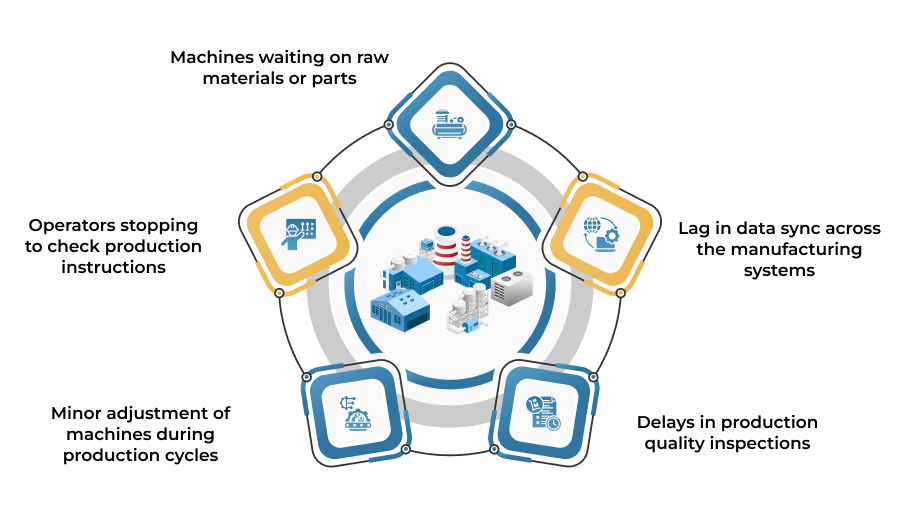
These delays won’t seem large on the surface, but repeated micro-delays over the production cycle will multiply, leading to significant loss in productivity and profit.
Smart factories have limited visibility into operational activities on a machine level despite numerous advancements.
Most traditional manufacturing systems only provide a broad overview of the production process. They do not provide real-time machine processes and events like micro delays. Operational data is required to expose these granular inefficiencies.
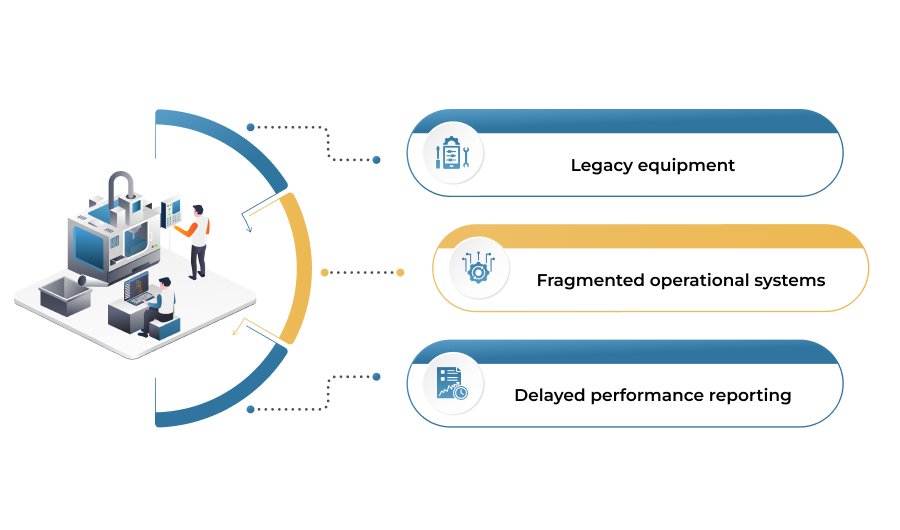
Manufacturing facilities with real-time visibility on machine-level operations is only 30% according to the World Economic Forum. For production efficiency, micro delays should be continuously monitored and addressed.
Without real-time monitoring, micro-delays remain invisible and continue affecting production efficiency.
Manufacturing operations have addressed problems on a case-by-case basis for many years. Teams respond with investigations after equipment fails or production is stopped in order to fix the problem.
This method fails to address micro-delays, which happen too frequently.With predictive operations, modern smart factories can use newly developed technology to develop micro-delays.
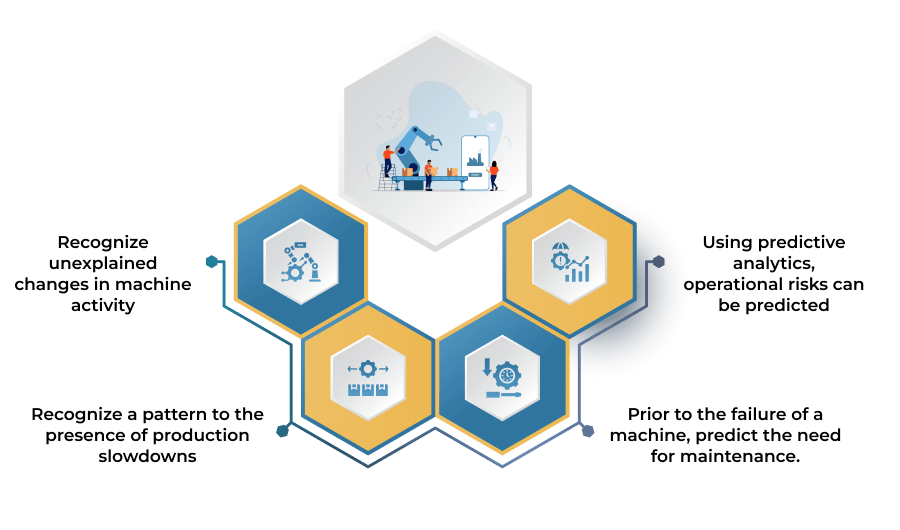
Deloitte has done a study and predicts the utilization of predictive analysis unapprised down time can be cut in 1/2 and operational efficiency can be increased by 10-15%
Manufacturers can minimize potential micro-delays that may develop in to a significant loss of productivity by downsizing operational disruptions.
Production imbalance across machines and assembly lines is another concealed source of micro-delays.
Most factories assign production workloads based on simplified historical averages, calendared weeks or months in advance. The real life production environment is ever-changing, and can include machine performance, scheduled and unscheduled maintenance, and turbulence in the supply chain.
A more dynamic approach can be achieved through Artificial Intelligence (AI) called AI-driven production balancing.
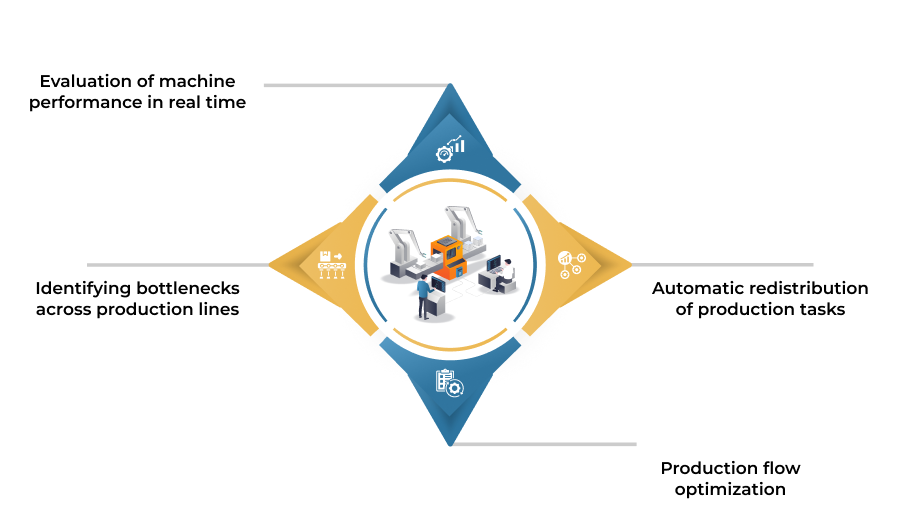
According to Gartner, AI-enabled teams report significant productivity gains, with many achieving faster operations and higher output using the same resources.
AI-driven work balancing is a means to contain the cascading effect of micro-delays on production lines.
A lot of organizations continue to handle operational insights and actions because of the insights and actions gap, regardless of whether the factory has insight.
Production analytics, for example, will provide insight about production delays. However, if operators receive this insight after the fact, delays will continue.
There are several reasons for this gap:
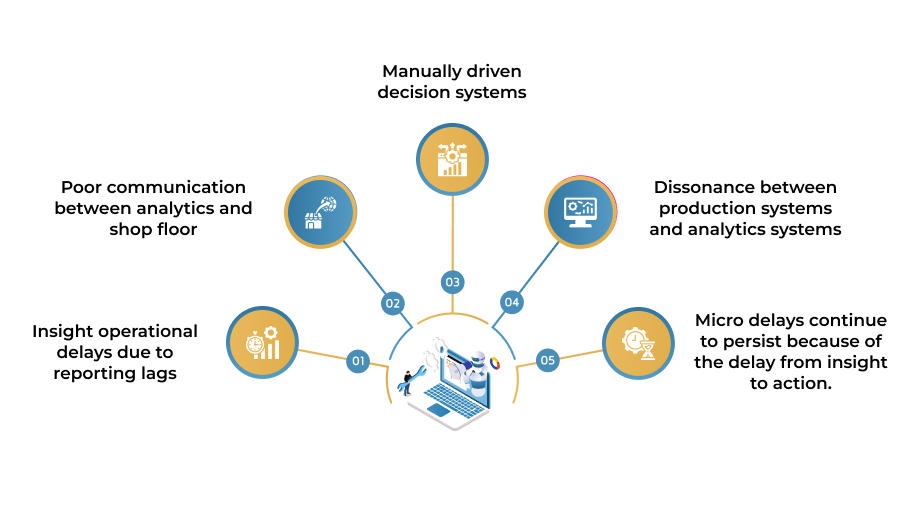
To handle this issue, smart factories are beginning to invest in digital operational control systems that send insights in real-time to the employees on the floor.
This allows for fast operational responses because employees receive alerts, suggestions, and automated actions that enable them to act efficiently.
The most efficient strategy for removing micro-delays is automating corrective measures. Automated systems can respond to disruptions in production processes without needing to interrupt a workforce.
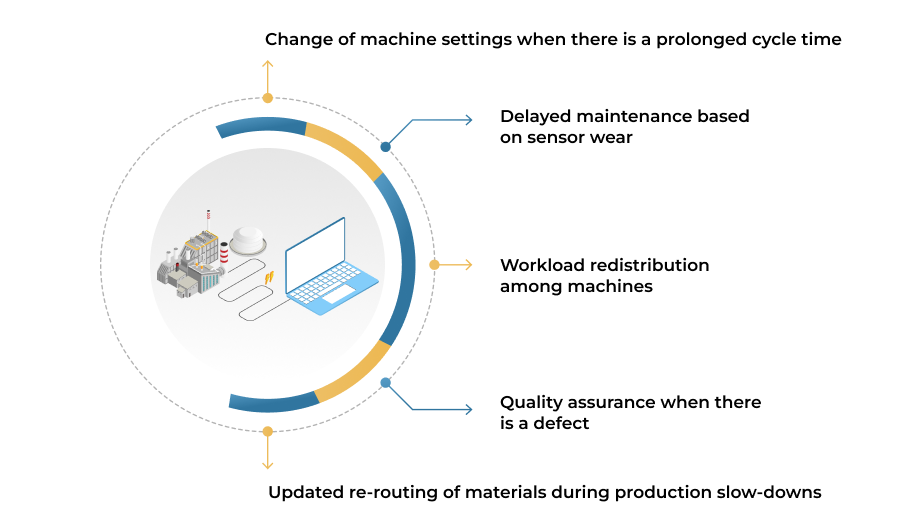
The Capgemini Research Institute states that intelligent automation can increase operational efficiency in manufacturing by 25%.
Automation turns smart factories into self-correcting ecosystems.
Defect rates, production output, and machine utilization have always been the main focus of traditional manufacturing KPIs. While these still matter, these metrics do not reflect the speed of shifts in operational issues, and speed is critical in assessing performance.
The modern manufacturing industry regards the speed of decision-making as an imperative metric of performance and shifts the focus from old operational KPIs
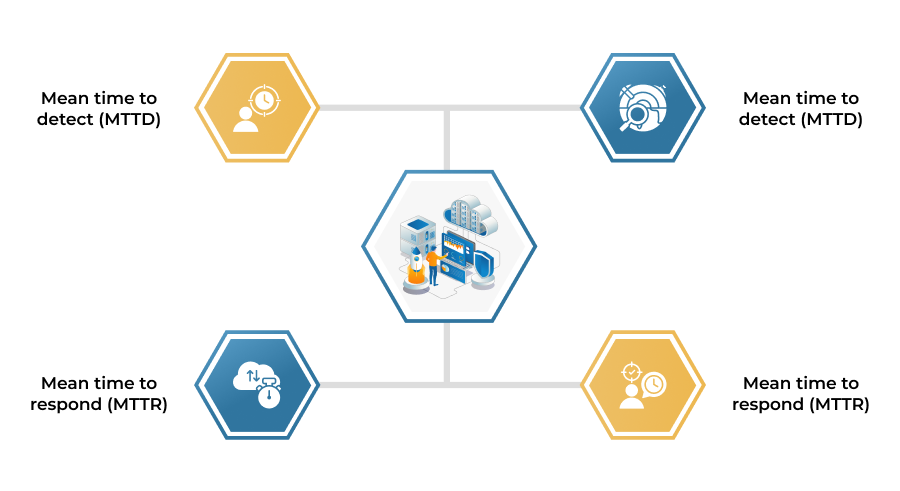
The response speed of operational decisions is the main predictor of productivity, and it has been proven by research carried out by PwC. The conclusion is that the speedier the operational decision cycle, the higher the productivity.
The next step in smart manufacturing is creating adaptable production ecosystems.In these ecosystems, the machines, software, and analytical systems adjust themselves automatically based on the real-time performance data they share with one another.The most important technologies in these self-adjusting production ecosystems include:
Real-time actionable data provided by connected IoT machines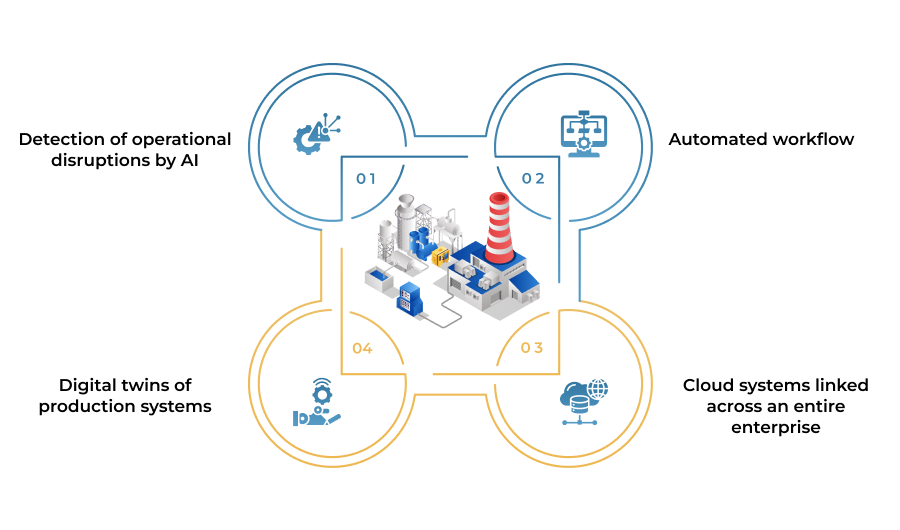
As stated by the Boston Consulting Group, manufacturers who implement Industry 4.0 technologies can realize 15-25% increases in productivity and up to 30% decreases in operational costs.
Self-adjusting factories will transform the manufacturing industry, providing unprecedented levels of efficiency.
With smart factories, technologies are transforming the monitoring and optimizing of the manufacturing process. However, technologies cannot address hidden inefficiencies if organizations do not manage the cumulative effect of micro-delays.
Micro-delays caused by small operational disruptions across machines, workflows, and decision processes, can result in diminished productivity worth millions of dollars annually. The solution to micro-delays lies in not only the identification of the disruptions but the implementation of corrective measures in real time.
Modern firms need to integrate the use of predictive analytics, AI-powered production balancing, automated corrective actions, and real time operational micro-delay intelligence.
The most successful factories of the future will not just be automated but adaptive, intelligent and self-optimizing. In today’s manufacturing, true efficiency goes beyond the speed of machines but the speed to which the organization identifies the problem and the speed of the organization in implementing corrective measures.

12 Oct 2026

08 Oct 2026
05 Oct 2026