Why Today’s Customers Expect Insurance...
12 Oct 2026

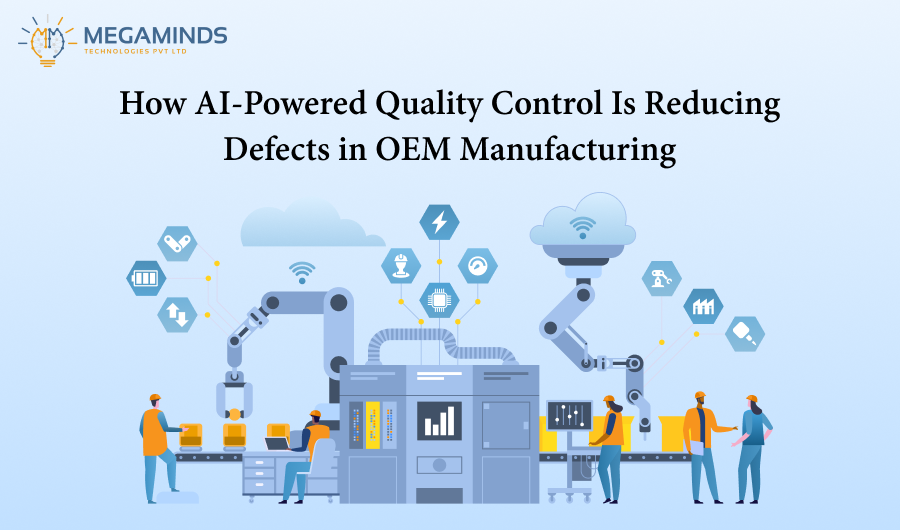
AI is enhancing quality control in OEM manufacturing by facilitating instant defect detection, automating inspections, and providing intelligent quality monitoring. Conflicting with traditional inspection methods that mostly depend on manual checks and sample testing, AI is always analyzing production data and product images to find defects in a fast and accurate manner.
Mainly, early detection of quality problems during production is a major benefit that manufacturers can leverage to decrease scrap, reduce rework, save on warranty costs, and standardize the output. Besides, manufacturing environment is becoming increasingly challenging, in which case, AI is supporting OEMs to uphold top quality levels, at the same time, improving their efficiency and lowering the risks of operations.
Machine learning, computer vision sensors industrial IoT devices, and advanced analytics in combination with AI powered quality inspection systems allow for continuous monitoring of production processes.
They can:
Traditional inspection systems operate based on their fixed rules, but AI always learns the production data step, by, step. It gets better at finding the quality problems as it gets more data.
AI, based inspection tools nowadays can examine thousands of items each hour and, at the same time, meet a level of reliability that human inspection alone cannot match.
Such ability is indispensable for OEM manufacturers where even small defects may cause huge expenses further in the supply chain.
Long-established quality control techniques face difficulties meeting the requirements of today’s rapid and complex manufacturing environments, despite many years of reliance on them. A majority of original equipment manufacturers (OEMs) still carry on with manual inspections and sampling, based tests, but these methods can leave major loopholes through which very costly defects may reach the consumers.
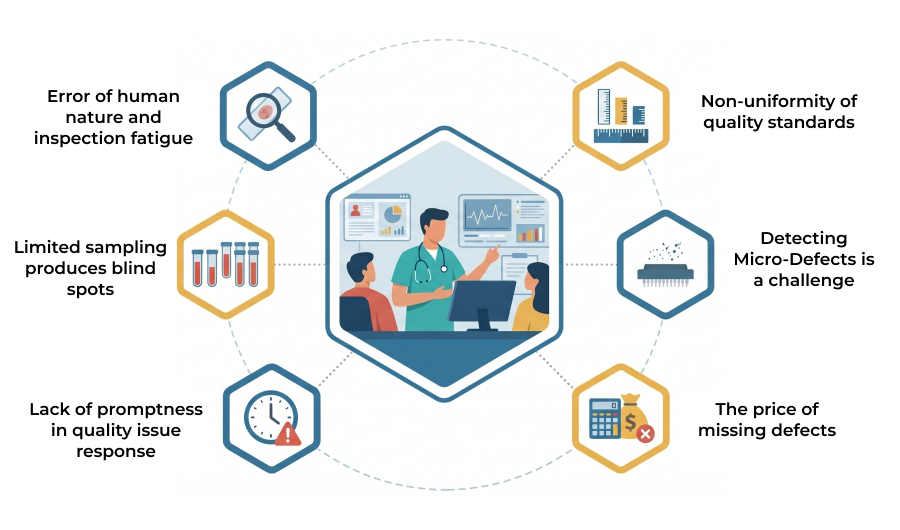
Error of Human Nature and Inspection Fatigue
Manual inspection relies heavily on human performance. After several hours of repetitive work, even experienced inspectors may miss subtle defects or apply quality standards inconsistently. AI-powered visual inspection systems can increase defect detection rates by up to 90%, highlighting the limitations of manual quality inspections.
Limited Sampling Produces Blind Spots
Traditional quality control inspects only a small sample of manufactured products instead of every unit. Although this approach saves time, it increases the risk of defective products going unnoticed. As a result, a single undetected defect can affect an entire production batch, leading to rework, product recalls, and customer dissatisfaction.
Lack of Promptness in Quality Issue Response
Manufacturers often discover defects only after completing the production process. By that time, hundreds or even thousands of products may already be affected. Even small quality-related delays can create hidden production losses, increase scrap rates, raise operational costs, and disrupt production schedules.
Non-Uniformity of Quality Standards
Different inspectors often interpret quality requirements differently. Studies indicate that inspectors agree on defect severity only 55% to 70% of the time. As a result, similar products may receive different quality evaluations depending on the inspector.
Detecting Micro-Defects is a Challenge
Human inspectors can easily miss tiny cracks, surface flaws, misalignment, and dimensional variations during repetitive inspections. Although these defects may seem insignificant at first, they can eventually cause product failures, warranty claims, customer complaints, and damage to a company’s reputation.
The Price of Missing Defects
According to the American Society for Quality (ASQ), the cost of quality includes prevention, appraisal, and failure costs. Quality-related expenses typically account for 15% to 20% of annual sales revenue for most manufacturers and can exceed 40% in poorly performing organizations. In contrast, world-class manufacturers keep these costs below 5% by implementing proactive quality management and advanced inspection technologies.
Computer vision is transforming quality control in OEM manufacturing by integrating AI with high, quality cameras and machine learning. These systems inspect products on the fly, make instant decisions about defects, and support manufacturers in delivering high, quality products consistently, all while minimizing the need for manual inspections.
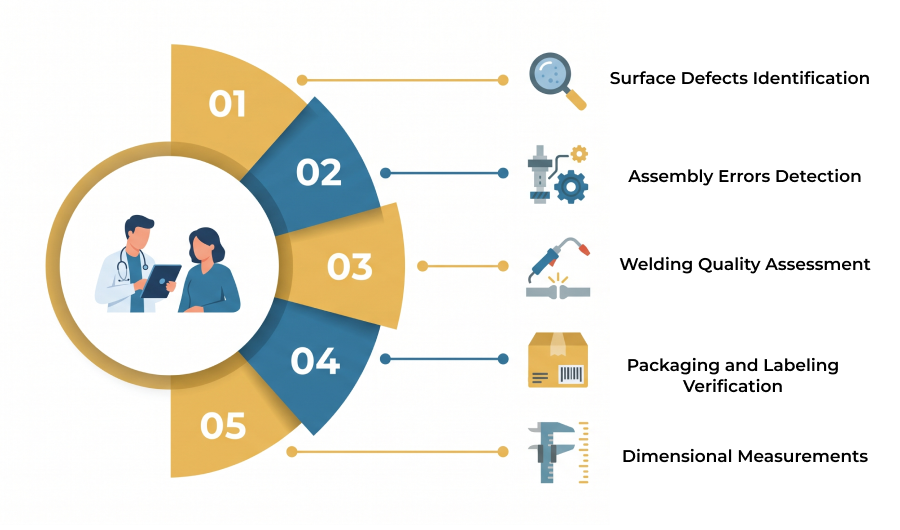
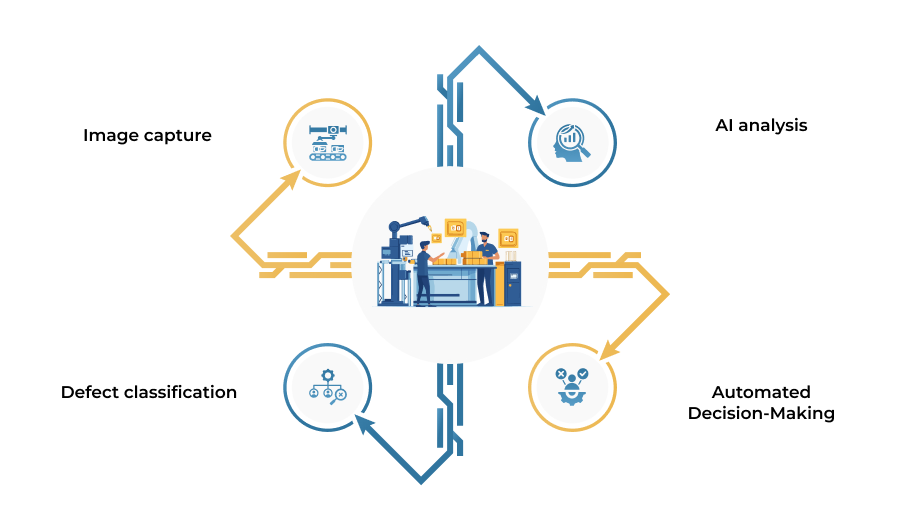
The latest research in the manufacturing sector shows that AI-enabled visual inspection tools could raise the defect detection rate up to 90%. This leads OEM manufacturers not only to enhance the quality of their products but also to effectively reduce inspection time and other related operational costs.
Unexpected quality issues are very rare. In most original equipment manufacturer (OEM) settings, problems are usually related to machinery performance, the quality of raw materials, the environment, or changes in the production process. Still, they can stay unnoticed for a long time Mainly when video monitoring and other real-time visibility tools are not utilized raising product quality and cost issues.
Intelligent quality control systems leveraging AI extract production, related datasets not only from machines and sensors but also from ERP MES IoT, and supply chain networks. Once the manufacturers have access to all these different streams of data, they can clearly understand the overall quality status of the production cycle.
The measured results are documented in the World Economic Forum’s Global Lighthouse Network, co-founded with McKinsey. In the September 2025 cohort, AI and generative AI enabled up to 50% of the top implemented use cases, producing a 41% decrease in product defects, a 28% decrease in energy consumption, and a 44% decrease in cycle time. That cohort also averaged a 40% boost in labour productivity and a 48% reduction in lead time.
Just detecting defects only after products are manufactured is no longer the best way. AI is the pillar of a more preventive quality control strategy which, among other benefits, allows Original Equipment Manufacturers (OEMs) to lower the volume of waste and rework, produce the same quality consistently, and use higher manufacturing standards.
AI powered automated inspection is ushering a change in OEM manufacturers from using reactive quality tests to proactive defect prevention. Rather than inspecting only a few products as before, AI systems can oversee each and every product, part, and manufacturing stage live to ensure that quality issues do not become problems that would cost quite a bit.
Among the top reasons is the ability to inspect 100% of the products. Each and every unit is checked for quality standards which means there is a much lower chance for defective products to slip through and reach the customers. AI also allows for instant detection of defects which means manufacturers can identify problems right away and make the necessary corrections before defects can spread across production lines.
Besides, automated inspection enhances traceability and process visibility which means teams can pinpoint the exact source of quality issues very quickly. Detecting defects early also means less scrap, rework, and production waste. Industry estimates show that AI, powered inspection systems can decrease defect rates by a whopping 30%, resulting in substantial cost savings and better operational efficiency.
Automated inspection for OEM manufacturers is not just a quality assurance method but a differentiating factor that enables them to produce products of the highest consistency, satisfy customers to the greatest extent possible, and showcase superior manufacturing performance.
AI, powered quality control has a value that stretches way beyond just identifying defects. Manufacturers of OEM can leverage AI’s real, time monitoring, automated inspection, and predictive analytics functionalities to enhance product quality, cut down their expenses, and optimize their operations in a highly competitive market.
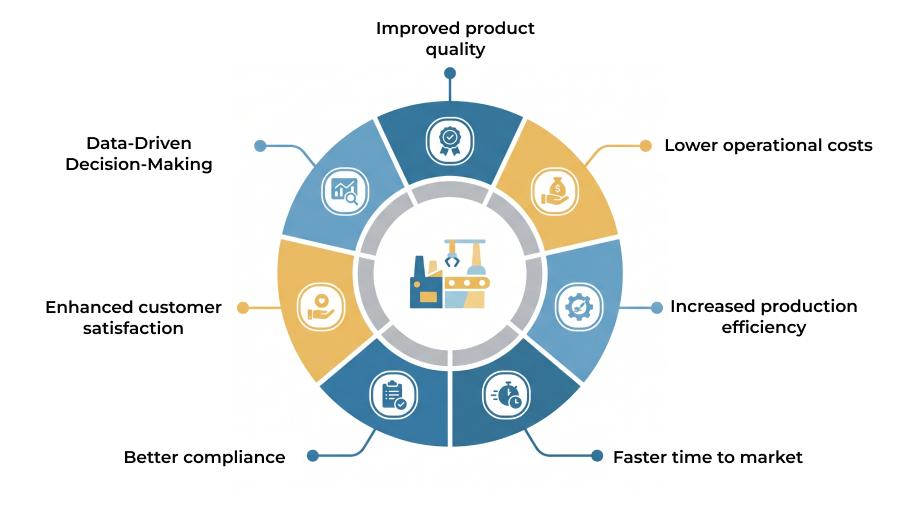
Improved Product Quality
By using AI-powered inspection systems that never become tired or distracted, manufacturers achieve a higher level of consistency and accuracy than manual inspections can provide. As a result, fewer defects reach customers, and more products leave the factory without requiring rework or repair.
Lower Operational Costs
When manufacturers detect defects early in the production process, they reduce scrap, rework, warranty claims, and product recalls. Lower defect rates also support more sustainable manufacturing operations. Poor-quality products can account for up to 15–20% of manufacturing revenue, making early defect detection a valuable cost-saving opportunity.
Increased Production Efficiency
Automated inspection systems operate 24/7 without slowing production lines. By replacing manual quality checks, manufacturers eliminate inspection bottlenecks and improve overall production efficiency.
Faster Time to Market
AI helps manufacturers maintain high-quality standards while accelerating production cycles. As a result, companies can deliver products to market faster without compromising quality.
Better Compliance
AI supports regulatory compliance through continuous production monitoring and accurate inspection records. These capabilities simplify audits and help manufacturers meet industry quality standards.
Enhanced Customer Satisfaction
Consistent product quality leads to fewer returns, fewer customer complaints, and greater product reliability. Consequently, manufacturers strengthen customer loyalty and enhance their brand reputation.
Data-Driven Decision-Making
AI collects and analyzes production and quality data in real time. Manufacturers use these insights to optimize processes, improve operational efficiency, and make smarter business decisions.
AI-powered quality control can bring a lot of value. Though, manufacturers should realize that deploying intelligent inspection systems is challenging. It is crucial for them to overcome technical, operational and organizational barriers to get the most out of their AI investments.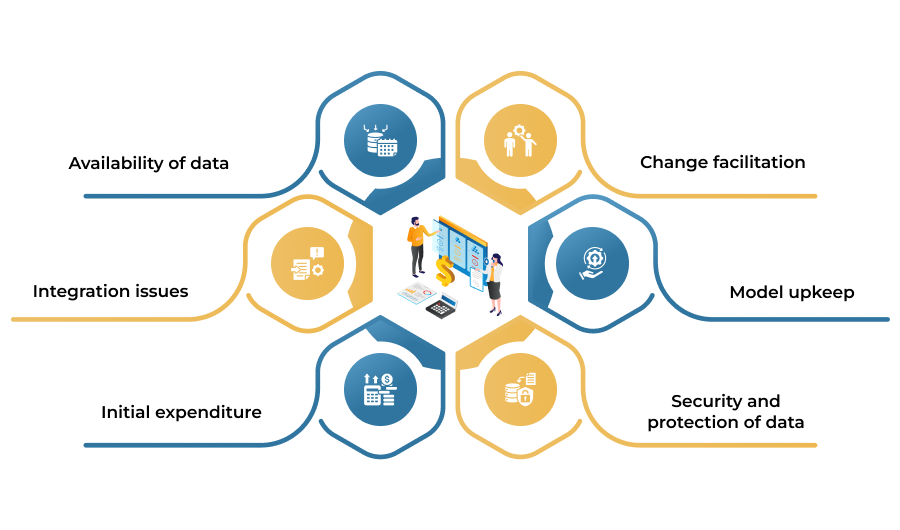
Availability of data
AI systems need a lot of good quality data to be capable of defect detection and pattern recognition. It may take manufacturers who do not have enough historical quality data some time to gather, arrange and prepare data to be utilized for AI training.
Integration issues
OEM manufacturers often use many old, fashioned equipment, ERP systems, MES platforms, and production technologies. Introducing AI inspection solutions in such environment necessitates thorough planning, technical know, how, and cross, team cooperation.
Initial expenditure
Cameras, sensors, software platforms, compute hardware, and deployment services carry real upfront cost. Deloitte’s 2026 Manufacturing Industry Outlook notes that implementation pace varies significantly by company size, with small and midsize manufacturers facing barriers from capital constraints to expertise gaps.
Change facilitation
Adoption of AI is successful, i.e. results in implementation of more than technology only. Quality and production personnel should also be trained to utilize inspection systems and follow new procedures and work instructions.
Model upkeep
Since products, materials, and production methods undergo continuous change, manufacturing settings are not stable as well. To uphold inspection accuracy and sustain long, term effectiveness, AI models need to be updated, checked and trained regularly.
Security and protection of data
With AI systems getting interconnected to IoT gadgets and cloud platforms, securing production data is really important. Manufacturers should have robust cybersecurity mechanisms to keep their operational data safe.
Artificial intelligence enhances quality monitoring in manufacturing. Using AI, organizations can identify defects, improve consistency, and lower the cost of quality.
In automotive manufacturing, original equipment manufacturers (OEMs) deploy AI-powered computer vision systems to assess the quality of welds, paint, and assemblies. McKinsey claims AI-assisted visual inspections increase the accuracy of identifying defects by nearly 90%, and decreases the number of product recalls and warranty claims.
In electronics manufacturing, AI systems assist the visual inspection of circuit boards and other components to find defects. Advanced analytics and AI techniques can improve product reliability by decreasing the number of defects by 35%.
In aerospace manufacturing, AI inspection systems aid manufacturers in identifying assembly defects, material inconsistencies, and small cracks. High manufacturing standards are required to ensure safety and remain in compliance with regulations.
In the manufacturing of industrial equipment, AI systems are used to monitor machining and assembly as well as quality of components. AI-enhanced quality systems increase effectiveness by detecting defects early and decreasing the need to rework the equipment.
In consumer goods manufacturing, AI systems assist the inspection of packaging and product quality to identify defects and prevent issues from reaching customers to improve quality and satisfaction.
AI-based quality control transforms inspection methods for OEM manufacturers. It builds advanced quality management systems that are faster and more reliable. The organizations that adopt AI inspection systems experience gains in four main areas.
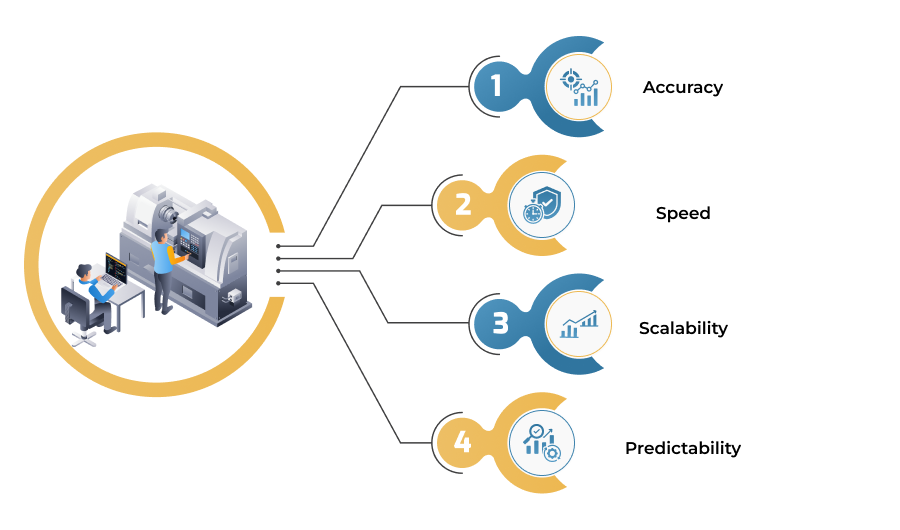
The combination of the aforementioned systems enables a strong and flexible manufacturing framework through a proactive approach to quality control. This helps optimize product quality and control costs.
Quality assurance in OEM manufacturing is transforming with advanced technology, especially with the evolving 4th industrial revolution. OEM manufacturing is integrating new forms of artificial intelligence to go beyond passive quality inspections to actively prevent problems before they happen.
Deloitte’s 2026 Manufacturing Industry Outlook identifies agentic AI systems that reason, plan, and take autonomous action — as poised to elevate smart manufacturing and operations, with adoption expected to grow considerably in the next few years. Deloitte’s 2025 Smart Manufacturing and Operations Survey found that 80% of manufacturers plan to allocate at least 20% of their improvement budgets to smart manufacturing initiatives, and that manufacturers view smart manufacturing as the primary driver of competitiveness over the next three years.
Technologies such as digital twins and Edge AI add to quality assurance in that they enable faster work to be done on the shop floor, and allow work to be done without the intervention of people. Autonomous manufacturing systems will allow manufacturing work to be done without constant modulation for quality assurance.
AI will add to the quality assurance of the supply chain. As these technologies progress, AI quality assurance will be used in OEM manufacturing to lower costs and improve efficiency and quality overall.
OEM manufacturers are adopting new methods of quality management through AI technology. Early detection of product defects, greater consistency of product quality, and lower costs of production are a few of the improvements manufacturers are experiencing using AI technology.
The future of manufacturing is here and it’s centered around AI technology. New methods to monitor product quality with AI at the forefront will help OEM companies gain the competitiveness, operational improvements, and greater client satisfaction they need to thrive in the ever changing field of manufacturing.

12 Oct 2026

08 Oct 2026

05 Oct 2026