From Manual Processes to Smart...
22 Oct 2026


The healthcare industry is being impacted greatly due to the enhancement of patient care, operational efficiencies, and low-cost service. Remote patient monitoring is transforming healthcare by enabling providers to track patients’ health from a distance. It allows healthcare teams to detect health issues early and respond quickly. As the demand for personalized, affordable, and accessible healthcare grows, organizations need innovative digital solutions. Microsoft PowerApps supports this transformation with its low-code development platform. It enables healthcare providers to build custom remote monitoring applications that address the unique needs of patients and healthcare systems across the United States.
For high-cost healthcare provisions that are often hindered by lack of access, PowerApps has a vast potential to improve healthcare delivery. While building applications from the ground up definitely involves quite a lot of coding, that is no longer the case with PowerApps; it simply helps healthcare providers in building applications for data management, patient engagement, and telehealth solution development. The global telehealth market size was valued at USD 142.64 billion in 2023 and is projected to grow from USD 161.64 billion in 2024 to USD 791.04 billion by 2032, exhibiting a CAGR of 22.0% during the forecast period.
Remote monitoring has its own challenges, which can limit the successful use of the system, as well as affect its adoption adversely. These hurdles must be carefully addressed to achieve the entire value expected from remote monitoring for improving patient outcomes and reducing costs in health care.
Over 51% of U.S. hospitals rely on 50+ disjointed software systems, leading to fragmented workflows and security vulnerabilities.
The primary challenge is that data from the various devices and systems does not come together. Data silos are a big problem for healthcare providers because they tend to refer to situations where patient information exists across separate platforms, making it difficult for healthcare professionals to have a view of the overall status of their ever-evolving health status.
Ensuring that patients in remote or underserved areas gain access to reliable connectivity poses a challenge by itself. Most rural communities in the US lack the proper infrastructure for smooth transmission of data needed for proper remote access monitoring by these programs.
Protecting patients’ health data is the first priority. The monitoring systems must comply with very strict regulations such as HIPAA (Health Insurance Portability and Accountability Act) regarding the security and privacy of patient information.
The challenge of engaging patients in remote monitoring programs and complying with the monitoring protocols. Motivation is required for the patients in order to use such devices incessantly to report appropriate health data.
The integration of remote patient monitoring data into existing workflows can be difficult. For example, healthcare providers need tools that will supplement their daily routines with remote data, but without unnecessary disruption to their workflow, yield informed decisions.
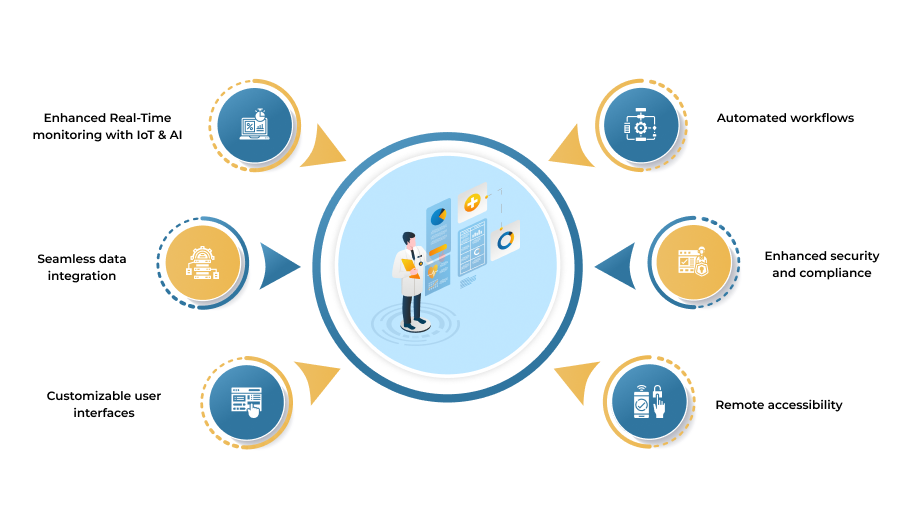
It addresses the challenges via a flexible yet easy-to-use platform for construction of custom remote solutions: PowerApps. Users do not need programming knowledge since it is a low-code platform and enables healthcare professionals to have their applications modified based on their necessity.
PowerApps can bring real-time views of vital patient statistics such as heart beats, systolic and diastolic blood pressures, and levels of glucose in normal cases as a result of the hospital integrating the applications of IoT-enabled medical devices. AI-analyzed data detection of anomalies will immediately alert healthcare providers to increase proactive interventions.
PowerApps can integrate seamlessly with several data sources, such as wearables, medical devices, or even existing health systems. They form data silos and thus ensure ease of access across different platforms by maintaining patient data at that first instance. For example, PowerApps could link to wearable sensors for gathering real-time health metrics such as heart rate, glucose, and blood pressure.
PowerApps will be able to develop user-friendly interfaces for a patient’s need, as well as for the clinical staff involved: on how they should wake up in different forms and with them, available on smartphones, tablet, and desktop PC versions.
The routing of automated work would be appointment scheduling, reminding patients to take their medicines, and even reporting data. With this streamlining of the processes, health care workers can concentrate on other more essential issues of caring for their patients.
PowerApps are indeed compliant with the security characteristics and specifications of standard industry standards, thus making privacy and security of patient data a priority in the health domain. This platform also provides compliance measures with laws like HIPAA for the utilization of such a tool by providers to safeguard sensitive information.
PowerApps applications are available remotely, thus providing an opportunity for continuous monitoring of patients by health professionals anywhere there is access to the internet. This access to the system is very beneficial, particularly to patients staying in rural and underserved areas, for whom conventional medical care is not available.
increasing its utilities in numerous remote monitoring applications within the healthcare enterprise. Those are the selected major use cases:
PowerApps assist in chronic disease management, allowing healthcare providers to monitor patients suffering from chronic diseases such as diabetes, hypertension, and heart failure at home. Patients can use wearable devices and home medical equipment to collect health metrics sent to their healthcare providers via PowerApps applications. This allows timely interventions and changes in treatment plans for improving patient outcomes as well as reducing hospital readmissions. For example, hypertensive patients can self-monitor their blood pressure levels and may receive advice from healthcare personnel without stepping out of their homes.
Protection and focus on all individuals recovering from surgery are PowerApps. Continuous vigilance of patients during their recovery allows early identification of complications. Cancer patients can log the symptoms in an app, click pictures of the surgical site, and communicate with their healthcare provider, again reducing the need to return to the hospital. This makes the patient even happier with the service experience.
PowerApps help in monitoring patients with mental health ailments remotely. Even with restrictions, automation permits these people to be exposed to online/holo therapy and have access to mental health resources. Patients can track their mood through apps, catch up with their medication intake, and connect with support groups. This is even more useful in the USA because of very limited access to mental healthcare.
The home healthcare setups have means of monitoring patients in their homes and PowerApps is the best tool to make the most of them. Week-home healthcare staff can use mobile phones to document class visits, verify medication dispensing, and keep in touch with other members of the care team. This efficiency and synergy in home healthcare seriously guarantee patients receive the care they deserve at the right time.
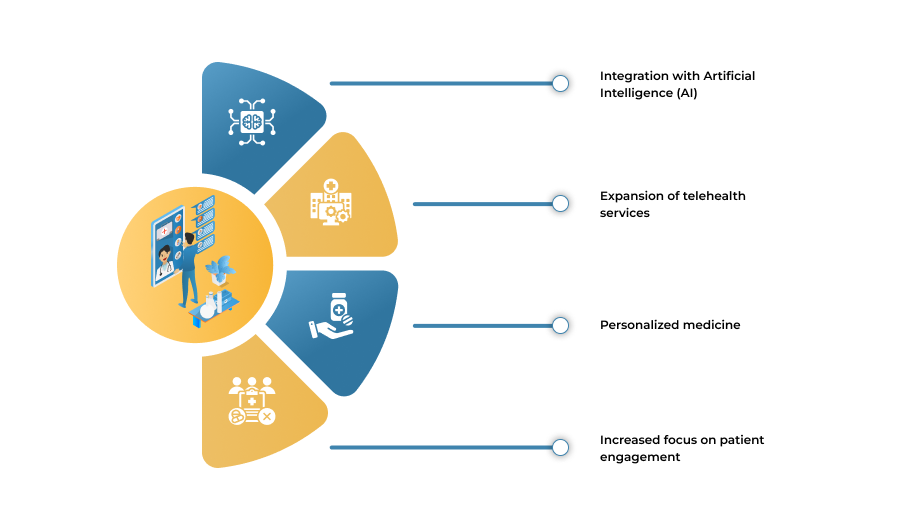
>>>>>>>>>>>>>>>>>>>>>>>>>>>>>>>>>>>>>>>>>>>>>>>>>>>>>>>>The future of remote monitoring with PowerApps is bright as it has got a number of transformations awaiting to usher in the future healthcare delivery in the USA as follows:
AI algorithms can be plugged into PowerApps applications for their analytical functions on remote monitoring data to detect deteriorating health patterns in a patient. This would enable any adverse intervention against the patient to be avoided by appropriate action from health providers.
PowerApps should allow providers to design holistic telehealth models-in remote monitoring and tele-consultation with tele-diagnosis-as a summation input for aggregating services that patients may access from the home.
PowerApps normally makes for the processing of personalized medicine applications and individualizes a treatment plan for each patient. The knowledge captured from remote monitoring is used in conjunction with genomic information and other constrained patient data to provide more effective and targeted care from health care providers.
Future remote monitoring solutions will focus more on patient engagement. They will encourage patients to take an active role in managing their health. PowerApps can support this shift by offering interactive applications with personalized advice, educational resources, and self-management tools. These features help patients make informed decisions and improve long-term health outcomes.
PowerApps is transforming remote patient monitoring in healthcare. It provides a flexible low-code platform that helps healthcare organizations overcome operational challenges. The platform integrates data from multiple sources and improves patient engagement. It also simplifies regulatory compliance, making it a valuable solution for modern healthcare providers.
As remote patient monitoring continues to grow in the United States, healthcare organizations should consider adopting PowerApps. The platform helps them remain competitive while improving patient outcomes. Its innovative capabilities enable healthcare systems to adapt quickly to changing industry demands.
PowerApps helps healthcare organizations strengthen their remote monitoring capabilities. It supports personalized patient care through connected workflows and real-time data access. As a result, providers can deliver more efficient, timely, and effective healthcare services.
If you’re interested to explore more about how PowerApps can benefit your organization or would like to discuss your specific needs, contact us today . We’re here to help you transform your healthcare solutions.
05 Oct 2026
21 Sep 2026
10 Sep 2026