From Manual Processes to Smart...
22 Oct 2026

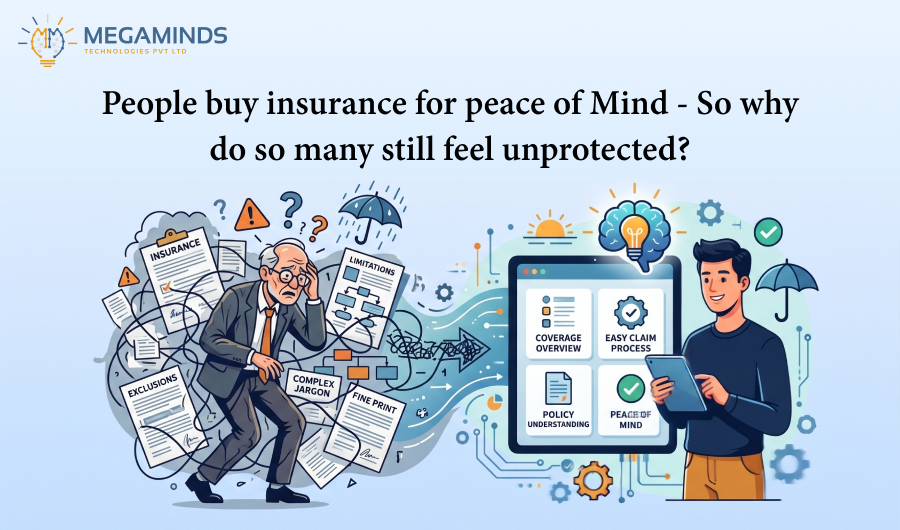
Individuals purchase insurance products in anticipation of achieving financial stability and reassurance. Nevertheless, there are still many individuals who are unable to gain that security due to confusion in understanding the terms of the policy, poor communication, unforeseen claims difficulties, or lack of coverage awareness until it is needed. Insurance companies in the modern world cannot limit themselves to just providing insurance products but should develop a customer-oriented approach.
Insurance has never been a matter of policies, premiums, and documents. Insurance means confidence all along. Today’s insurance customers evaluate insurers based on the overall experience they receive, not simply the policies they purchase.
When people buy health, life, motor, travel or business insurance, they bet on confidence in times of trouble. They rely on the guarantee that their insurance company will give them financial assistance in time of need and support them.
Nowadays, when people choose an insurance policy, they do not compare prices only. Instead, they ask themselves many other questions:
All of that comes from changing customers’ needs. As stated in Deloitte’s research on the insurance industry, nowadays customer experience plays an important role in insurance companies’ success being even more powerful than price advantage.
For insurance companies, it means that there is much more to success than selling policies.
Having an insurance policy doesn’t necessarily give customers a sense of security. Whereas an insurance policy gives a financial safety net, the feeling of confidence arises out of knowing what is covered and getting quality support during crucial moments. The majority of policyholders learn about their lack of coverage during claims.
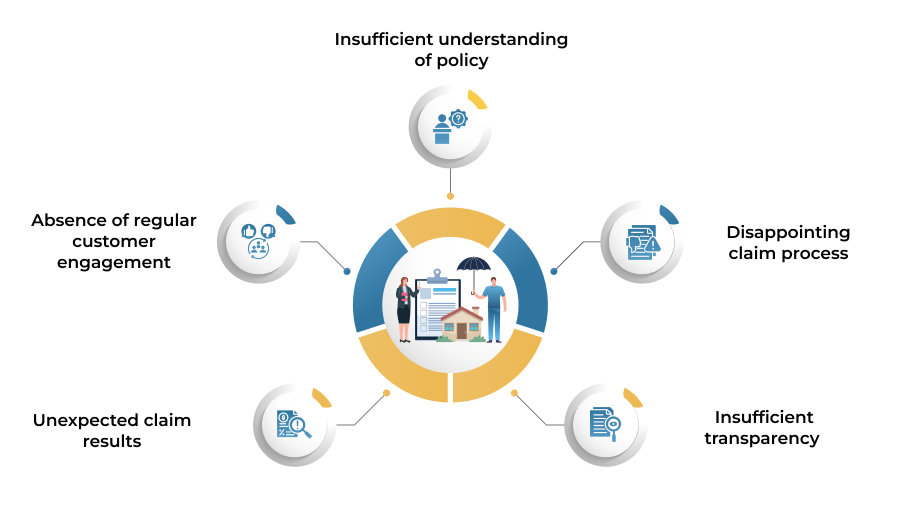
The clients expect full coverage when buying an insurance product; however, most of the times, their expectations do not coincide with the policies’ provisions. Some of the expectation gaps may include the following ones:
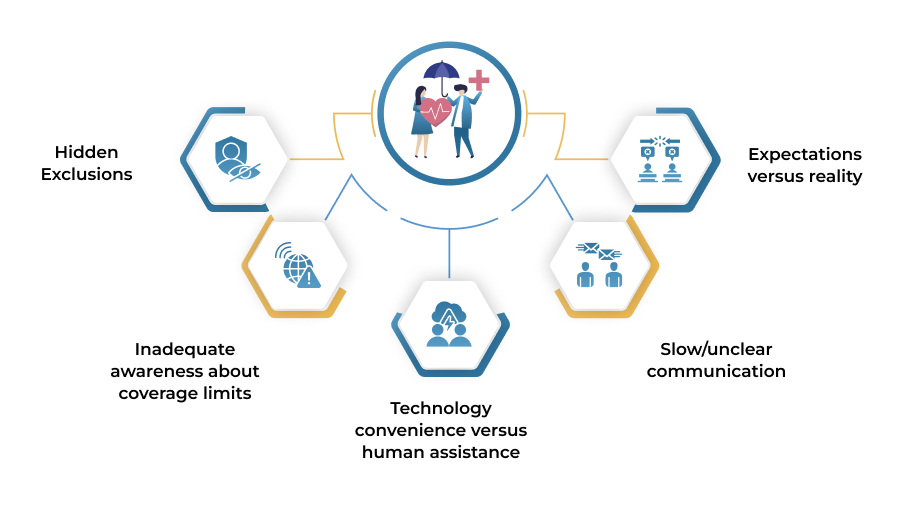
To close such expectations gaps, insurers should pay attention not only to product improvement but also to communication and client education.
Modern insurance policies have become more complex. They often include legal jargon and technical terms that confuse customers. According to the Deloitte 2025 Global Insurance Outlook, clear and simple communication plays a vital role in improving transparency. It also helps insurers build stronger customer trust.
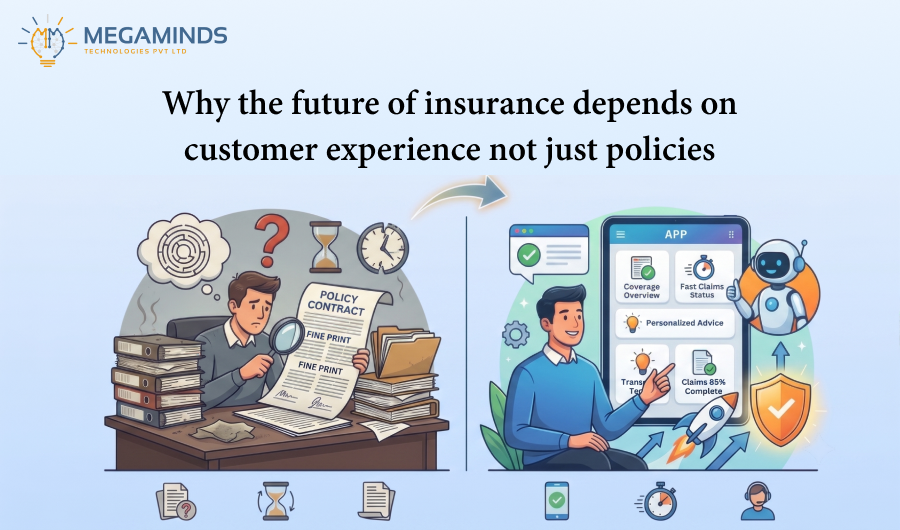
Most people have difficulties comprehending the details of the policy contract they sign, which creates problems related to understanding the specifics of insurance coverage, the list of exceptions, and claims requirements. The diversity of premiums, riders, deductibles, and add-ons also complicates the process of selecting an appropriate insurance contract.
If customers lack understanding of the policy they bought, they feel insecure regarding their insurance. It is possible to provide them with a simple overview of the policy contract and insurance coverage with the help of AI technology.
The real measure of an insurance company is in claims resolution. Sifting through endless claims paperwork can ruin an otherwise pleasant experience for the customer. The insurer’s offerings are only part of the value equation; the customer experiences more with the insurer in the claims resolution phase. Claims resolution will only become more automated in the coming years. The Accenture 2025 Insurance Consumer Study shows that processing claims using artificial intelligence improves customer satisfaction. Satisfying the claimant will only become more complex as personalization of the customer experience improves. customer loyalty.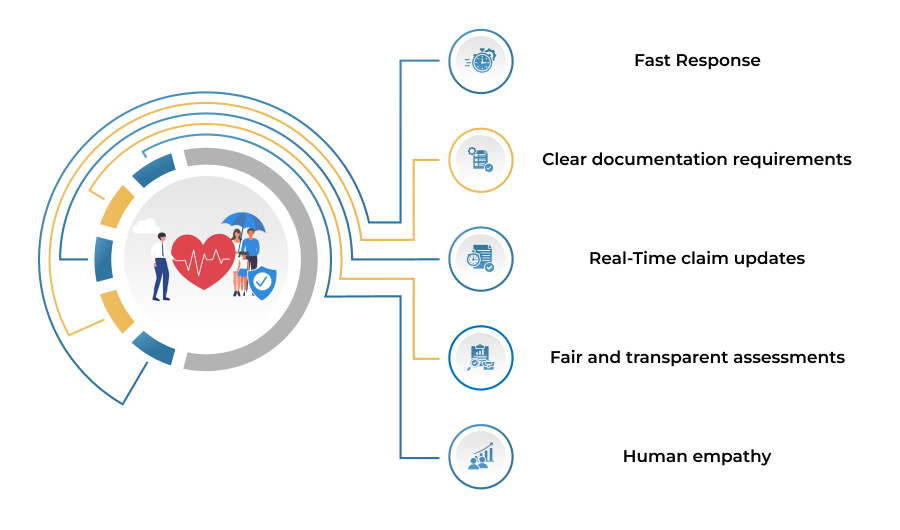
1. Fast Response
Customers require prompt response once a claim has been filed. Quick reaction gives customers peace of mind that the claim has been received and is being processed.
2. Clear Documentation Requirements
Clear and simple requirements for providing documents prevent delays and complications in dealing with claims. Providing customers with a checklist upfront will help to avoid repeating of asking for additional information.
3. Real-Time Claim Updates
Transparency of the claims process makes it easier for customers to understand what stage the processing is currently at and what should be done next. Predictive AI also helps insurers detect suspicious claim activity early, reducing fraud before financial losses occur.
4. Fair and Transparent Assessments
It is important to clearly state the reasons of partial approval or denial of a claim along with full transparency.
5. Human Empathy
Customers submit claims following accidents, illnesses, robberies, etc. Besides efficiency, empathy and personal approach in communication are necessary components to build good relationship.
Handling claims properly allows not only to close the case but also to enhance customer confidence and create loyal clients.
Modern insurance companies improve the customer experience through technology and greater transparency. They provide proactive communication, personalized recommendations, and ongoing support. Instead of contacting customers only during policy purchases or renewals, insurers now engage with them throughout the customer journey. This approach creates a seamless and more personalized insurance experience.
Personalized communication makes it easier for customers to understand their policies through reminders and relevant recommendations. While this is being done, customers are provided with an opportunity to use digital self-service options which will enable them to download their policies, file claims, pay their premiums and check on their claims’ progress.
Using artificial intelligence, the customer will be provided with instant answers to queries regarding coverage, filing of claims, and policy renewals. AI and data-driven intelligence are helping insurers improve risk assessment, personalize customer experiences, and build more transparent insurance services. Through data-driven insights and visual explanations of insurance policies, insurers are able to increase transparency and reduce the customer’s confusion.
Consumers are now expecting more than just insurance protection.Not only do they compare insurers against competitors within the insurance industry but also against the convenience of digital solutions provided by banks, e-commerce sites, and healthcare providers. According to the PwC Global Insurance Survey 2025, the consumer experience is one of the main drivers of loyalty and retention.Building customer trust requires transparent communication, reliable claims handling, and consistent service at every interaction. 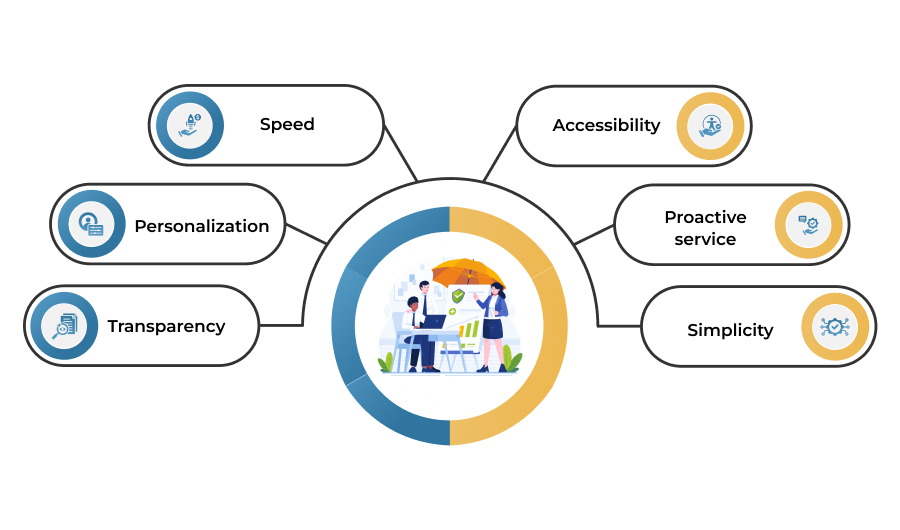
Speed
Timely policy quotes, claims processing, and customer service have become one of the critical expectations. Any delays may affect consumers’ satisfaction.
Personalization
Policyholders of the modern time need coverage tailored to their lifestyle, finances, and risk factors, rather than a standard insurance product.
Transparency
Consumers appreciate honest discussions on insurance benefits, exclusions, prices, and claims process.
Accessibility
The growing adoption of the digital channels means that consumers expect to access everything from anywhere and at any time.
Proactive Service
Instead of waiting for customers to contact the company, insurers should offer renewal notifications, updated policies, risk-prevention advice, and customized notifications that can keep the customers informed.
>
Simplicity
Insurance products should be simple to comprehend with clear terms, fair pricing, and understandable coverage descriptions, rather than a complicated legal language.
However, insurance has always been more than just about financial safety from uncertainty. People are looking for peace of mind, which is provided not by a policy alone but by a guarantee that they will be taken care of at times when it really matters.
It becomes clear from the gap between coverage and customer confidence that there is a real chance for companies to benefit greatly by focusing their efforts in certain directions. Insurers have all necessary means to change the perception of insurance from a product to a valuable service.
In such a situation, companies will need to pay attention to making policies clear and simple for their clients, effective communications, claims handling with transparency and, of course, using artificial intelligence to help with all of the above.


19 Oct 2026
15 Oct 2026