Why the Future of Insurance...
15 Oct 2026

The Insurance Intelligence Era describes the evolution of insurance into modern systems focused on risk assessment, prediction, and personalized service. Unlike the outdated systems based on historical and manual data, the insurance systems of the future will utilize AI, big data, and automation for optimized outcomes. Continuous risk assessment will be an inherent part of the evolving systems.
The momentum is real and measurable. The global market for AI in insurance is projected to grow from $14.99 billion in 2025 to roughly $246 billion by 2035, a compound annual growth rate of about 32%. Today, businesses benefit greatly from faster underwriting, more accurate risk prediction, and the ability to act on risk before it materializes. Intelligent insurance systems give companies the ability to proactively prevent risk, lower operational costs, and secure a competitive advantage.
Historically, the limited availability of datasets and the resultant use of such datasets to develop actuarial models that inform decisions with regard to the weighting of insurance risks posed, or the pricing of those insurance risks, was the sole basis of risk assessment model dependent insurance regimes. These decisions were made with the aid of actuarial models that relied on the use of past trends, demography modeling, self-judged risk, and manual underwriting, and each model had its own benefits and pitfalls.
The pitfalls of each model were: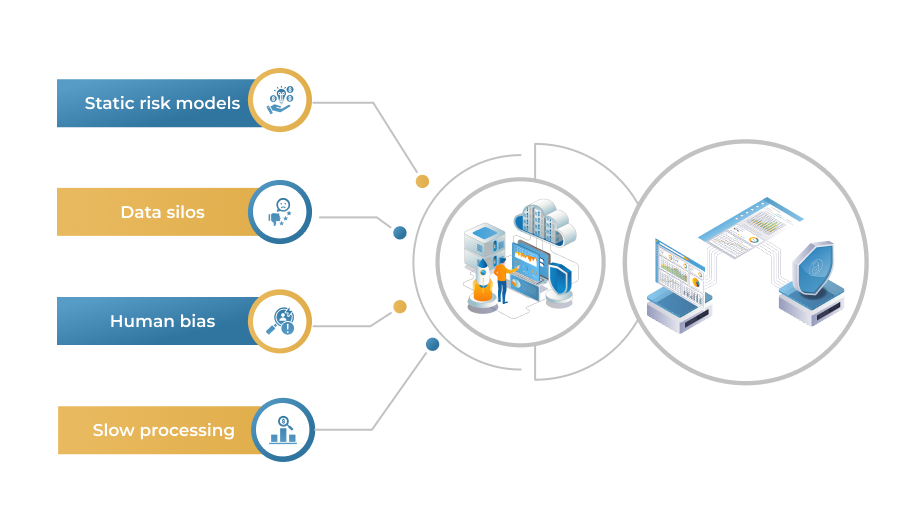
The result is that costs to the consumer and insurer alike are increased, inefficacy becomes evident, and the consumer is left with a poor experience.
Insurance companies today use real-time analytics and data-centered models. Connected devices, records, social media, and customer interactions expand insurers’ ability to process both structured and unstructured data. Because the industry sits on vast pools of unstructured information PDFs, images, Word documents, and web pages and still relies on many manual tasks, it is uniquely positioned to benefit from these technologies
With the help of platforms developed by Amazon Web Services and Microsoft Azure, companies can process large datasets on an industry-wide scale, allowing firms to:
For instance, in the automotive industry, the shift to usage-based insurance required companies to rely on telematics data and driving behavior as firms shrank the traditional gap of price-predicting.
AI is quickly reshaping underwriting, one of the most time-consuming tasks in the industry. Insurers using AI can analyze medical, financial, and personal data to understand risk with new depth. Reported results are significant: some insurers say AI-powered underwriting processes applications up to 70% faster while maintaining or improving accuracy.
AI is making its impact in other ways as well. They are as follows: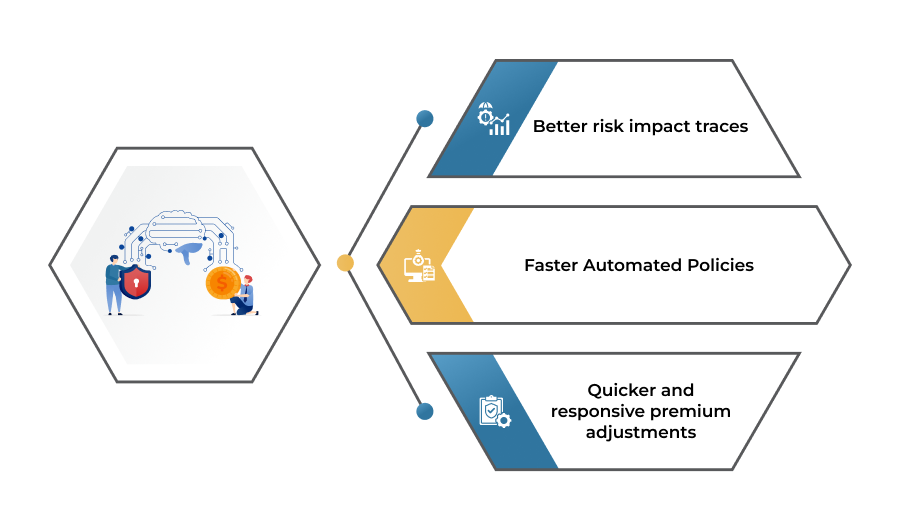
In a recent McKinsey survey of more than 50 leaders at Europe’s largest insurers, over half said generative AI could deliver productivity gains of 10–20% and premium growth of 1.5–3.0%. Overall, these changes bring speed to the process and the ability to explore risk more thoroughly.
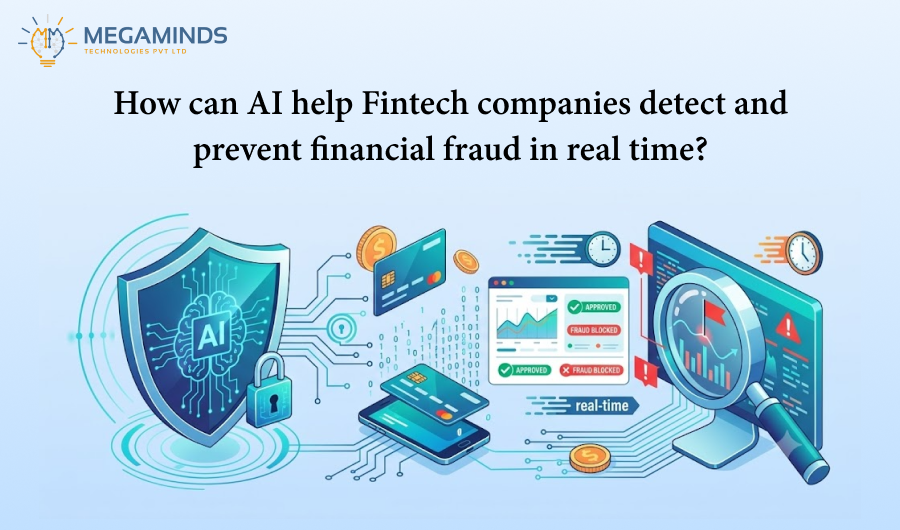
Insurance fraud is one of the industry’s largest problems. According to the Coalition Against Insurance Fraud, fraud now costs the United States an estimated $308.6 billion each year a dramatic jump from the roughly $80 billion cited in its previous estimate decades earlier. Health care fraud is the single most costly category at about $105 billion annually, followed by life insurance fraud (~$74.7 billion). The FBI estimates the average American family pays $400–$700 more per year in premiums to cover these losses, and 78% of US consumers say they are concerned about insurance fraud.
Fraud detection systems powered by anomaly detection, pattern recognition, and behavioral analytics are changing how we detect fraud. They allow us to:
SAS Institute’s analytics systems allow insurance companies to build and optimize AI fraud detection, systems and insurance systems, with the goal of balance between decrease in the average cost of fraudulent detection and increase in the effectiveness of fraud detection.
The insurance systems optimize AI fraud detection in insurance companies, with the goal of balance between decrease in fraud detection costs and increase in effectiveness of fraud detection.
The result is not just cost savings, but also improved trust and transparency within the insurance ecosystem.
Claims processing is a very important part of the insurance customer journey. This whole part of the journey is very sensitive to changes. Automation is significantly improving this process.
Automation, combined with AI, is promising to make claims a lot smoother. Specifically, this means: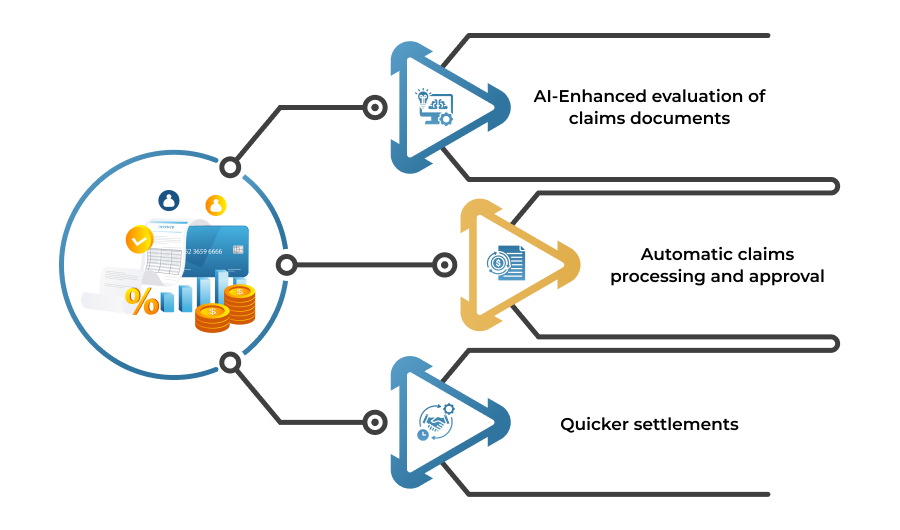
AI is impacting insurance in the claims processing stage because it is allowing you to injury assess without needing a manual assessment. For automotive insurance this is frequent and a very easy way to process claims.
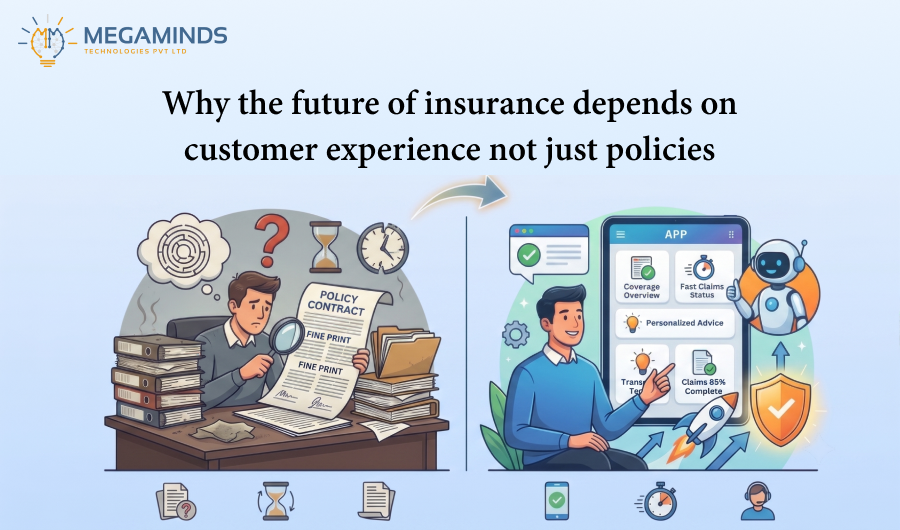
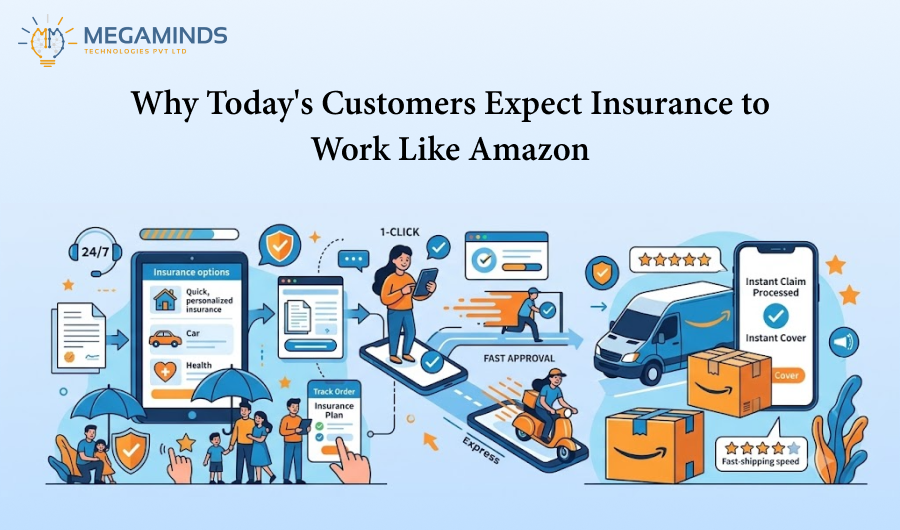
Today, people demand personalization and fast service in all areas, including the insurance industry. They expect instant updates and communication about claims in addition to instant policy information.
New research shows over half of all respondents are willing to provide their private information to get a more tailored service in return. Furthermore, 30% of customers said they would change their insurance provider to one that would provide better claims service.
Chatbots, recommendation systems, and AI customer service all draw from the same data and are currently changing the customer service landscape for all service industries. Insurers are no exception, with almost a 50% drop in the time it takes to respond to a customer and a 30% overall boost in customer satisfaction.
Omnichannel presence and low customer waiting times are the corners of quality insurance customer service. Research found that insurance companies that excel in customer service also show about a 25% boost in customer retention.
The shift from reactive to proactive customer service, entails providing tailored customer experiences. AI and data-driven solutions would allow insurance companies to achieve the same depth of service as more traditional companies.
Integration of data ecosystems is one of the most important functions of intelligent insurance. Insurers today need to pull data from a variety of places, including:
This type of integration is being increasingly facilitated by cloud and API (Application Programming Interface) technologies. By constructing a unified data layer, insurers can create:
Businesses that have integrated ecosystems are able to adapt to market conditions and customer needs.
Both policyholders and insurers stand to gain from the widespread implementation of AI and data-driven technologies. Here are the benefits for each group.
For Insurers, the adoption of these technologies can lead to:
For Policyholders:
Thus, the entire insurance industry will benefit from the transformation AI and data-driven technologies will foster.
Successful digital transformation depends not only on technology adoption but also on organizational readiness and execution. Although they have some positive aspects, intelligent insurance systems also face a number of challenges:
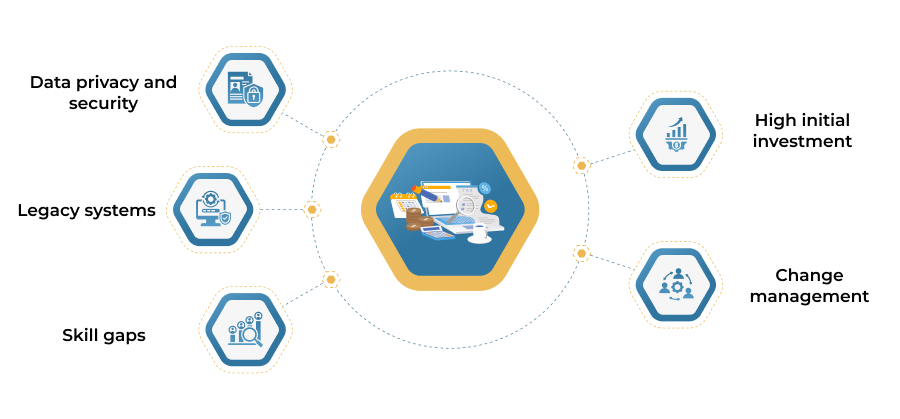
Creating a technology, workforce skills, and governance frameworks will allow the insurance industry to implement new technologies which will allow them to maintain a competitive role within the insurance industry.
Insurance’s future is in consolidated systems powered by AI that optimizes increased efficiency. Insurers are changing the game on the scale of how risk is assessed, managed, and prevented.
McKinsey & Company says insurers who fully integrate AI into their systems can even boost productivity 30-40% and reduce operational costs by 20-25%. Even further, Accenture says 75% of insurance executives say that within 3 years, the industry is set for a blockbuster change due to the rapid adoption of AI, driving the need for immediate adoption.
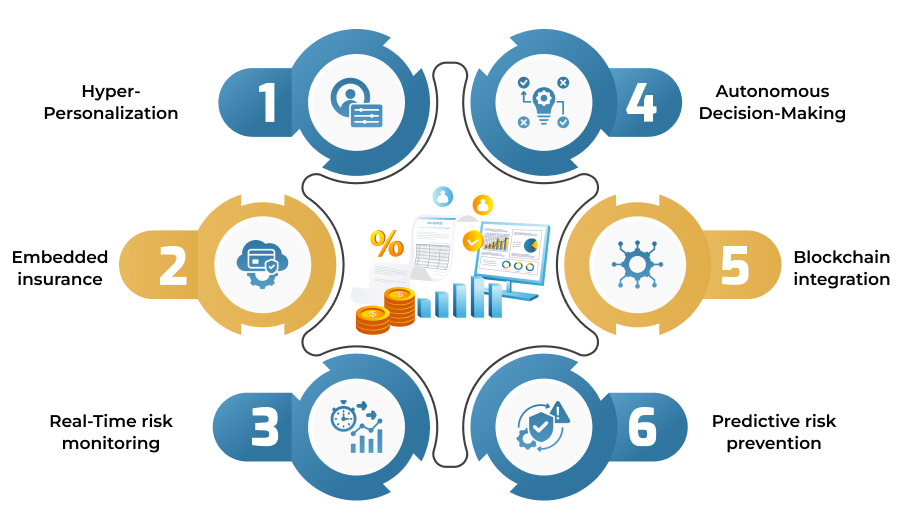
Hyper-Personalization:
Tailored policies based on behavioral habits of customers promote deeper engagement. Deloitte reports that personalized insurance offerings have a 20% increase in retaining customers and a 15% increase in conversion.
Embedded Insurance:
Informal insurance partnerships are accelerating. Swiss Re suggests that by 2030, over $700 billion in premiums could be written due to Embedded Insurance.
Real-Time Risk Monitoring:
Risk is determined and managed through the continuous use of IoT and connected devices. Capgemini shows that insurers who use IoT-based risk monitoring will have a 10–15% decline in claims.
Autonomous Decision-Making:
AI is able to conduct automated underwriting and claims decisions. IBM says that 80% of typical insurance activities may be Addressed through the use of automation.
Blockchain Integration:
Increased security and evidence are a result of blockchain. PwC states that up to a 30% reduction in losses related to claims fraud is possible, and claims processing is improved through the use of blockchain.
Predictive Risk Prevention:
Insurance companies have the opportunity to identify and eliminate risks with the help of predictive analytics. As stated by McKinsey & Company, advanced analytics can help decrease the costs of claims by up to 20% through proactive management of risk.
When insurers adopt this new era of innovative technology, they will improve efficiency and customer experience. Insurers will lead the insurance market and complete new risk requirements while achieving excellent profitability.
Proactive decision-making driven by data is at the heart of the new age of insurance intelligence. Here is a new way of thinking about risk, fraud, and claims processing. This also completely changes the relationship between a company and its stakeholders.
Success in the insurance intelligence era can’t be achieved through technology alone. Insurers face cultural, strategic, and digital barriers. Balances must be struck to embrace intelligent systems in claims processing. Insurers must build data governance in decision-making and invest in scalable business platforms.
Those who fully embrace AI and data analytics will lead the insurance intelligence era to the creation of the most outstanding customer insurance and new solutions to business operations.
15 Oct 2026
12 Oct 2026
08 Oct 2026