The complexity of making a decision in a volatile business world has increased greatly. Global disruptions of supply chains, volatile markets, changes in regulations, and rapid maturing of technology have generated a situation where traditional ways of decision-making do not work. Companies are under extraordinary pressure to make essential decisions with less information and less time. This complexity has led to a decision-making gap where the errors are getting more and more costly, while the confidence in the results is decreasing. In the process of exploring this difficult environment, businesses have found that artificial intelligence can play a major role by turning ambiguity into clear and analyzable data, thus allowing the corporate decision-makers to make riskier decisions safely and with high confidence.
The Real Cost of Uncertainty in Critical Decision-Making
The financial impact of poor decision-making is much greater than just losing money right away. McKinsey research indicates that organizations with strong decision-making practices consistently outperform their peers financially, while poor decision-making remains a major source of lost value and avoidable costs across enterprises.
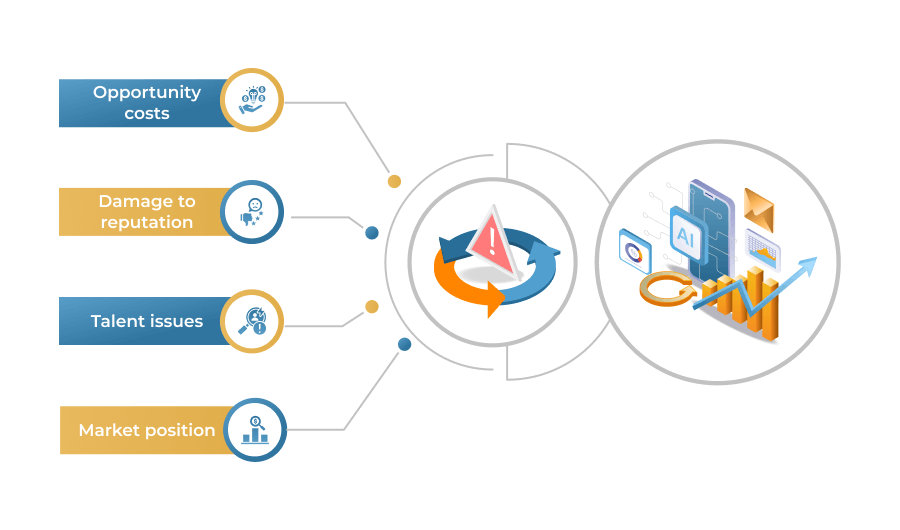
Besides direct financial losses, uncertainty results in a series of problems:
Opportunity costs: when executives hesitate or decide wrongly, opportunities waste away. Markets are very dynamic, and the competitors who act promptly get the advantage. Boston Consulting Group found that 85% of executives admit that their company missed a great opportunity because the decision-making process was too slow or ineffective.
Damage to reputation: One single high-profile mistake can undo the trust that had been established over the years. Edelman’s Trust Barometer consistently shows that trust is a primary driver of customer purchasing decisions. That company, which means that decision failures can eventually destroy the brand.
Talent issues: Most of the time, poor strategic decisions drive companies to restructure, staff burnout, or employee disengagement. On the basis of a Deloitte study, companies with great decision-making cultures are able to keep their top employees 40% longer compared to their competitors.
Market position: According to the Harvard Business Review and related leadership research, businesses that make better decisions faster typically outperform their slower-moving competitors in terms of competitive performance and strategy execution, which can eventually aid in their growth and market position strengthening.
All these points lead decisively towards the need for upgrading the decision-making capabilities, and AI is the way to do that efficiently.
Why Traditional Decision Models Fall Short Under Pressure
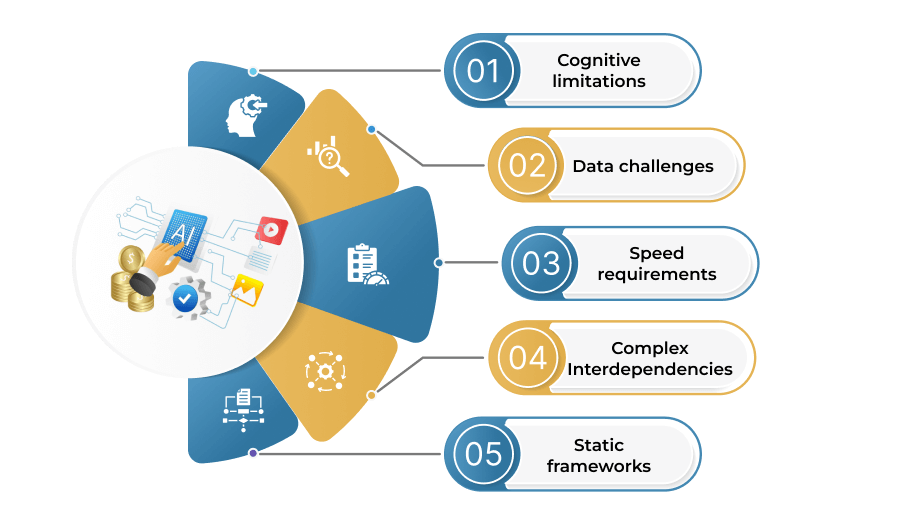
Traditional decision-making models, which are helpful under stable conditions, still have major drawbacks when it comes to complicated, risky situations:
Cognitive limitations: Human decision, makers are naturally biased and use mental shortcuts that can lead to errors. In fact, Nobel laureate Daniel Kahneman’s work in behavioral economics reveals that even experienced decision, makers are prone to making systematic, biased, and erroneous judgment mistakes when they face uncertainty.
Data challenges:IBM and IDC together reveal that the amount of data generated worldwide is rising at a rate beyond exponential, thus it becomes increasingly challenging for normal decision-making models and human teams to efficiently derive insightful information.
Speed requirements: Decision periods have been cut down dramatically from months to just days or even hours. According to Gartner research, business executives are facing ever-growing pressure to make decisions faster than traditional organizational processes can support.
Complex Interdependencies: The business systems of today are highly interdependent. Stanford research indicates that approximately 67% of the critical risk factors cannot be identified by linear models that attempt to capture nonlinear relationships.
Static frameworks: A lot of traditional models rely heavily on historical data. In unstable markets, history is a poor predictor of the future. Research from MIT Sloan indicates that 60% of strategies simply based on historical data perform poorly in changing business environments.
Such drawbacks result in a gap between decisions and their implementation that only AI, powered methods can bridge effectively.
How AI Transforms Data into Decision Intelligence
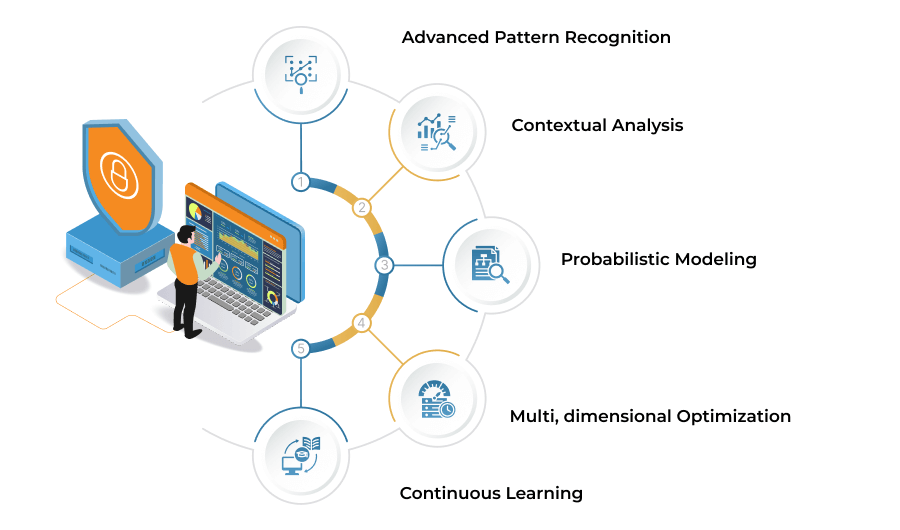
Artificial intelligence transforms decision-making by converting raw data into actionable intelligence through several key capabilities.This evolution is part of a broader shift toward decision intelligence, where organizations focus on turning insights into faster and more confident actions.
Advanced Pattern Recognition: Machine learning software can quickly find secret patterns in huge datasets with many millions of data entries which, in fact, would be impossible for a human being to do.Deloitte points out that AI is able to recognize predictive signals with an accuracy that is 95% higher than ordinary statistical methods.
Contextual Analysis: AI employs natural language processing (NLP) to understand unstructured data such as news articles, regulatory filings, emails, and social media. According to IBM research, most enterprise data is unstructured and difficult for traditional systems to analyze, including text, documents, emails, and media.
Probabilistic Modeling: AI assesses different scenarios and calculates the probability of each instead of just providing yes or no answers. According to a McKinsey report, businesses that make decisions using probabilistic AI models see a 30% increase in return on investment for their strategic initiatives.
Multi-dimensional Optimization: Cost, risk, speed, and quality can all be simultaneously assessed by AI, even if they are competing priorities. According to an INSEAD study, optimization using AI increases resource allocation efficiency by 25.40%.
Continuous Learning: Traditional models are fixed and unchanging, while AI systems learn continuously, change, and improve. Gartner states that adaptive AI systems are those that retrain or update themselves automatically with fresh data as time passes. Hence, decision systems can be flexible to the ever, changing real, world scenarios without depending mainly on fixed models.
From Reactive to Predictive: AI’s Role in Reducing Risk
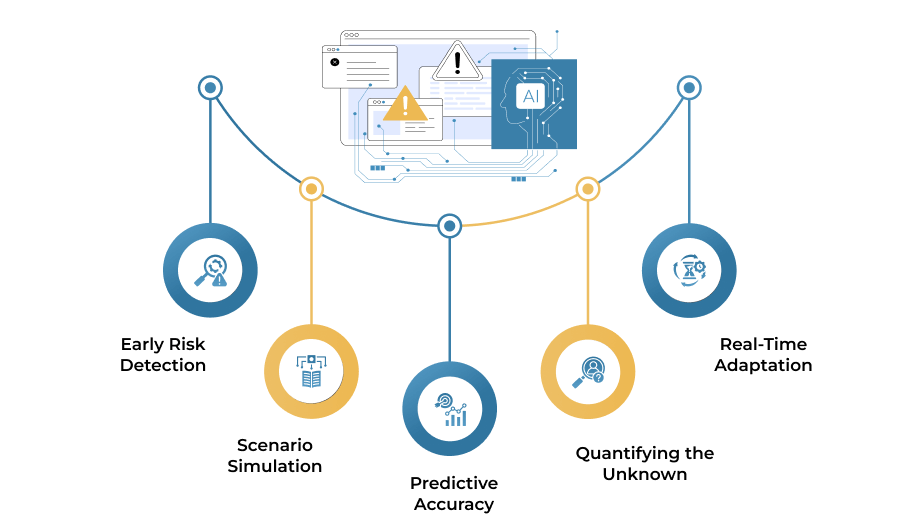
The most revolutionary thing about AI in decision-making is how it enables organizations to move away from reactive strategies to predictive ones:
Early Risk Detection: AI is able to spot potential risks way ahead of time. Forrester Research has found that AI-driven early warning systems can cut supply chain disruptions by almost half (45%).
Scenario Simulation: By running “what if” scenarios in the thousands, AI allows decision makers to get ready for uncertainty. Research conducted at MIT reveals that companies that rely on AI simulations have 30% fewer costly mistakes during disruptions.
Predictive Accuracy: In sectors like finance and operations, AI-supported forecasts are 35% more accurate than those of human experts, says Harvard Business Review.
Quantifying the Unknown: With AI, unclear worries can be turned into measurable risk metrics. PwC has noted that companies implementing AI-driven risk quantification experience 28% fewer unexpected losses.
Real-Time Adaptation: AI applications are capable of constantly refreshing their suggestions as situations evolve. Gartner’s forecast indicates that by 2026, 30% of major businesses will be heavily dependent on AI for adaptive decision-making.
The ability to predict makes it a complete game changer in terms of risk management, as it offers the potential to treat uncertainty as a variable that can be handled rather than a challenge that cannot be overcome.
Supporting Human Judgment with Real-Time Insights
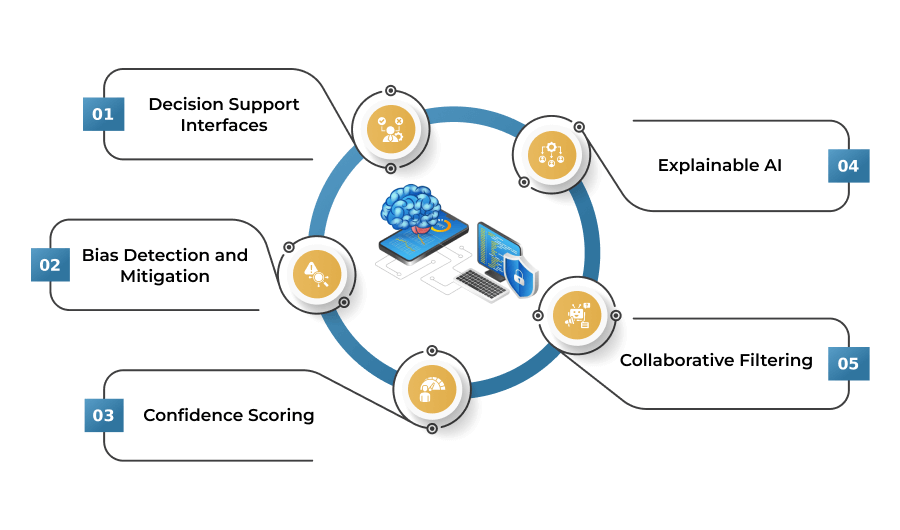
AI is not here to replace human decision-makers but rather to be a powerful augmentation tool that improves human judgment Ultimately, better decisions come from a culture that empowers teams to act quickly and confidently using data.
Decision Support Interfaces: AI systems deliver complex information in the form of easy, to, understand visuals that show key factors and possible outcomes. According to research by Stanford, decision makers using AI-enhanced dashboards make their decisions 40% quicker and with 20% better results.
Bias Detection and Mitigation: AI is capable of detecting cognitive bias patterns in decision-making and suggesting corrective measures. The researchers at Carnegie Mellon have discovered that AI-assisted decision-making can significantly cut down confirmation bias, by as much as 85%.
Confidence Scoring: Through machine learning, models can also quantify how confident they are in their suggestions, thus assisting human decision-makers in gauging the dependability of AI insights. According to Deloitte, confidence scoring brings about a 65% increase in decision, maker’s trust in AI systems.
Explainable AI: Some of the latest AI technologies can articulate the reasons behind their decisions in a manner that humans can easily comprehend, thus being a bridge between algorithmic results and human understanding. Gartner states that by 2025, explainability will be an integral part of 30% of new AI applications.
Collaborative Filtering: AI is capable of finding similar decisions made historically along with their results, thus, it is able to give pertinent information for the present decisions. MIT reports that collaborative filtering can lead to a 25% increase in decision quality in complex situations.
The partnership between humans and AI fosters a mutually beneficial relationship: technology takes over data processing and pattern recognition, whereas humans contribute contextual understanding and ethical judgment.
Use Cases Where AI Delivers Measurable Confidence
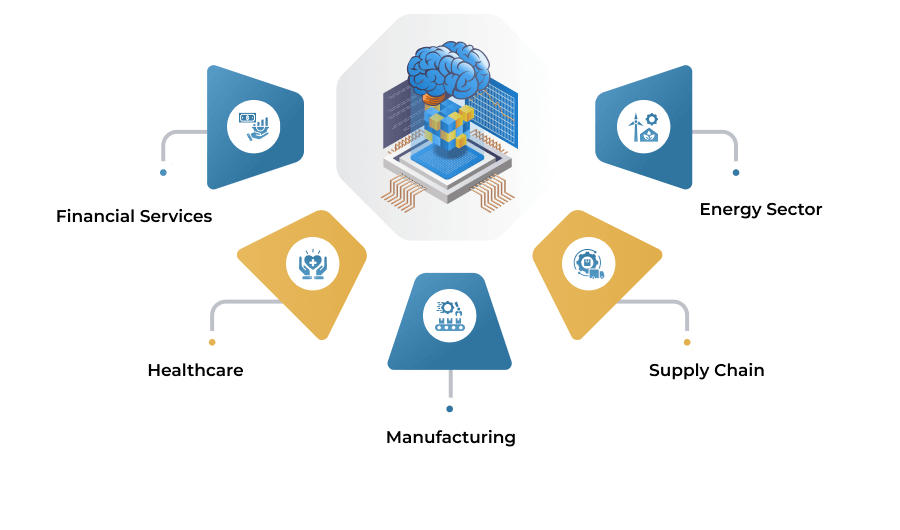
AI is revolutionizing high, risk decision, making across industries with measurable results:
Financial Services:
The review of thousands of commercial legal and credit agreements, which previously required about 360,000 lawyer and loan officer work hours annually, is automated by JPMorgan Chase’s AI platform COiN (Contract Intelligence) using machine learning. This process is completed in seconds with increased consistency and accuracy.
Goldman Sachs employs AI for credit risk assessment which has led to 35% better prediction of defaults and a prevention of $2.3 billion in loan losses yearly.
Healthcare:
IBM Watson for Oncology suggests chemotherapy based on cross, verifying patients’ medical records with extensive medical literature, thus, reaching a 96% concordance rate with expert panels.
AI, powered diagnosis tools at Mayo Clinic were instrumental in the reduction of diagnostic errors by 40% and the improvement of patient outcomes by 25%.
Manufacturing:
AI based predictive maintenance helps cutting maintenance costs and unplanned downtime by 50% in factories as been shown to works pretty well. Also, at the same time, it increases asset reliability and operational efficiency of the plant.
Siemens’ AI, powered quality control reduces manufacturing defects by 70%, while the first pass yield is increased by 30%.
Manufacturing is also leveraging intelligent analytics to optimize operations and reduce downtime through better decision-making.
Supply Chain:
Amazon’s AI, driven inventory optimization lessens stockouts by 50% while also bringing down inventory costs by 20%.
DHL employs AI for delivery routing which leads to a 10% saving in fuel costs and at the same time increases delivery speeds by 25%.
Energy Sector:
Shell’s AI, enabled systems optimize oil drilling resulting in a 10% production efficiency gain and a 30% reduction in safety incidents.
Google’s DeepMind cut cooling expenses by 40% in its data centers, thanks to the application of AI for energy management.
These are just some examples of how AI advances decisions in situations carrying high risks across various business areas.
Trust, Transparency, and Governance in AI-Driven Decisions
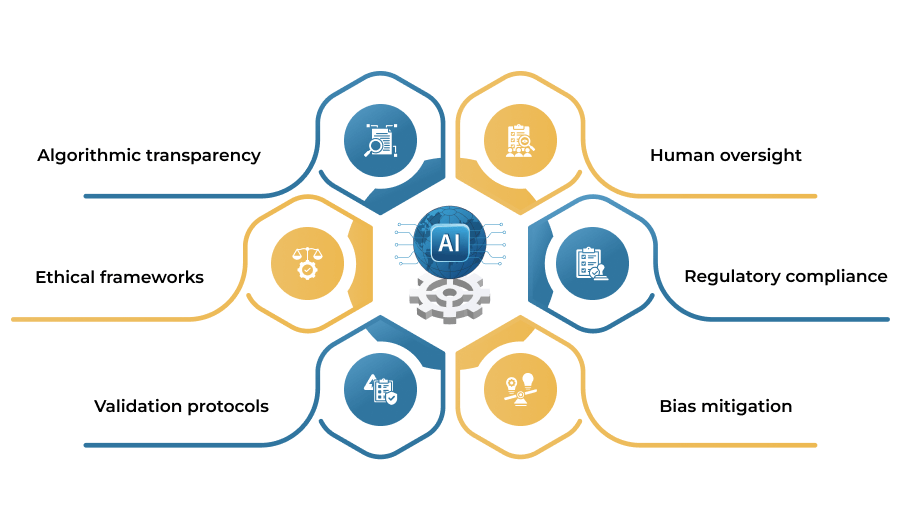
With AI playing a bigger role in critical decision, making, organizations need to confront issues of trust, transparency, and governance;
Algorithmic transparency: Top companies use interpretable AI systems that expose their reasoning processes. An Accenture survey shows that 73% of executives consider explainability a must for AI deployment in critical decisions.
Ethical frameworks: On the one hand, companies create AI ethics boards and rules to ensure responsible use. On the other hand, MIT study indicates that companies with formal AI ethics frameworks have 50% less AI, related disputes.
Validation protocols: Testing and validation at every stage before deployment confirm that AI systems deliver the promised functionality. According to the Institute for Business Value, organizations that perform thorough AI testing get three times more ROI from AI ventures.
Human oversight: Proper human oversight helps with trust and the detection of mistakes. Gartner advocates human review of all high, impact AI decisions.
Regulatory compliance: As AI rules change, companies need to align their systems with new standards. PwC forecasts that by 2024, 60% of large companies will have a separate AI compliance department.
Bias mitigation: Being ahead in recognizing and rectifying biased algorithms contributes greatly to a fair decision, making process. Deloitte’s research shows that companies that have put in place bias detection have increased trust of their stakeholders by 45%.
These governance components lay the groundwork for developing trustworthy AI for critical decision, making scenarios.
Building an AI-Ready Decision Framework
Organizations seeking to leverage AI for high-risk decisions should follow a structured implementation approach:
Assessment Phase:
Identify high-value decision opportunities where AI can provide the greatest impact
Evaluate current data infrastructure and capabilities
Assess organizational readiness and cultural factors
Foundation Building:
Establish data governance frameworks to ensure data quality and accessibility
Develop the necessary technical infrastructure and talent capabilities
Create cross-functional teams combining business and technical expertise
Pilot Implementation:
Start with controlled pilot projects in specific decision domains
Implement robust measurement systems to track AI performance
Establish feedback loops for continuous improvement
Scaling Strategy:
Develop a roadmap for expanding AI across decision domains
Build change management programs to drive adoption
Create a center of excellence to share best practices
According to McKinsey, organizations following this structured approach achieve 2-3x higher success rates in AI implementation and 50% faster time to value.
Conclusion: Confident Outcomes Start with Intelligent Decisions
The business world is evolving into a highly complex environment, and it looks like AI may be the differentiating factor between companies that are successful and those that are struggling. AI gives the executives a chance to make decisions based on data and facts, rather than making decisions in a reactive way and on the basis of their feelings. Decision-making processes incorporated with AI not only help companies to avoid risks but also enable them to outperform competitors by making better strategic decisions. As business is getting faster and decision-making is becoming increasingly complicated, AI-supported decision intelligence will not only be one of the company’s competitive advantages but may even be a business operation requirement. Those companies that adopt intelligent decision-making approaches today will be the successful ones.
How does AI assist in making high-risk decisions in a business?
By analyzing massive amounts of data, AI is able to detect patterns and predict outcomes thereby significantly reducing the element of risk and offering a reliable basis for making the major decisions.
What is the main cost to a business of making wrong decisions?
In addition to the immediate loss in money, bad decisions also harm the company's image, cause the best employees to leave, and market changes catch the company unprepared; all these factors work against the business continuing to be successful in the long run.
Why are conventional decision models unable to cope today?
Besides being slow and biased, they can neither keep up with the volume of data nor the complexity of the data in today's business environment.
What is "decision intelligence"?
Decision intelligence combines various techniques, including artificial intelligence, to extract meaningful insights from unstructured data, thereby enabling more intelligent, faster, and more accurate decision-making.
How can businesses make sure their AI is free from bias?
An organization should frequently use bias detection based on a set of ethical principles and continue identifying, correcting and fixing biases in decision-making algorithms.
What is the future of AI in business decision-making?
Many of the functions AI is currently seen as offering a competitive advantage will be so deeply ingrained in the running of a business that AI will no longer be recognized as a competitive edge.
Quickly scale your development capabilities by hiring pre-vetted tech experts who align perfectly with your project goals, timeline, and company culture.
What to expect after you reach out?
1. Share Your Requirements
Tell us your project goals, tech stack, and resource needs for a perfect talent match.
2. Talent Shortlisting
We screen and shortlist top-tier professionals based on your exact technical and cultural fit.
3. Interview & Selection
You interview the candidates and select the ones that align with your expectations and company values.
4. Onboard & Integrate
Seamless onboarding process to ensure smooth collaboration with your in-house team from day one.
5. Monitor & Scale
We assist with performance tracking and help you scale the team as your project evolves.