Why Today’s Customers Expect Insurance...
12 Oct 2026

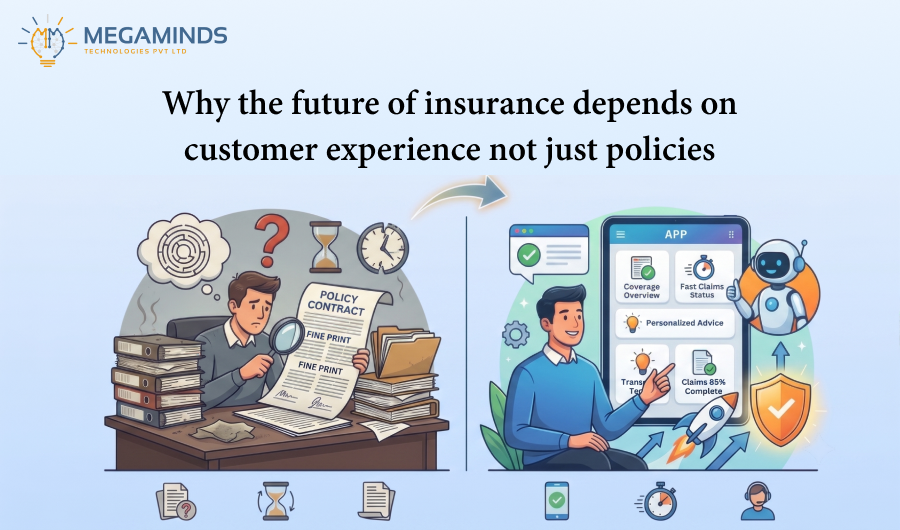
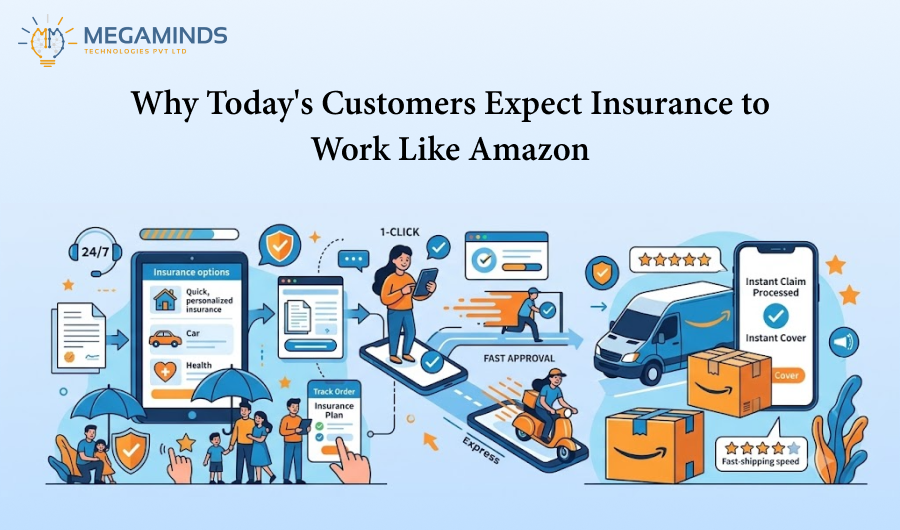
Insurance customers expect good insurance customer service. Today, insurance customers naturally expect ease, simplicity, and speed alongside their coverage. Customers expect ease, accessibility, and simplicity when they interact with their insurance customers at any stage of the process, from purchase and payment to filing a claim. All coverage, convenience, and claims ease to the customer are the minimum expectations of today’s insurance customers.
When insurance customers engage with a provider, they expect quick service, straightforward communication, and the ability to self-service through online/digital tools. Customers expect good service beyond the first engagement and a bad first experience can lead a customer to seek coverage elsewhere, while good service will create a loyal customer.
The data backs this up. In PwC’s 2025 Customer Experience Survey of 5,511 consumers, 52% said they stopped using or buying from a brand after a bad experience with its products or services, and 29% stopped because of poor customer experience online or in person. The same survey found 70% of executives believe customer expectations are outpacing their organization’s ability to adapt.
Insurance customers have high expectations of their service and meeting those expectations is the only way to attract and retain customers in the insurance market.
The insurance industry is moving from a policy-based model to a customer-based model. Rather than focusing only on products and coverages, insurers are focusing on the needs, wants, and expectations of the customer throughout the insurance journey. Deloitte’s 2026 Global Insurance Outlook names changing customer expectations as one of the main forces reshaping the industry this year.
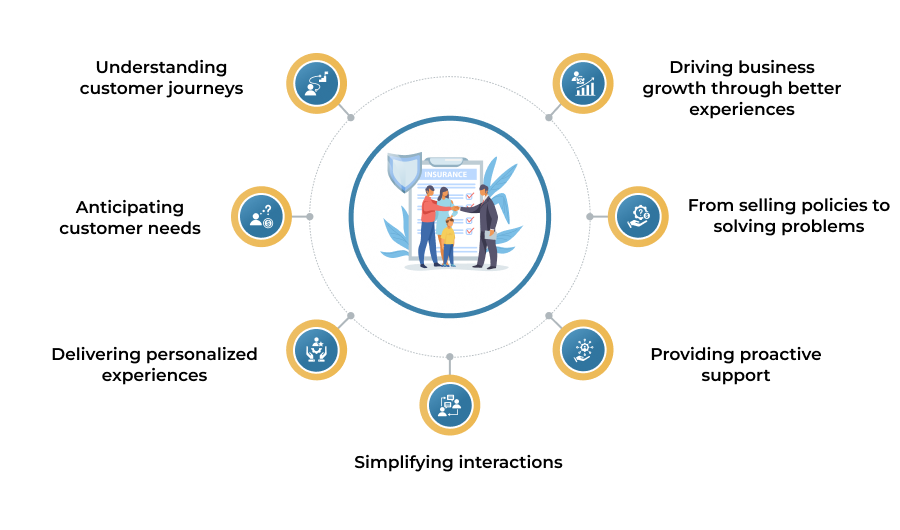
Digital transformation is impacting all industries, yet many insurance companies still use clunky methods that frustrate users. Lengthy paperwork and slow claims lead to inadequate services in the insurance sector.
The J.D. Power 2025 U.S. Property Claims Satisfaction Study shows the cost of delay. The average property claim now takes 32.4 days to complete, and the time from first notice of loss to final payment has passed 44 days, the longest since the study began in 2008 (Reinsurance News). Claims finished within 10 days score 762 on a 1,000-point scale, while those taking more than 31 days drop to 595.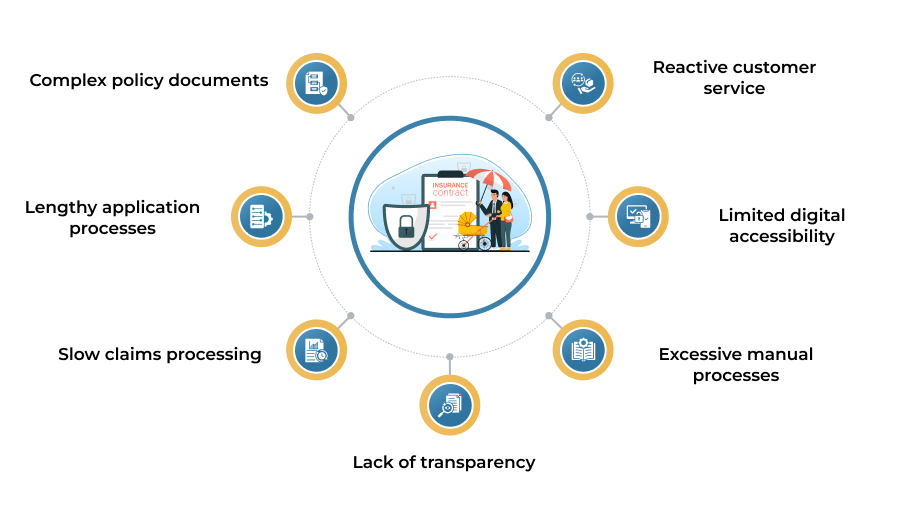
Complex Policy Documents
Insurance documents with numerous complicated policy documents lead to confusion for customers about their coverage and benefits
Lengthy Application Processes
Manual data entry techniques used by many insurers to carry out tedious manual functions increases customer effort and slows down the purchase of a policy.
Slow Claims Processing
Lengthy processing of claims is frustrating for customers and is inadequate during time sensitive claims.
Lack of Transparency
Customers often have no easy way to track the status of their claims, and are often left without communication when updates are due.
Excessive Manual Processes
The combined use of legacy systems and manual workflows leads to poor operational efficiency that delays responses to customers.
Limited Digital Accessibility
Customers prefer mobile and self-service systems. Many insurers use outdated methods that do not provide connected services and fulfill the customer’s need.
Reactive Customer Service
Traditional insurers focus on service once an issue arises. Transforming the services offered is essential to provide customers with ample support and communication.
Customer expectations are evolving faster than many insurers can keep up. Beyond digital tools, customers now expect personalized, proactive, and seamless experiences throughout their insurance journey.
Salesforce’s State of the AI Connected Customer report (7th edition, 2025), based on more than 16,000 consumers and business buyers, found that 73% of customers now feel companies treat them as individuals rather than numbers, up from 39% in 2023. Personalization has quickly become the baseline, not a bonus.
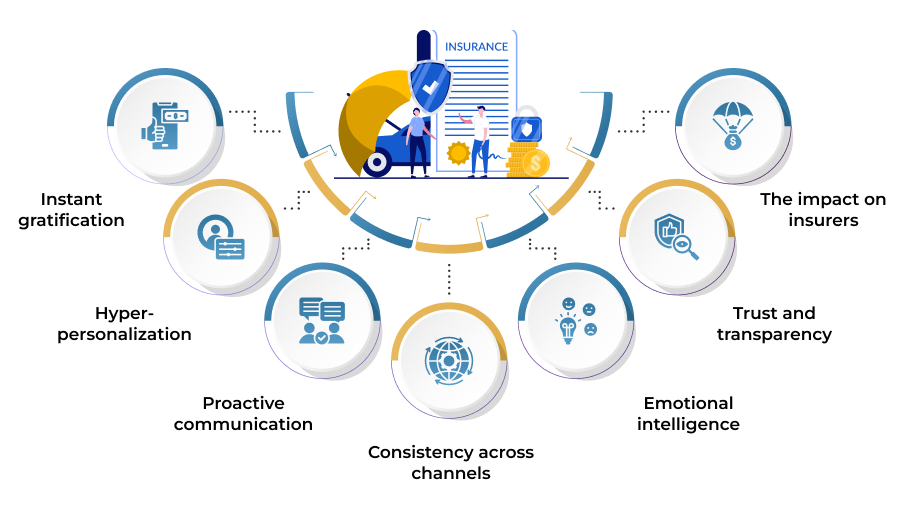
Digital platforms are transforming how customers interact with insurance providers. Today’s policyholders expect fast, convenient, and seamless experiences, making digital innovation essential for insurers looking to stay competitive.
From online policy purchases and self-service portals to mobile apps and real-time claims tracking, digital platforms simplify every stage of the customer journey. Instead of lengthy paperwork and repeated follow-ups, customers can access information, manage policies, and receive support anytime, anywhere.
Modern insurance platforms also enable personalized communication and consistent experiences across websites, mobile apps, chatbots, and customer support channels. This helps insurers respond faster and build stronger customer relationships.
Research shows that over 75% of customers prefer digital self-service options for routine insurance tasks. As expectations continue to rise, insurers that invest in digital experiences can improve customer satisfaction, increase retention, and create a significant competitive advantage.
Artificial intelligence (AI) and advanced analytics are transforming how insurance companies understand, engage, and serve their customers. By analyzing large volumes of customer data, insurers can identify behavior patterns, preferences, and potential needs, enabling more personalized and proactive experiences.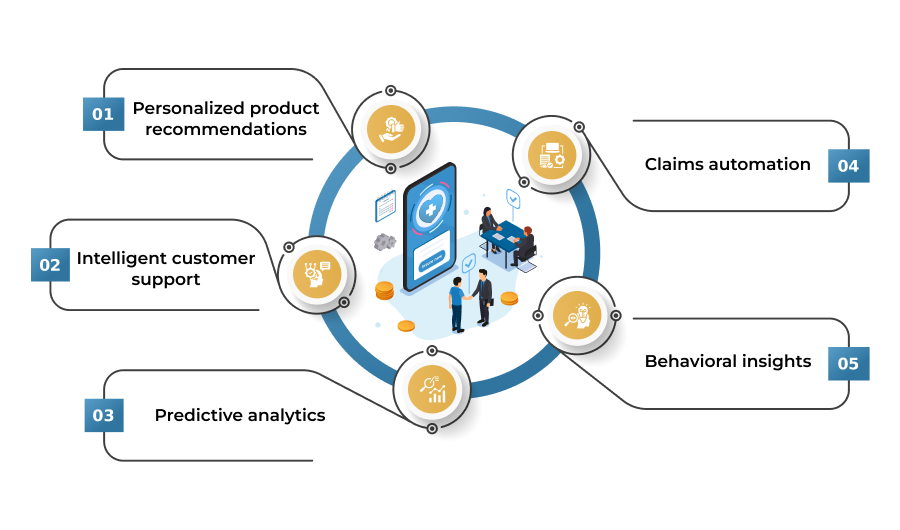
Personalized Product Recommendations
AI helps insurers recommend relevant policies and coverage options based on customer demographics, lifestyle, purchase history, and life events. According to McKinsey, companies that excel at personalization can generate 40% more revenue from those activities than their competitors.
Intelligent Customer Support
AI-powered chatbots and virtual assistants provide instant responses to common customer inquiries, improving service availability and reducing wait times. Research shows that AI-driven customer service can handle up to 80% of routine customer interactions, allowing support teams to focus on more complex cases.
Predictive Analytics
Advanced analytics enables insurers to anticipate customer needs, identify potential risks, and offer proactive recommendations. This helps improve customer satisfaction while reducing the likelihood of future claims.
Claims Automation
AI streamlines claims processing by automating document verification, damage assessment, fraud detection, and settlement decisions. Industry reports indicate that AI-powered claims solutions can reduce processing times by up to 70%, improving both efficiency and customer experience.
Behavioral Insights
Data analytics helps insurers understand how customers interact with policies, digital platforms, and support channels. These insights enable organizations to optimize customer journeys and deliver more relevant experiences.
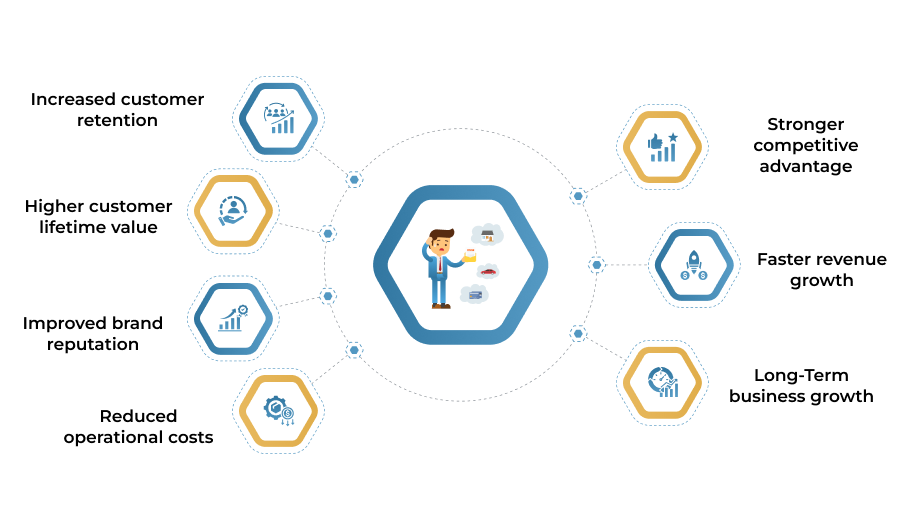
By combining AI, automation, and data-driven insights, insurers can create faster, smarter, and more personalized interactions. The result is a more responsive customer experience that builds trust, increases retention, and drives long-term business growth.
Modern customers expect insurance experiences that are fast, simple, and hassle-free. To meet these expectations, insurers are streamlining policy purchases, automating claims processes, and reducing unnecessary paperwork, making interactions quicker and more convenient.
Digital tools such as self-service portals, mobile apps, and real-time notifications allow customers to access information, track claims, and manage policies with ease. This improves transparency while giving customers greater control over their insurance journey.
However, technology alone is not enough. During complex claims or stressful situations, customers still value human support, empathy, and personalized guidance. The most successful insurers combine digital efficiency with meaningful human interactions to create experiences that build trust and long-term loyalty.
By making insurance faster, simpler, and more customer-focused, insurers can improve satisfaction, strengthen relationships, and stand out in an increasingly competitive market.
While insurers are investing heavily in customer experience, delivering a seamless and consistent journey remains challenging. Many organizations still rely on legacy systems that limit innovation and make it difficult to integrate modern digital solutions. In fact, nearly 70% of insurers continue to operate on outdated infrastructure, slowing their transformation efforts.
Data silos present another major obstacle. Customer information is often spread across multiple systems, making it difficult to deliver the personalized experiences that over 70% of consumers now expect. Additionally, insurers must balance customer convenience with strict regulatory and compliance requirements.
Rising customer expectations, combined with the complexity of integrating AI, analytics, and digital platforms, create further challenges. To overcome these barriers, insurers need modern technology, connected data ecosystems, and a strong customer-centric strategy that ensures consistent experiences across every touchpoint.
We know investment in customer experience results in positive impact on satisfaction, but there are additional positive impacts on business. For the insurance industry, there are strong ties between improved customer experience, business relationships, staff productivity, and profitability. Organizations focused on customer experience outperform peers in terms of customer retention, loyalty, and profitability.
Insurers are building intelligent, personalized systems to differentiate their offerings and gain competitive edge. The latest advancements in AI, ML, and connected technologies are redefining how insurers interact with their customers.
The future of insurance is about understanding your lifestyle and anticipating your risks. Forward-thinking insurance companies will provide policies that reflect your individual preference and serve your needs in a timely and efficient manner.
AI will revolutionize insurance by enabling instant underwriting and claims settlement and offering round-the-clock assistance. Connected devices and ecosystems will ultimately change how insurers protect their customers in a variety of contexts.
By continuously enhancing their offerings in this direction, insurers will build lasting relationships with their customers and go beyond providing policies to help customers make the right decisions and eliminate risks in their lives.
Customer-centricity will be the key differentiator in the future of insurance. Competitive pricing and policies will still exist, but they won’t be the main drivers of long-term customer loyalty. To be loyal to an insurance provider in this digital world, customers expect proactive service, personalized experiences, seamless digital journeys, and instant service.
In the area of trust and relationships, insurance providers have the potential to leverage several recent advancements, including automation, AI, and data, to transform every interaction. Providers that focus on the experience will ultimately thrive. The ones that don’t, will fail.
Winning in insurance will be determined by which companies simplify processes and create truly personalized experiences that deliver value. These businesses will own the markets they operate in. In the coming years the companies with the best insurance policies will also be the best at creating customer experiences that win loyalty.
12 Oct 2026
08 Oct 2026
05 Oct 2026