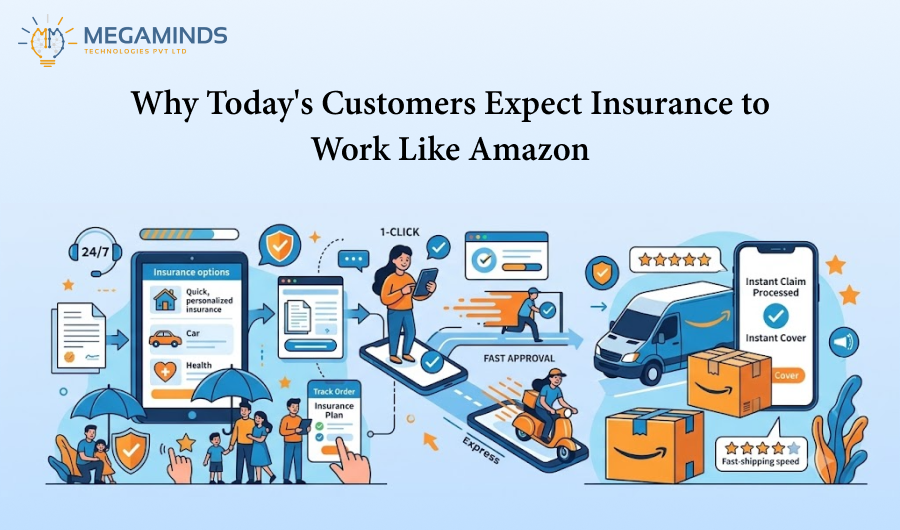
Why Today’s Customers Expect Insurance...
12 Oct 2026

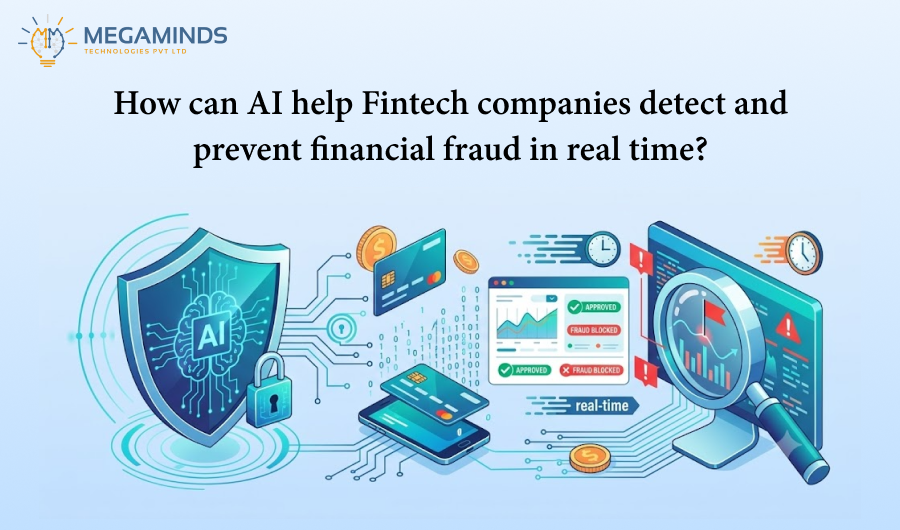
AI speeds-up and secures transactions all the while minimizing fraud in the system and showing transparency in fraud detection, customer onboarding and approval. While strong fraud protection systems increase customer confidence, satisfaction, and loyalty, AI enhances detection and prevention, and minimizes false rejection. AI offers financial business companies the ability to build safe reliable ecosystems with the aid of fast, cost effective, and configurable processes and solutions to meet customer needs, and real time data analysis.
According to industry research, customer trust has become one of the most critical competitive differentiators in digital finance platforms. Trust is the backbone of every financial transaction. While trust may not be visible on dashboards or product pages, it creates the perception customers have with every transaction, every approval, and every decision. If trust is absent, advanced digital platforms will not be able to retain users or scale effectively.
In the FinTech world, customers no longer engage with other human beings. Instead, they engage with algorithms, meaning that every response by the system becomes a signal of trust. Every positive experience raises trust, and every negative experience creates a lack of trust that is very hard to change.
Gone are the days when customers simply wanted “good service.” Now, businesses are competing with each other to meet the high standards set by customers by providing instantaneous and perfect experiences.
When a business opts to meet these expectations, the trust their customers have comes easy and when they don’t the customers simply walk away. Customers don’t complain.
Trust has become more than a brand value; it is now a revenue driver and a competitive advantage.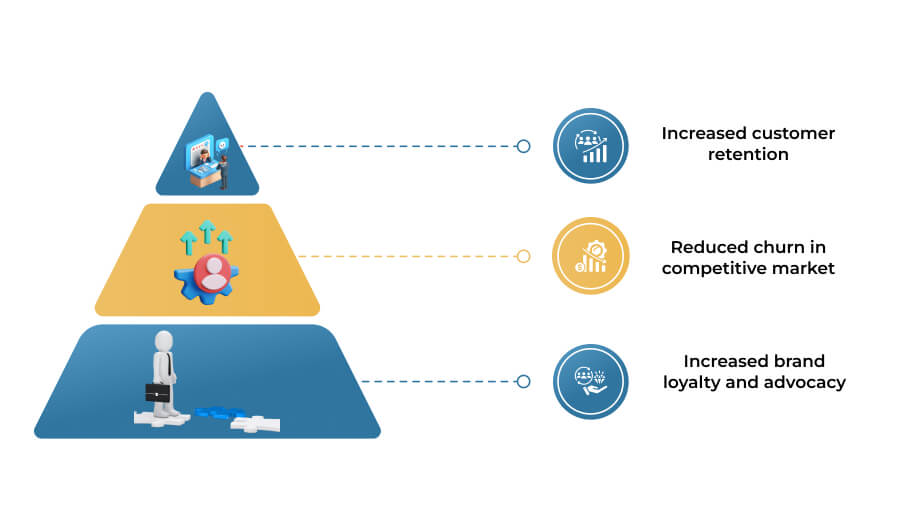
Trust builds up over time. Positive interactions encourage customers to stay while negative interactions risk losing the customers.
Quick reactions are seen how consumers gauge their trust in Digital Financial Services. How quickly systems demonstrate their responses determines the effectiveness and trustworthiness of the platform. In every sector, customer trust is determined by the system’s ability to perform reliably and communicate in real-time.
When approval is quick, control is asserted. When approval is slow, uncertainty is fostered. Even a fraction of a second can cause users to lose faith in the platform. In the payment and lending arenas, the rapidity of a decision is a critical factor in shaping consumer perceptions. Research shows that real-time decision-making significantly improves customer confidence and overall digital experience.
Businesses that implement real-time decision-making processes are improving operational efficiency, but more importantly, they are bolstering consumer confidence. In many enterprises, operational delays often begin in decision rooms long before customers experience the impact.
Not all errors are equal in today’s financial systems and some can break customer trust in a matter of seconds. False declines and the failure to identify fraud are two decisioning errors that impact customer experience and business performance. While one holds back legitimate customers, the other lets actual risks go through. Together, they create a precarious decisioning ecosystem in which one erroneous decision can cause loss of revenue, reputational damage, and customer attrition that can last for years.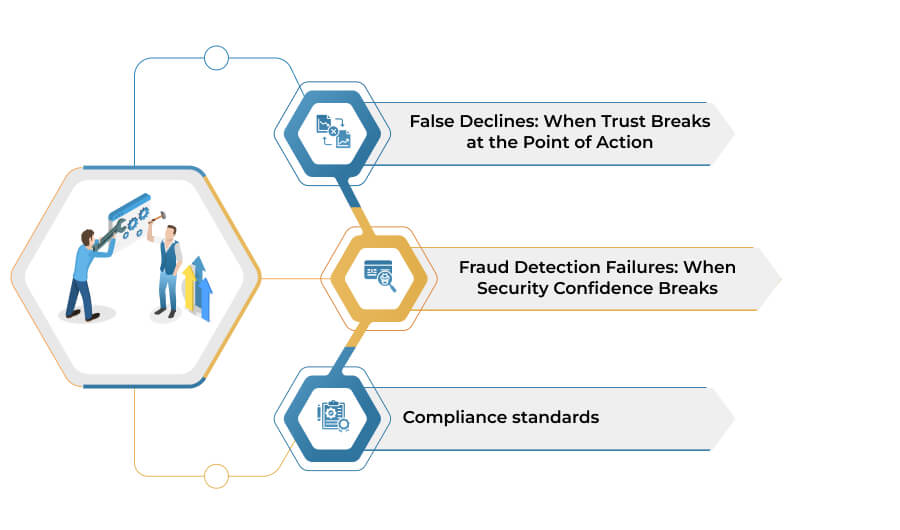
False declines can occur at critical moments for customers who are trying to finish a purchase. Instead of a seamless experience, they are met with an unanticipated decline that instantly breaks trust.
Where it fails:
Why it matters:
People remember experiences, and a false decline is an experience, and stops a payment, but not a memory. Your system will be deemed unreliable as a result.
Fraud detection failures show the system’s inability to safeguard users more than any feature or promise. Financial and emotional harm is done when users see unauthorized transactions and feel their trust is betrayed.
Where it fails:
Why it matters:
Trust is lost not only in a fraudulent transaction, but in the platform itself
Today’s organizations are prioritizing the delivery of security and experience in perfect synthesis.Many organizations are realizing that automation alone cannot solve operational inefficiencies without intelligent decision-making systems.The key challenge is executing the dual trade-off in a manner that is both correct and imperceptible to the end user.
What must be achieved:
Why it matters:
Trust in a system grows when defenses are unnoticeably protective and system performance is unnoticeably consistent.
Incorporating AI technology to analyze data in real-time has altered data-driven decision-making processes in the financial sector. AI enables data-driven contextual flexible decision-making as opposed to inflexible decision-making in a framework based on data streams. AI examines a myriad of factors ranging from a user to multiple contextual and transactional histories, geolocation, device signals, and autonomously optimizes and contextualizes decisions.
It is the ability to learn that differentiates AI technology from any alternative. Traditional decision-making has processes that are dynamic while AI has the ability to adapt systems to any new trends as a result of a process called transactive learning. AI systems are therefore the most unprecedented and sophisticated systems in decision-making.
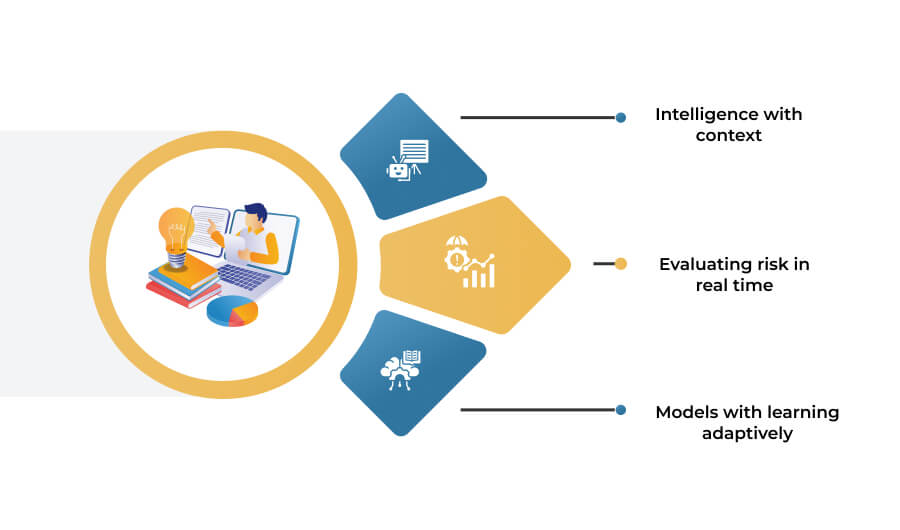
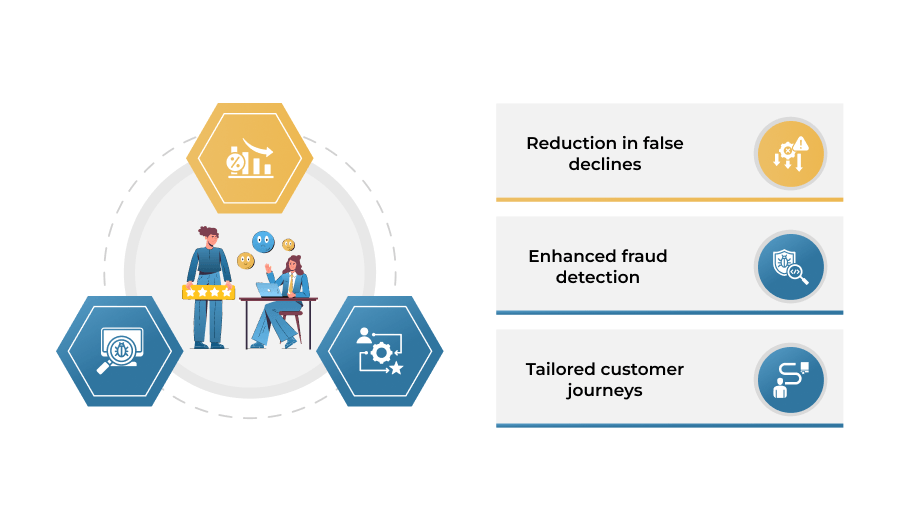
AI’s speed, intelligence, and flexibility allow businesses to shift from responsive to anticipatory and predictive decision-making.
AI is more than just streamlining decision-making processes. It builds assurance in every engagement. Automated systems become more reliable to users when results are correct, simple, and consistent. Trust is developed system-wide.
The ability of artificial intelligence to recognize and act in the moment is its true ability, not speed.
Contemporary financial systems must address the conflicting need for both customer-centric interaction and regulation upholding step-integration. Customers desire instant and simple interactions. But it falls on businesses to ensure that each interaction is regulation-compliant.
The end goal is not about minimizing compliance. It is about making it invisible. When done effectively, the flow of the customer journey will be seamless. The type of cumbersome, verification checks and compliance audits will be done behind the curtain, while the customer experience is made to be fast and simple.
Businesses need to meet the demands of both regulators and customers at the same time — without sacrificing either.
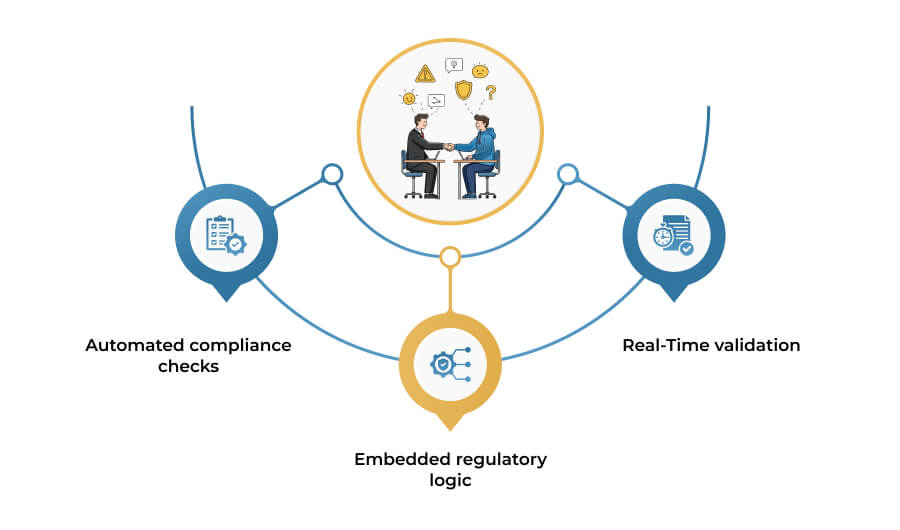
Automated Compliance Checks
Automated systems handle KYC and verification methods, minimizing manual work and time taken.
Embedded Regulatory Logic
Compliance standards are built into the workflows so that every action taken can be within the law.
Real-Time Validation
Transactions are evaluated and authorized on the spot, providing speed and precision.Our target is very clear- customers should experience simplicity, not complication.
The most effective systems ensure that while the experience is still seamless and effortless, compliance is taken care of in the background.
Businesses today require rapid shifts in workflows within their internal processes to be responsive to the changing needs of the market. Low-code systems allow companies to construct and alter decision-making workflows without needing significant resources in the form of engineering or time.Low-code platforms are enabling enterprises to build agile and scalable decision systems with greater speed and flexibility.
Being able to update their systems continuously and in real-time allows companies to remain responsive to changing patterns of fraud, shifts in regulation and changes in the market.
When companies have the ability to update and change their system continuously, customer experience is further enhanced. The journey is responsive to changing needs, streamlining the customer experience and solidifying trust.
Transparency and explainable AI models are becoming essential for building long-term trust in automated financial systems. Financial decisions are made in a matter of seconds. Although these decisions can be automated, trust can be built through understanding. When customers do not understand why an outcome was unfavorable, they begin to lose faith in the system. Providing transparency allows customers to feel that the decision that was made was fair, logical, and dependable.
From a regulatory standpoint, explainable decisions also help build trust. When customers can explain the outcome of an approval or rejection, they are far more likely to trust the system and continue to use the service.
Transparency not only means having decision factors and real-time updates, but also providing simple explanations. Ultimately, transparency helps customers to understand the system instead of feeling confused.
Most importantly, transparency helps build trust in the decision-making process. It helps create an environment of confidence rather than uncertainty.
Trust has gone from being an abstract concept to an actionable, measured business performance metric. Insurance leaders are increasingly using analytics platforms to improve visibility into customer trust, risk, and operational performance. Today’s businesses leverage predictive analytics to ascertain the decision-impacting confidence and loyalty of patrons to the business.
Key Metrics That Define Trust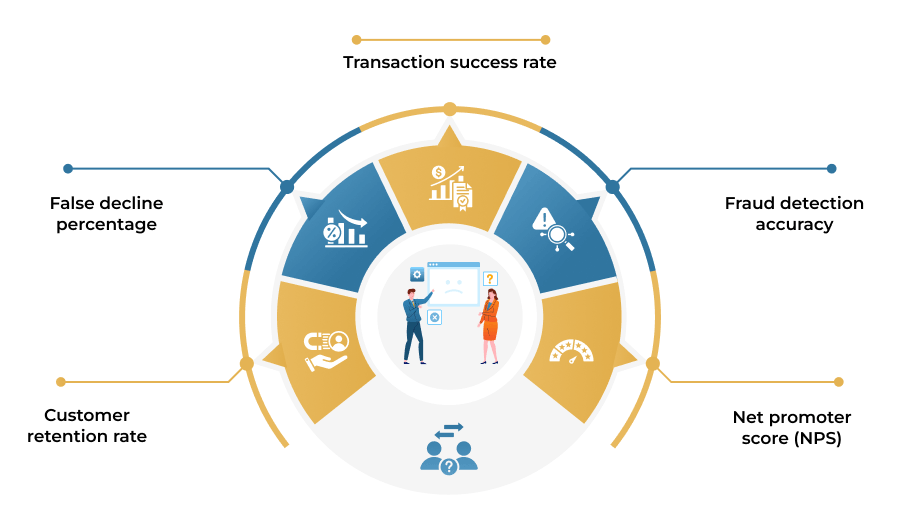
These metrics, when tracked and optimized, give businesses the ability to pinpoint decision, accuracy, trust, and weak points, and improve them to strengthen customer trust.
Trust-first systems are created purposefully. Today’s businesses are redesigning their decision systems to build trust with customers by making interactions seamless, precise, and dependable.
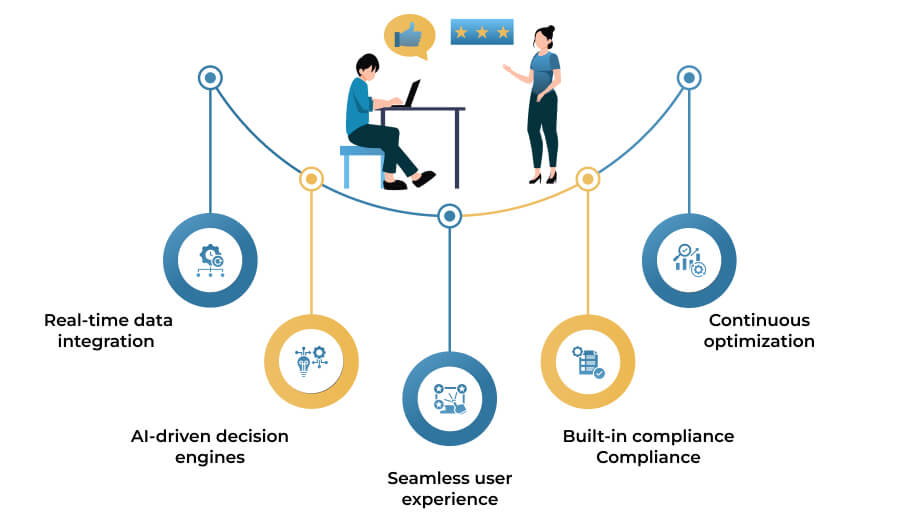
When integrated, these components allow businesses to focus on mitigating trust issues, in turn, making trust an automatic result of these systems in place.
Businesses can no longer afford to treat trust as an afterthought. It can, and should, be designed into systems, processes and decisions. Customers expect a seamless experience with speed, accuracy, transparency, and security.
Businesses that become intentional about building trust with their customers will not only keep their customers, they will become differentiated in a marketplace that is becoming more competitive. Trust-first strategic decision frameworks will deliver customer interactions that strengthen trust.
The bottom line is that every decision in modern finance is a moment that can, or cannot, be trusted. Every decision is either a moment that builds trust or a moment that breaks trust.
12 Oct 2026
08 Oct 2026
05 Oct 2026