Why Today’s Customers Expect Insurance...
12 Oct 2026


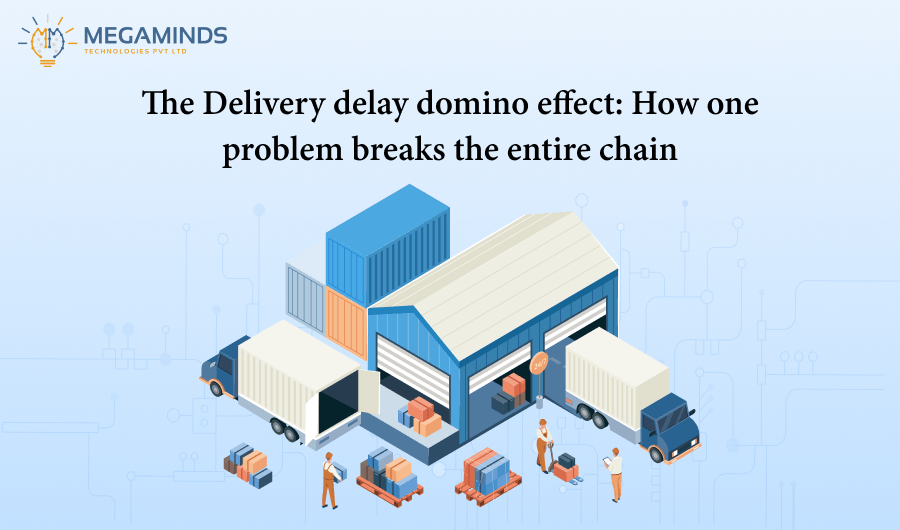
Most late deliveries in logistics is not due to traffic or transportation issues, but rather due to internal delays in the decision-making processes, like slow approvals, unintegrated systems, and lack of real-time visibility. Enhancing the speed of decision-making and increasing automation can help reduce delivery delays and operational inefficiencies.
Before shipment movement, many decisions have to be aligned, which include confirming inventory, pricing approvals, dispatch authorizations, and planning routes. When one of these steps slows, the entire delivery timeline collapses.
An example of this is when a shipment is ready to leave at 10 AM. It might be delayed until 2 PM, not due to logistics inefficiency, but because someone was “waiting for confirmation.”
Your real delay is in this gap.
This is not the case in high performing companies, where the speed of decisions is a central focus, rather than an afterthought.
The costs to the organization for indecision are difficult to measure, but are clear to the loss of efficiency, profit, and the trust of the customer. Each indecision, of which some can be 10 minute decisions, and some are hours of coordination sticking points, impact the entire supply chain.
Research has shown more than 60% of the delays seen can be attributed to gaps in internal decision making.
Operational friction is a clear and measurable result for the indecision and loss of efficiency. It is clear to see the business risk grows over time.
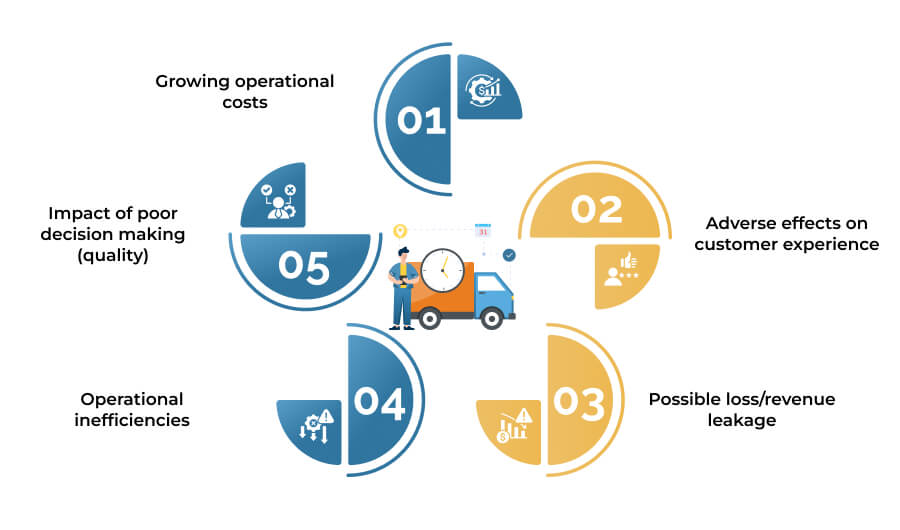
Besides slowing deliveries, delays slow business development, limit flexibility, and diminish competitive strength.
Companies that remove the lag in decisions and create workflows that are data-driven and executed in real-time can deliver up to a 25-30% improvement in delivery performance, a 20% reduction in operating costs, and a strong improvement in customer satisfaction.
In a rapidly evolving marketplace, a lack of action goes beyond delays; it poses a risk to the scale and ultimately the viability of the business.
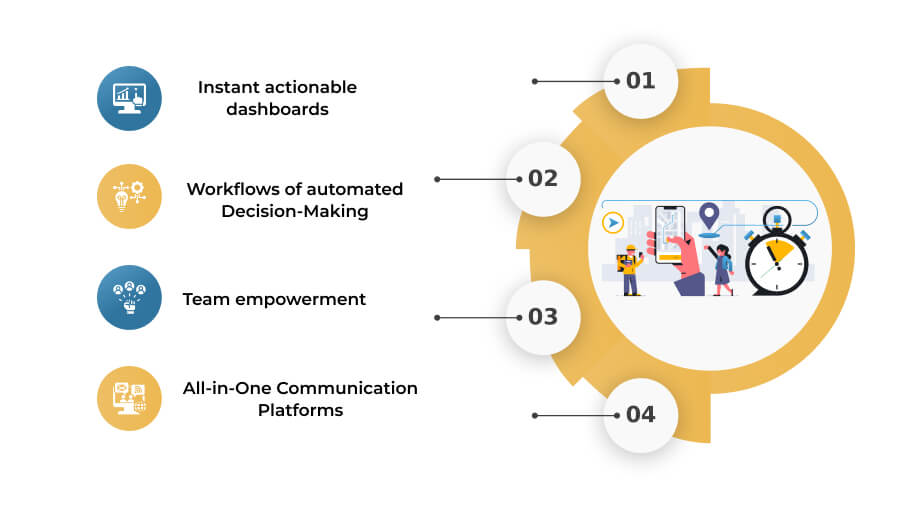
Visibility is not solving the problem. Lots of companies like to show off their dashboards, but real-time insights are passive until something is done. Knowing something is delayed is not as important as actually doing something to resolve the situation.
Most organizations have people that monitor things, but real-time decision-making is pushed up the hierarchy. This creates dependency, kills response time, and turns small setbacks into big problems.
Most systems are the same. They provide insights without the execution. No automated workflows or triggers mean the team has to sit in a manually approved and communicated limbo, which are just more delays.
A good example of this situation is the one where one bump in the road can mean a lot of bumps because people can’t just go and reroute shipments without more approvals. By the time another person has gone and done this the opportunity has been missed.
In logistics, understanding has never been the goal. Businesses need to gain the ability to act in real time. Actual efficiency is found in combining visibility with the ability to make decisions.
Most traditional logistics models answer problems in a reactive manner. They don’t consider potential problems before they arise, which lead to possible delays or even an inefficient system. On the other hand, the focus of today’s modern enterprises is turning to predictive coordination which functions by identifying potential problems in advance. With today’s predictive coordination models of logistics, problems can be resolved before they impact the delivery schedules.
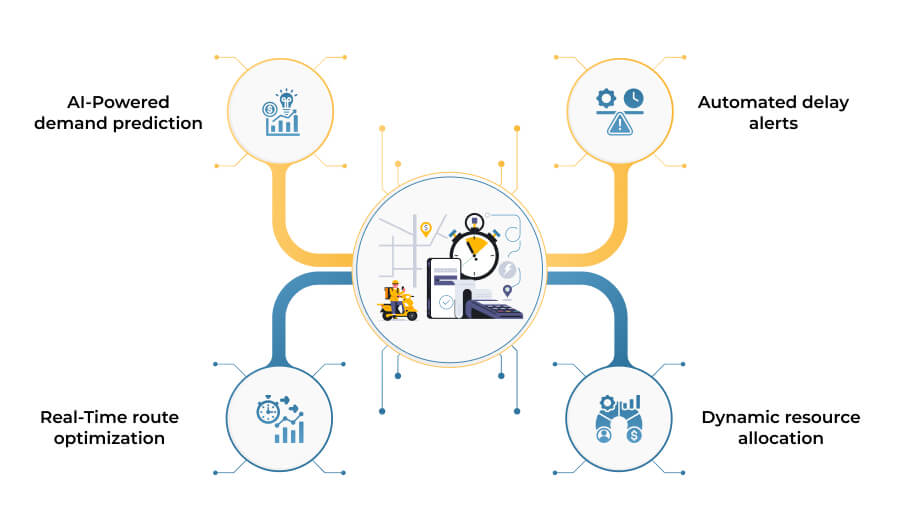
The described potential allows for the transformation of the function of logistics from cost absorption to value creation, increasing efficiency, reliability, and competitive advantage.
Power of data lies in the ability to drive decision making and action. For most businesses, the most difficult problem to solve is not data collection, but the ability to make data driven decisions and execute them, resulting in the most difficult problem of the data transformation process. Delays occurring in the time between insights and action are often created during this time interval.
Flexibility is core to speed, and traditional development just won’t cut it.
This is why low-code platforms are such a big deal.
Rather than waiting months for your IT team, you can build and deploy logistics solutions in just a few days.
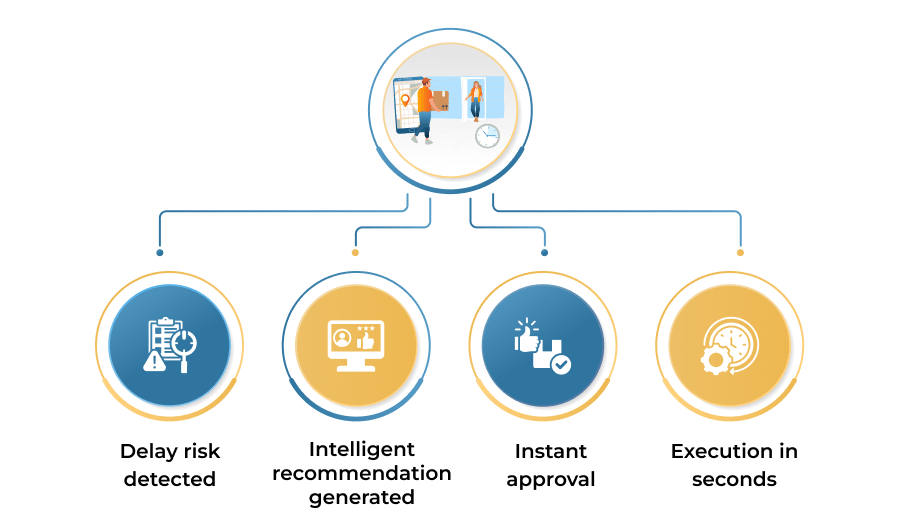
Instead of a real-time dispatch approval system, why build it yourself?
Instead of predictive delay notifications, why deploy it yourself?
No lengthy development cycles and no bottlenecks
Low-code not only accelerates development; it also removes decision friction throughout the process.
In today’s business environment, the most successful organizations aren’t the ones making the most moves, it’s the ones making the most rapid decisions. In today’s logistics, the most common delays stem from decisions, such as approvals and fragmented streams.
Decision velocity measures how quickly an organization can gather relevant information, make decisions, and take action. Improving decision velocity can improve responsiveness to disruptions by over 60%.
Data centralization can improve decision accuracy by as much as 30% and ensure that teams are working with the most accurate information. Plus, process automation can remove 50-70% of the decision time caused by human bottlenecks.
Empowered frontline teams can resolve issues faster, accelerating operations by as much as 25%. Real-time disruptions management can reduce risks by 20-35%.
In today’s logistics environment, what determines how quickly a business can deliver is how rapidly decisions can be made and how quickly action can be taken.
Fixed systems fail in a world of unending change.
Supply chains need to be adaptive to support modern businesses.
What Makes a Supply Chain Adaptive:
The Payoff:
An adaptive system doesn’t simply react to change; it predicts and integrates change.
That’s how top businesses remain in front.
Calculating the origin of delays in deliveries may seem to suggest highways, but the true origin is slow approvals, indecisive responses, and disconnected decisions within an organization. Logistics is within the business. Therefore, the focus should be on improving decision-making processes internally before the business begins to operate.
Today’s winning enterprises are the ones who are able to make decisions faster, and not necessarily the ones who are moving faster. Through the integration of real-time insights, automation, and decision enabled teams, businesses are able to identify and resolve delays at their sources, improve their delivery performance, and secure their position at the top in an ever-changing and demanding marketplace.
It is time to rethink your decision-making strategy, not just your routes, if your logistics still feels reactive and slow. Shifting from making decisions with delays to actions in real-time is the number one factor that differentiates good from great businesses. Contact Us to start designing logistics that are faster, more intelligent, and free from delays.
03 Sep 2026
17 Aug 2026
15 Jun 2026