Why Today’s Customers Expect Insurance...
12 Oct 2026


IoT and Power BI are changing how we see real-time logistics and transportation by letting us keep an eye on fleets, shipments, and operations all the time and turning raw sensor data into useful information. This combination lets businesses find problems right away, improve routes, cut costs, and make decisions based on data instead of having to wait for reports that aren’t complete.
There are large visibility gaps in legacy logistics tracking because manual scans and irregular updates slow information flow. Human error often causes teams to lose or misroute packages, leading to delayed data entry. International shipping further increases these challenges because infrastructure varies widely across regions. Businesses make slower decisions and rely on fragmented Excel reports, resulting in costly mistakes, while customers lack real-time shipment visibility. Before adopting digital solutions, logistics companies operating with manual processes experienced high error rates and limited operational agility.
These systems don’t meet predictive requirements, so operations teams aren’t aware of new problems like fuel theft or engine wear, which leads to 30–40% more downtime expenses.
By equipping trucks, cargo, and warehouses, IoT sensors provide detailed data streams continuously with the help of which logistics companies can carry out real, time monitoring like never before.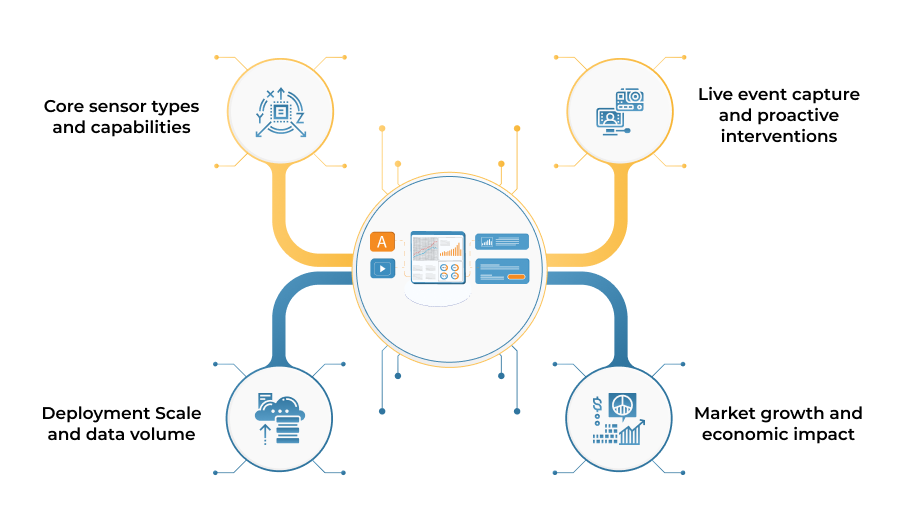
By using data-driven decision-making, this configuration turns logistics operations into a real-time nerve center and reduces operating costs by 35%.
IoT ecosystems generate massive volumes of data every second. This data turns into noise instead of intelligence in the absence of analytics.
Creating business value from IoT signals entails the following steps: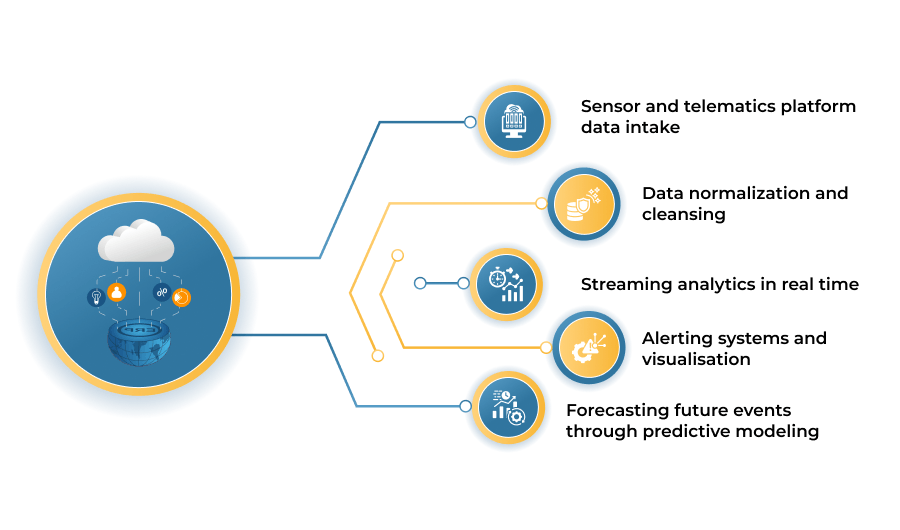
For example:
Businesses transition from basic monitoring to predictive and prescriptive logistics intelligence by implementing analytics models.
At this point, Power BI emerges as a key transformational driver.
In the case of IoT providing data, Microsoft Power BI acts as the brain which processes, visualizes, and democratizes it. Power BI is the main analytics and visibility layer that not only takes in processed IoT data but also takes in the contextual information of your core business systems (ERP, TMS, WMS). What makes it powerful is its ability to:
The integration of IoT and business data in Power BI facilitates automation and highly efficient business operations. This is why the operational intelligence you can attain with this integration goes beyond mere tracking.
| Feature | Traditional Reporting | Power BI + IoT |
|---|---|---|
| Update Frequency | Daily/Weekly | Real-Time Streaming industry40 |
| Anomaly Detection | Manual Review | AI-Powered Auto-Flags aiforbusinesses |
| Customization | Static Excel | 100+ Interactive Screens dojo |
| Cost Impact | High Errors | 30% Shipping Savings sparity |
Using IoT + Power BI, GPS/telematic data of fleets are monitored for location, speed and idle timethus the routes are optimized and the fuel is cut by 20%. Warehouse sensors live, track inventory temperatures and stock levels, which prevents spoilage.
Route visibility identifies deviations immediately, and the dashboards indicate the ETAs changed due to traffic or weather conditions. A Fortune 500 logistics company implemented this to reduce storage costs by 18% through demand sensing.
Holistic monitoring covers the different assets: engine health of the fleet, humidity in the warehouses, and traffic on the roadswhich, in total, results in a 15% increase in efficiency.
Did You Know? Fleet sensor data indicates IoT, equipped trucks lead to 80% fewer breakdowns.
Small interruptions in logistics might soon turn into significant service outages. Thus, it is essential to detect exceptions in real time.
With IoT and Power BI:
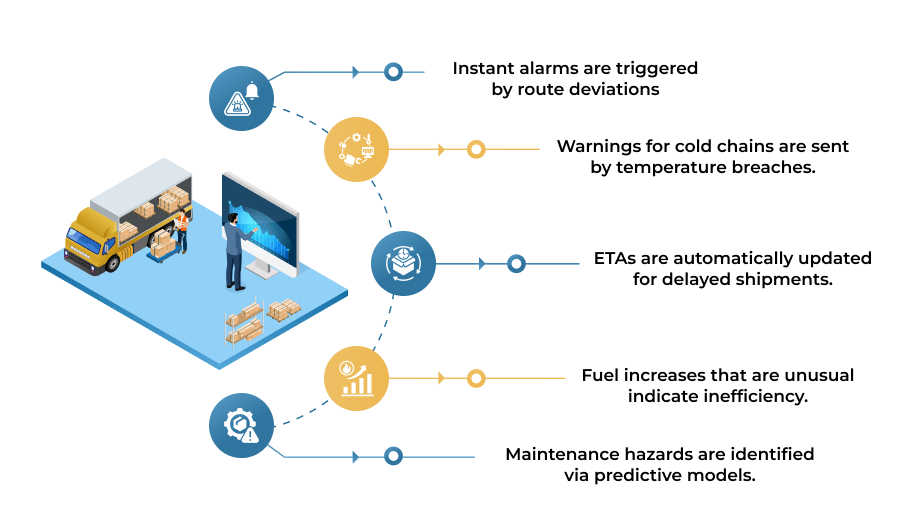
Rather than discovering issues after customer complaints, operations teams can intervene immediately.
For example:
If a delivery truck deviates from its assigned route, Power BI dashboards can automatically notify supervisors, estimate delay impact, and recommend alternative routes.
This proactive approach reduces:
Faster response time directly translates into improved service reliability and profitability.
The real advantage of this technical coupling is experienced when IoT, driven data is brought back and re, integrated into the operational systems of your business. Power BI serves almost as a bridge, enabling a smooth flow of data. To illustrate: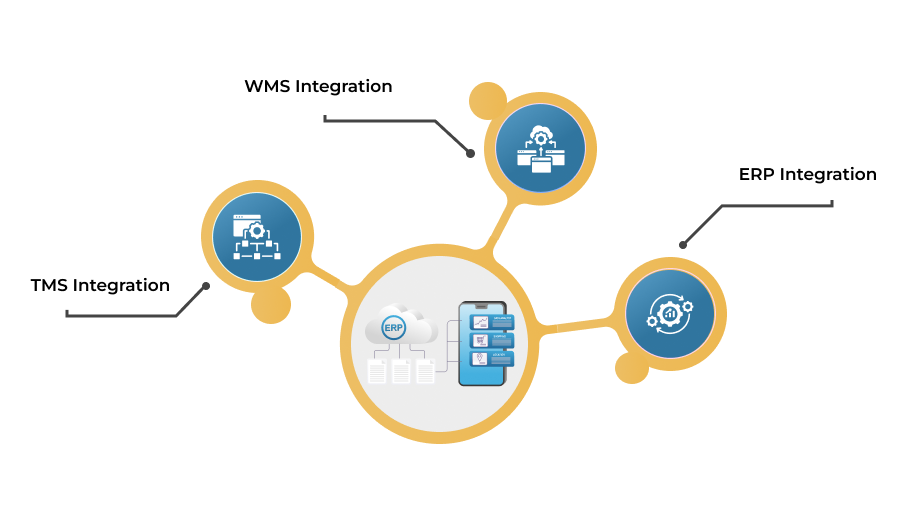
TMS Integration: Real, time ETAs derived from IoT GPS data are thus returned to the TMS to dose customers with accurate delivery times. The actual routing data can be leveraged to dynamically re, optimize future route planning.
WMS Integration: IoT devices in trucks can notify the WMS of an expected arrival, therefore the warehouse staff will be able to pre, stage the equipment and allocate dock space, thus reducing turnaround times.
ERP Integration: Proof of delivery, e.g., via a mobile app and timestamped with IoT data, can be automatically trigger the invoicing in the ERP, thus shortening the order, to, cash cycle.
This integration closes the circle, making sure that physical events recorded by IoT immediately continue and enhance the digital processes of your core business systems.
Real, time transparency results in higher OTIF figures, with IoT analytics uncovering delay patterns for proactive remedies thus customer satisfaction through precise ETAs gets a further uplift.
Their costs got lowered: 35% savings in ops, 50 million dollars annual fuel cuts.
Reliability goes up massively when predictive maintenance eliminates downtime, at the same time, missives facilitate shipping versus charged costs. One company has experienced 30% cost savings and a more efficient invoice handling.
For sales people and project managers: achievements that can be measured such as 22% quicker transit time result in a lead over competition.
| Metric | Improvement | Source [cite] |
|---|---|---|
| Delayed Shipments | -38% | sparity |
| Shipping Costs | -30% | sparity |
| Transit Time | -22% | clariontech |
| On-Time Delivery | +20% | cobit-solutions |
Since the system is flooded with highly sensitive operational and location data, security becomes the first and most important priority. Leveraging the capabilities of a platform such as Microsoft Power BI provides a great foundation for data governance and compliance. Some of the main security features include: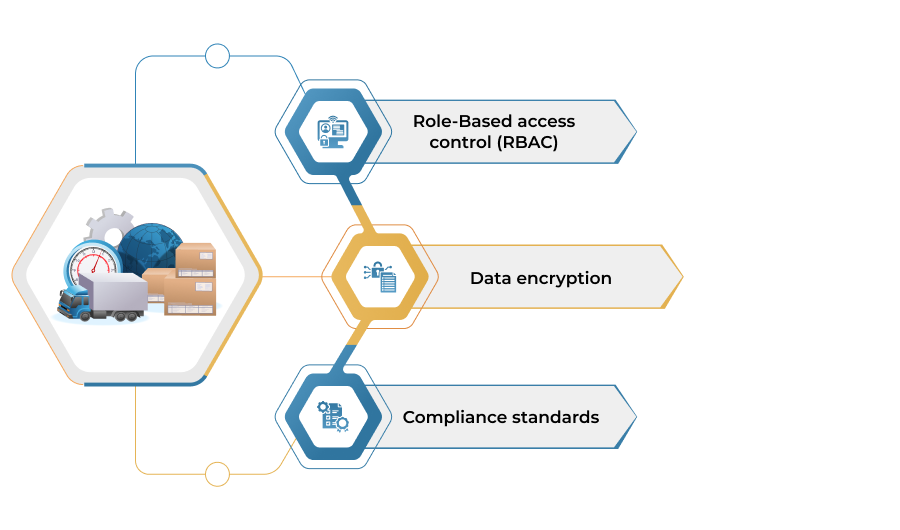
Role-Based Access Control (RBAC): This guarantees that people can only access the data agreeing to their job. The system shows drivers only their vehicle data, while logistics managers can access the full fleet view.
Data Encryption: Power BI encrypts data both in transit and at rest, protecting it from unauthorized access.
Compliance Standards: Microsoft holds numerous compliance certifications, including GDPR, thus assisting businesses in fulfilling their regulatory requirements when managing data, especially cross, border data.
An IoT and Power BI solution that is well, designed and secured from the very start achieves security as a priority and thus the advantages of visibility do not entail the sacrifice of data integrity.
Visualize a whole, seamless process from start to finish. A sales order is registered in your ERP system. The WMS efficiently selects and packs the items, and an IoT sensor tag is put on the pallet.
When the truck departs from the warehouse, the TMS is notified with the time of departure, and the sensor starts sending out signals of location and temperature.A customer service agent is able to monitor the shipment’s progress live on a Power BI map and give the customer the exact time of arrival.
On the way, the truck encounters unplanned traffic. Power BI’s AI, driven traffic prediction tool updates the time of arrival and automatically notifies the customer.Finally, the truck gets there, a door sensor verifies that the door was opened at the correct location, and proof of delivery is digitally recorded, thus the ERP is automatically invoiced.This smooth, clear, and smart process is the real future IoT and Power BI bring to us today.
Integrating IoT with Power BI is more than just a great step forward; it is a complete rethinking of logistics management. It achieves this by replacing reactive guesswork with proactive, data, driven intelligence and, thus, eliminating the delays in information caused by old systems. This strong duo offers the necessary level of transparency at a glance to effectively control costs, improve service, and create a solid supply chain that is capable of handling today’s disruptions.
Going forward, this live database will become the essential base upon which new technologies such as predictive analytics and autonomous logistics can be developed. By making this change now, companies are not only improving their performance but also preparing their entire supply chains for a future that will be smart and interconnected.
03 Sep 2026
17 Aug 2026
22 Jun 2026