Why Today’s Customers Expect Insurance...
12 Oct 2026


Field operations nowadays and companies that could flourish delivering superior customer experiences are in the core of an ever-changing digital landscape. But there remain companies with processes, systems, and operations that are so outdated or manual that they are truly inefficient and unresponsive. Digitization-first thinking, today, is a must-no-optional decision. This stance emits any situation at the field level to lean for digital solutions in growth, agility, and service enhancement.
Fieldwork is that crucial operation-for service delivery, especially in utilities, construction, manufacturing, and IT services. Yet roadblocks get placed to hamper the performance, scalability, and satisfaction of its customers. Identifying these friction points is the very first step toward the actual designing of any impactful digital-first solution.
Some common field-level challenges are:
Many field teams still resort to cumbersome paper-based methods that hinder operations and increase chances of human error.
Field operators perform tasks without the updated information, thus causing delays in task completions and bad decisions.
Lack of consistent communication between office teams and field agents creates misalignments and misses vital updates.
Bad schedules and dispatching tend to lose time, duplicate routes, and underuse resources.
Being unable to monitor field activities often forces managers into a reactive problem-solving mode rather than with an anticipatory approach.
Customers now want real-time updates, effortless service, and transparency-a tough proposition sans digital support.
Recognizing these operational hurdles helps businesses reimagine field processes using digital-first thinking, enabling smarter, faster, and more scalable service delivery.

The digital-first concept is a buzzword but really speaks about a mindset, which puts technology at the heart of a strategy rather than leaving it as an afterthought. For day-to-day operations, this approach ensures that teams work smarter, respond faster, and create elicit value at every single touchpoint.
Here are a few instances of what building digital-first thinking stands for:
Prioritize tools that are easy to use and do not disrupt the daily work workflow of a field person, whether that is through mobile apps, wearable technology, or voice-centric interfaces.
Include automation where ever there can be repetitive manual tasks, intelligent systems could assign tasks, report, and schedule.
In-the-field data access and analytics require the teams to be equipped for a time-sensitive decision.
Facilitate dialogue among the field and the office via unified platforms that verge on the cloud and eliminate data silos.
The best approach to scaling digital solutions should be modular, so they scale with the changing needs of the business, rather than demanding reinvention with exorbitant costs.
Adopt an iterative development process and fast experimentations to align with changing dynamics of the field and customer expectations.
This mindset unlocks speed, agility, and resilience, turning field-level challenges into strategic wins.
Introducing a digital-first approach into field operations entails putting the right tools and technologies at the disposal of teams and also simplifying workflows. The solution needs to answer a real-life operational block or have scale and practicality.
We have listed the following key digital tools that are changing field-level efficiency:
Provide mobile apps to crews to send task updates in real-time, also location tracking, customer information, and data entry offline.
For central data storage and access, facilitates real-time collaboration between field teams and HQ in the absence of sync lag.
Monitor assets, equipment, and infrastructure remotely through smart sensors to guarantee timely maintenance.
Use smart algorithms to improve decisions through route optimization, workload prediction, and issue triaging.
Dispatching will be aided by route planning and technician accountability provided by geospatial information.
Offer remote assistance and training that is fully immersive to minimize downtime and knowledge sharing.
Use it to track KPIs and recognize tendencies, as well as to determine real-time data from a unique source of truth.
By leveraging these technologies, organizations can significantly boost productivity, accuracy, and customer satisfaction in field operations.
A digital-first mindset throughout operations entails far more than mere implementation of tools. It requires a clear strategy that works in sync with business goals, realities on the field, and user needs. Implementation activities should be carried out in a well-structured manner, with scaling options, and a system of feedback to track any changes.
Below are some considerations in the implementation of digital-first strategies in field operations.
Document workflows in nearly every aspect of the operation. Identify bottlenecks and inefficiencies to allow where digital tool intervention will ultimately bear fruit.
Get frontline workers involved in planning to gather genuine insights and to develop acceptance of the new tools and processes.
All digital solutions should be designed mobile-first to guarantee access on the go and in offline modes.
Make sure that the new technology loads into the existing ERP, CRM, or ticketing system before going for operation.
Implement on-the-job training and digital readiness of the teams to generate adoption and realize ROI.
Agile implementation models are helpful here to continue optimizing the tools based upon real-time feedback and changing operational requirements.
Executing with intention ensures that digital-first thinking becomes embedded, not just introduced, in your field ecosystem.
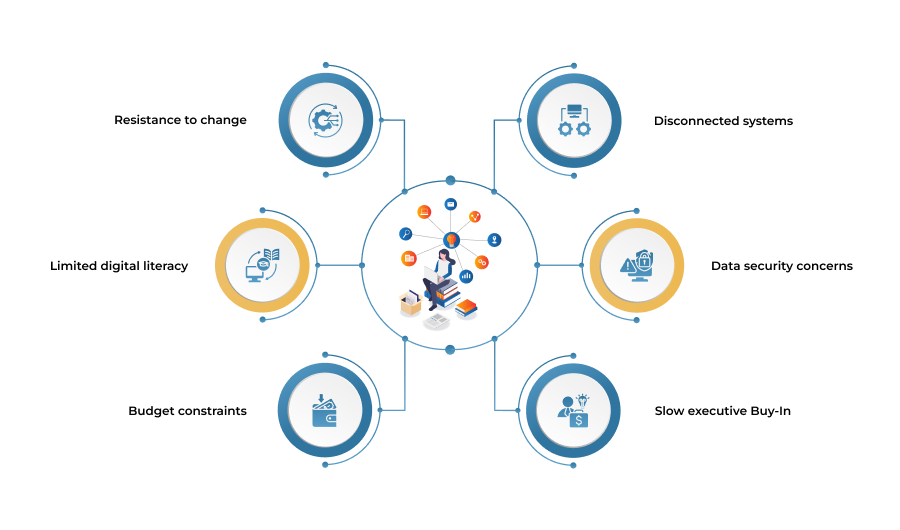
Being a digital-first field operation transition remains a powerhouse maneuver-the catch lies in actualizing it. Organizations do face barriers that halt momentum, such barriers can adversely impact adoption or dilute ROI. Proactively contending with the barriers leads to long-term success.
Key barriers are as follows, together with the proposed remedies:
Field personnel may be hesitant in abandoning legacy methods. Overcome this dilemma by bringing the resistance in at an early stage to enable quick wins to be demonstrated and celebrated.
Skill gaps should be bridged through follow-up workshops, mobile-first UX, and peer learning programs.
Keep it small, scalable, and cloud-based with high ROI and low upfront investment to accomplish the biggest efficiency gains.
Select an open-API platform or one that facilitates integration from within to allow systems to converse among themselves (CRM, ERP, and dispatch).
Focus on enterprise-grade cyber-security implementation and adherence to relevant Data Protection laws (e.g., GDPR or HIPAA).
Give the leadership some ROI use cases and success stories to help get that elusive support and budget approved.
Overcoming these barriers paves the way for a resilient, future-ready field operation model.
A digital-first approach is not implemented once and leave. Instead, it is a journey of constant optimization. The measurement of success through relevant KPIs and the inculcation of a culture of continual improvement ensure that digital transformation brings long-term value in field operations.
Here is how to track success and keep evolving:
Time to complete a task, first-time fix rate, downtime reduction, customer satisfaction (CSAT), and technician utilization are some metrics that should be tracked to ascertain the said impact.
Make use of digital dashboards and BI tools (Power BI, Tableau, etc.) for real-time monitoring of performance across teams and locations.
Keep checking the processes and field user feedback quarterly to identify bottlenecks or areas for upgrades.
Field agents can be surveyed or given app-integrated feedback loops to provide insights concerning how well the tools employ real-world requirements.
Where digital performances from others or industry best practices are measured allows you to find room for improvement.
Select quick development cycles to continually test, learn, and evolve on the tools and processes.
Encourage celebrations of performance improvement with the entire company far from being a morale boost and positive reinforcement for innovation culture.
Consistent evaluation leads to smarter strategies and ensures your field operations stay ahead of the curve.
Dealing with field-level challenges through a digital-first perception of the problems is not even optional anymore, instead, it has become something strategic for organizations that must survive in a customer-centric fast-paced environment. By recognizing the unique hurdles found on the ground, adopting new technologies, and embarking on up-to-date digital strategies, companies find themselves bestowed with extraordinary efficiency, agility, and, ultimately, higher customer satisfaction.
Are you ready to take your field operations by digital storm? Let us get in touch and chart out a custom digital-first strategy. Contact us today to start the conversation.

22 Jun 2026
15 Jun 2026
08 Jun 2026