Why the Future of Insurance...
15 Oct 2026

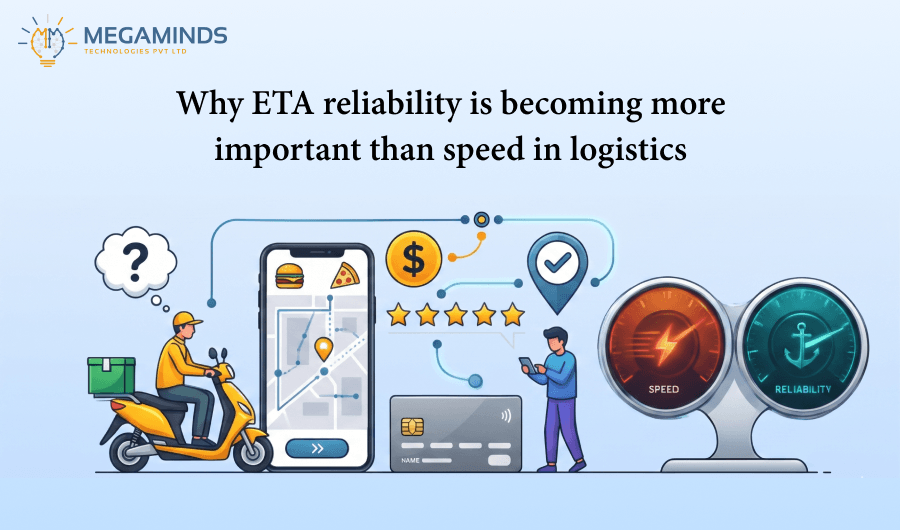
In modern logistics, reliance on ETA is metrics more important than speed of delivery. To businesses and consumers, speed is inconsequential if the service is unpredictable. On-time deliveries allow businesses to plan time and time-sensitive activities and reduce delays while working towards maximum customer satisfaction. Erratic and unreliable services, be it due to delivery or ETA, will inevitably cause disruption in the supply chain. Today, ETA reliability can be improved with the use of cutting edge technology like integrating AI, GPS real-time tracking or predictive statistics. This would ultimately allow for improved customer confidence, more efficient supply chains and a competitive advantage for the business.
ETA reliability means the speed and dependability of estimated delivery times during shipment. Logistics has changed significantly, and businesses know better than to work off delivery arrangements and schedules. ETAs can now be calculated in real time with the operational data and predictive analyses. Simultaneously, logistics offers a better understanding and lower estimation of time. As a result of improving ETAs, logistics has a better understanding of time. Accurate forecasting ETAs is becoming increasingly important for operational effectiveness and maintaining customer satisfaction.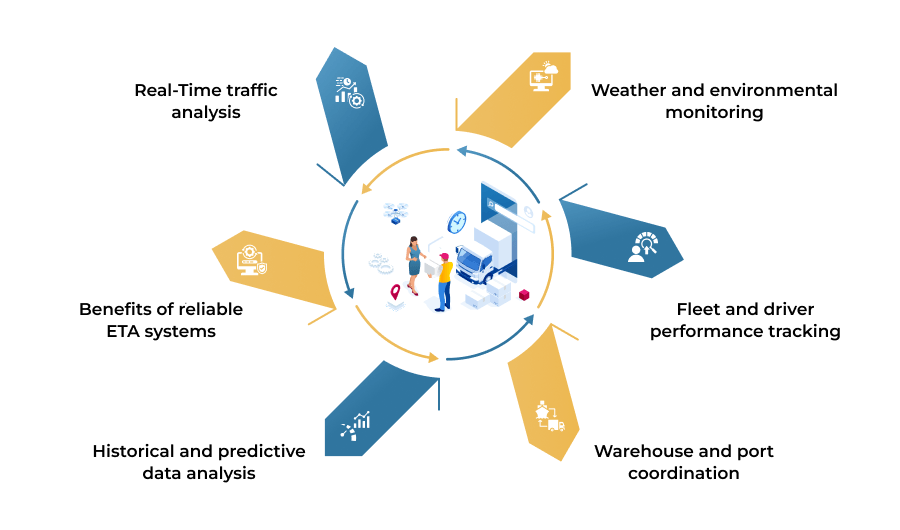
Even advanced logistics systems can struggle if delivery experiences fail to meet customer expectations consistently. People used to say they liked your service, it was fast. Fast isn’t enough. The customers liked it because it was fast, but the real reason they liked it was that it was trustworthy. If you tell them that you will be delivering that shipment tomorrow and arrive a week after it, then you’ve raped them of all their faith in you. You’ll get angry customers, angrily killing you customers, customers who are angrier than if you told them your would deliver the shipment in three days, and then did on day three. Today, the customer wants honest and reliable.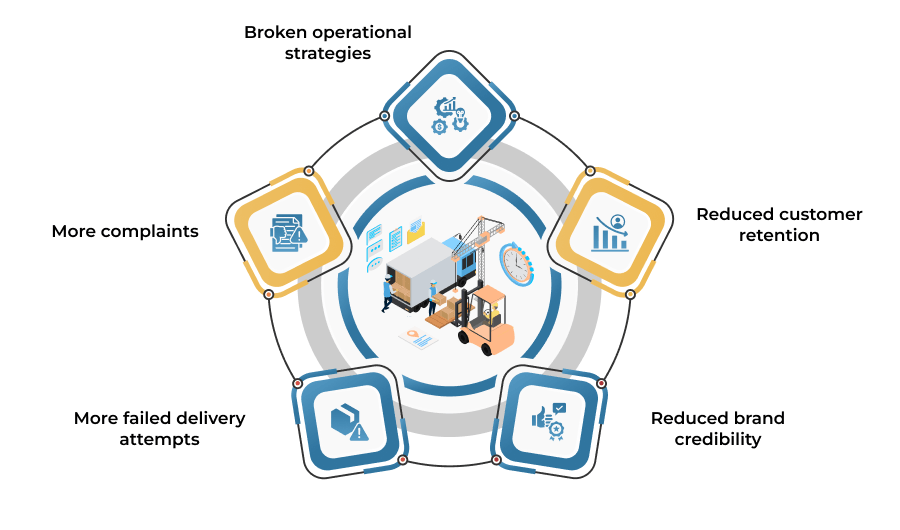
Broken Operational StrategiesYour staff, production, and work schedules are a direct reflection of predicted arrival and shipment schedules. Unpredictable deliveries break all of the workflows, and, as a result, reduce operational efficiency.
More ComplaintsUnpredictable deliveries break your customers’ trust, and they no longer have confidence in the logistics providers. Frustration with your delivery service will negatively impact the customer.
More Failed Delivery AttemptsUnexpected arrivals cause customers to be unavailable and result in failed deliveries, more adjustments to last-mile delivery, and greater expenses.
Reduced Brand CredibilityTrust decays as a result of repeated failures to deliver on time.
Reduced Customer RetentionAs time passes, your customers expect more, especially when they shop online. The most important thing you will learn from your customers is that most will spend their money with the most reliable and predictable delivery service. The most predictable delivery service will boost customer retention.
Logistics companies utilize Artificial Intelligence to enhance delivery deadline and ETA accuracy across the board. Anticipating and managing delivery disruptions using traditional systems was not possible, as those systems relied on an unchanging route and delivery averages. Integrated AI logistics systems are able to harness real-time data to determine traffic and delivery conditions based on live streaming data for the best and most accurate delivery predictions and congestion.
AI continuously improving delivery route accuracy and reliability is extremely beneficial. Congestion patterns and the delays they cause are predicted in advance. Maintaining and improving delivery performance is now achieved as a result of service providers optimally adjusting routes based on the predicted patterns.
AI also assists logistics companies with Intelligent systems for performing traffic analysis on the transportation system to estimate the effects of specialized stains, storms and other extreme weather. Companies are therefore able to formulate options to reduce and eliminate delivery disruptions.
Enhanced monitoring of the delivery system by AI also achieves high reliability logistics operations by tracking the performance of the fleet, fuel consumption, driver and fleet servce health behavior. This helps minimize failures in transportation.
The use of predictive analytics to achieve even better response to dynamic risks provides companies with the capability to determine with a fair amount of accuracy disruptions in the supply chain even before they occur. As a result, logistics companies are geared towards creating a more dependable network with reduced uncertainties and improved satisfaction to their customers with the incorporation of AI predictive ETAs.
Real-time data is changing how logistics firms enhance the precision of their delivery and the reliability of their estimated time of arrivals. Delivery journeys are monitored through the continuous collection of operational data facilitated by delivery technologies like GPS tracking and IoT sensors. Businesses can now track the status of shipment, traffic, performance, and what is occurring at the warehouse and dispatch in real time.
AI-based predictive ETA systems have the capability to analyze the data and automatically adjust estimated time to delivery in real time. Smart suggestions to change delivery path are made based on road and weather conditions, delays at the warehouse, and blockage along the paths. This allows the logistics firms to reduce operational delays and achieve greater efficiency and delivery reliability.
The ETA system’s ATP capability notifies customers of the delivery status in real time, improving communications. This real-time logistics intelligence is increasingly adopted by businesses to meet the expectations of customers for faster, highly intelligent, and dependably designed supply chain logistics.
A commitment to accuracy in both delivery and estimated time of arrival (ETA) grants businesses a considerable competitive advantage in today’s logistics. The need for comprehensive logistics visibility along the entire supply chain is heightened when dealing with returns, exchanges, and the growing demands of consumers. Today’s consumers will not hesitate to take their business to companies that fulfill their demands when they see that particular company consistently delivers. Consistent delivery of orders will improve the management of the supply chain and the overall operations of the business, maximize growth potential, and will not negatively impact business continuity. Moreover, it will also improve the overall experience of the customer.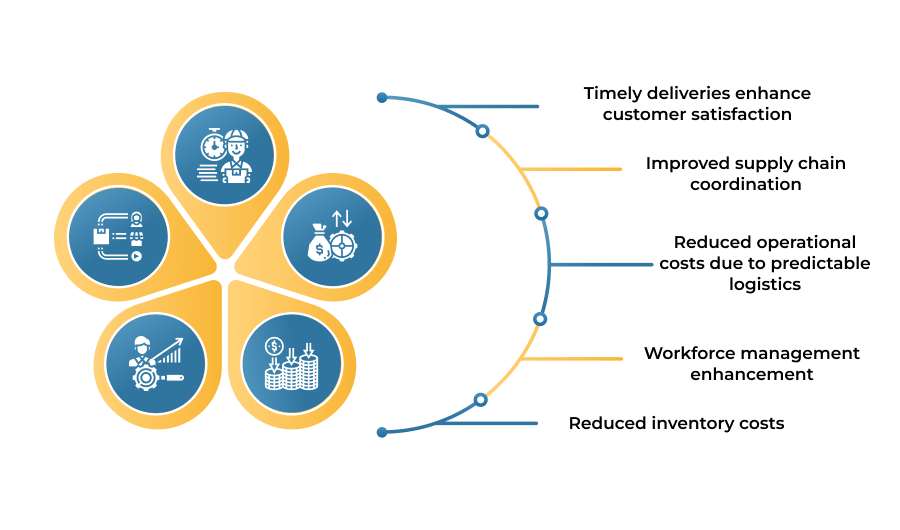
Risks in Meeting Customer Expectations: Increasing customer expectations combined with the increasing complexity of supply chains, makes dependable delivery promise to be more and more important to remain competitive.
Small disruptions can quickly create larger supply chain challenges when logistics networks lack visibility and coordination. Even though there have been many developments in the logistics industry, a precisely forecasted ETA is still a challenge. As far as the supply chain is concerned, it is quite unpredictable. There are numerous reasons for occasional delays such as interruptions of the transportation and operations of the logistics company.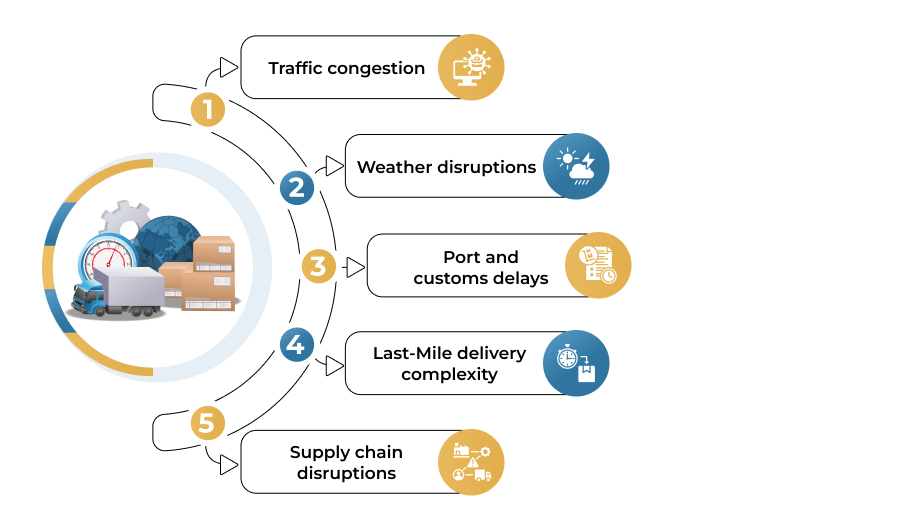
Delivery reliability is essential when establishing client confidence and the potential for repeat business. Customers expect the same service across similar companies and demand accurate delivery time predictions, updates, and easy-to-access communications. A study determined that almost 80% of customers are likely to reorder from a company that delivers orders on time. Delivering on time promotes customer loyalty.
Providing delivery reliability spikes customer retention and loyalty and promotes positive, word-of-mouth referrals. Research reports that over 65% of consumers will patronize a business no longer after persistently receiving late deliveries. Customer satisfaction rates can increase from 20% – 30% due to delivery reliability. This is especially accurate for eCommerce, retail, manufacturing, and healthcare service and product delivery.
B2B (business-to-business) companies benefit from the reliability of delivery, which means more production, more sales. But failures of the system could lead to loss of customers and much higher costs of delivery. Therefore, effective delivery systems and reliable ETA estimates are essential for customer satisfaction, business growth, customer retention and maintaining a competitive advantage.
Some organizations are using predictive ETA abilities to ensure better trust & efficiency while delivering. Using AI technologies to predict real-time tracking & optimization of the route can help organizations avoid delays.
There are real time tracking technologies built specifically for eCommerce to enhance delivery to customers and thus boost customer satisfaction during peak periods. For manufacturing businesses, ETAs can help manage inventories in real time thereby minimizing downtime.
Real time delivery forecast can prove to be critical for healthcare in delivering time sensitive equipment or supplies. Food and grocery delivery services also benefit from ETAs to communicate with customer about time sensitive orders.
Fleet management companies depend on telematics and AI for operating optimized fleets and delivering more accurate long distance deliveries. Reliable ETA services show improved performance and experience within the operational system of just one business, however, it’s easy to assume the positive impacts are felt throughout an entire industry.
More accurate predicted arrival times (ETA) allow businesses to increase the reliability of all deliveries, achieve improved operational efficiencies, and higher customer satisfaction ratings. As we integrate more ETA technology, it detects anticipated delays, connects logistics, and delivers a more efficient supply chain and delivery.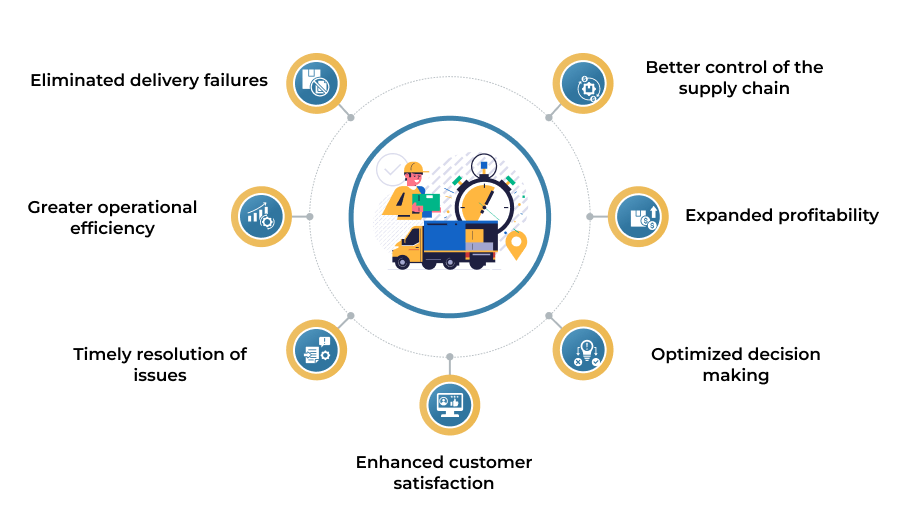
The future of logistics is headed in the direction of using Artificial Intelligence and IoT technologies to create smarter, more predictive supply chain systems. Companies are beginning to adopt these new systems, which will allow for improvements to estimated time of arrival and better operational efficiencies. Recent reports indicate that costs could go down by as much as thirty percent and delivery accuracy could improve by thirty-five to fifty percent.
The focus of the new logistics networks will be real-time delivery, automated route adjustments, predictive analytics for risk and return mitigation, and extensive route customization. Based on current delivery and operational schedules, AI systems will adjust routes on the fly taking into account real-time traffic and various other disruptions.
Using these predictive logistics systems will allow companies to enhance communication and collaboration across the entire delivery process. These include the fulfillment centers (warehouses), and transportation (fleets and last mile delivery). In addition, emissions and fuel use will decrease through better route planning and fleet optimization.
The companies that are early adopters of predictive logistics technology will have better operational resilience, customer satisfaction, and improved competitiveness.
Logistic innovation is imperative to adapting to the new demands in the market. Today’s consumers and businesses appreciate accuracy over speed. The modern market favors businesses that invest in their ability to give anticipated time of arrivals (ETAs), maintain visibility during the delivery process, and establish consistent delivery patterns. Customer loyalty is made and broken by disruptions in service, and businesses are learning the importance of prioritizing trust over speed. Supply chains are becoming increasingly digital and complex, and logistics performance that proves reliability is a true market advantage for long-term growth.
15 Oct 2026
12 Oct 2026

08 Oct 2026