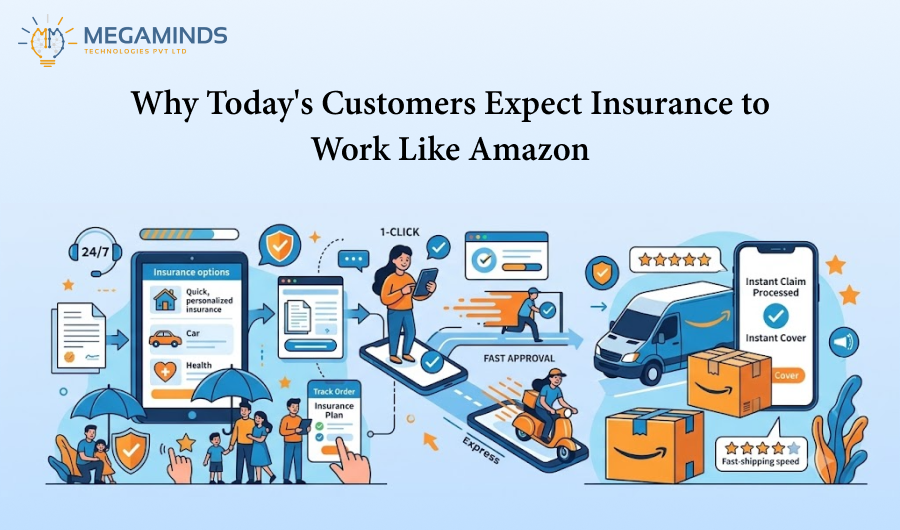
Why Today’s Customers Expect Insurance...
12 Oct 2026

AI, data analytics, cloud platforms, and automation are driving smart, fast, and tailored insurance services in modern enterprises. Instead of reacting to claims after losses, advanced insurers predict risks and attempt to prevent losses while enhancing customer services.
There are growing expectations from customers and businesses to receive streamlined services, customized policies and fast claims, and real-time policy changes. To remain competitive, insurance companies are utilizing AI to automate underwriting, and predictive analytics as well as IoT and embedded insurance services.
Because of the fast integration of advanced tech, modern insurance is rapidly shifting to a data-centric framework and away from the traditional model to provide businesses with tools to optimize performance and increase customer satisfaction.
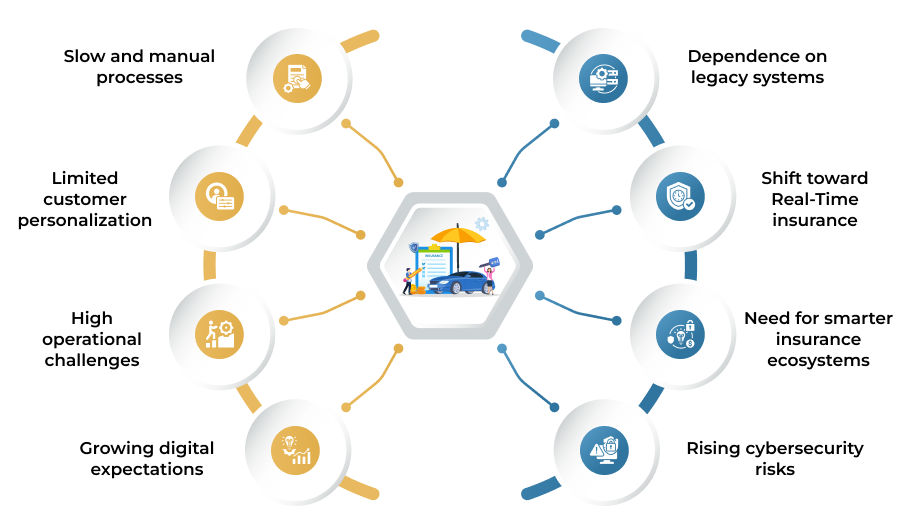
In the last few years, the demand for digitized insurance has levelled up due to the explosion of the fintech and e-commerce industries. Insurance is now a subset of digital commerce, and personalization and speed are now the standard. In digital industries, customer trust is built through every interaction, decision, and experience delivered by the platform.
Modern policyholders demand:
Many customers abandon insurers after a few subpar digital interactions. Because the standards are so high, the differentiator in the insurance market is excellent customer experience. More and more dynamic businesses are choosing customer focused business models.
Automation, intelligent chat, and dynamic recommendation modules are really good at balancing speed and scalability and insurers are shifting pressure from operations to their systems.
The adoption of dynamic business models, such as usage based insurance, has transformed predicted risk. Under modern telematics, real risk is loss of control, and insurers reward safe, responsible policyholder behaviors, like healthy lifestyles.
This shift in insurance structure is moving toward a personalized business.
Digital insurance platforms are at the heart of future-ready insurance firms. Such systems help insurers upgrade their operations, gain the agility to scale, and offer customers faster and smoother experiences across multiple digital interfaces.
Contemporary platforms help firms to:
Fast adoption of cloud computing is the norm across the insurance industry. Believed to be Cloud Native, insurance companies are showing better operational efficiency with sharper improvement visible in their agility, product launch speeds, and ease of deployment.
Digital platforms improve engagement among insurers, financial institutions, healthcare organizations, and other external stakeholders. APIs and the connected application ecosystems help organizations exchange real-time information, providing fast, seamless customer service.
Embedded insurance is the another key industry game changer. Direct purchase of insurance in most transactions (e.g. trip bookings, automobile purchases, or ecommerce) leads to incredible ease and satisfaction for consumers.
Swiss Re estimates that the value of embedded insurance will exceed $700bn in gross premiums by 2030. This presents one more example of how digital platforms are pushing the insurance industry toward truly connected, intelligent ecosystems.
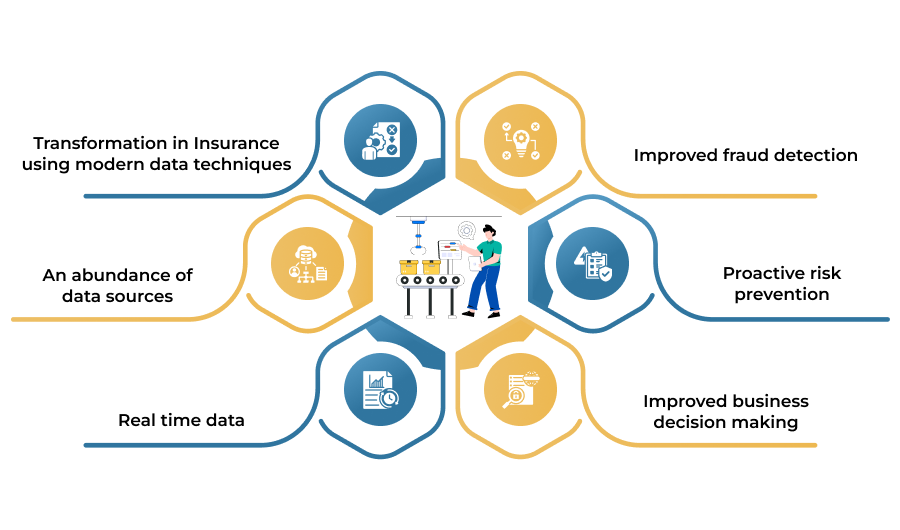
Transformation in Insurance Using Modern Data TechniquesData arguably may be the most vital of all resources as the insurance industry adopts new frameworks. Insurers are able to utilize advanced analytics, AI, and machine learning to optimize the business decisions that are made, and target customers in ways that were previously thought impossible.
An abundance of data sourcesModern insurers utilize IoT devices, wearables, telematics, and operational platforms to gather data that can explain customer behaviors de-risking practices.
Real time dataMoving away from traditional methods of data collection is paramount in order to stay relevant in this field. Predictive analytics provides the information needed to accurately assess the ever changing climate of risk and to provide effective underwriting.
Improved Fraud DetectionAI analytics can detect anomalies far faster than traditional methods. AI-powered insurance systems can claim processing times faster (reducing them) to 50% of current times, and is believed to improve operational accuracy greatly. Predictive AI systems are helping insurers identify hidden fraud patterns before they lead to major financial losses.
Proactive Risk PreventionAI analytics can detect anomalies far faster than traditional methods. AI-powered insurance systems can faster claim processing times, and is believed to improve operational accuracy greatly.
Improved Business Decision MakingData-driven insurance reliance models decrease the cost of claims while increasing operational resilience and improve risk awareness. These systems provide the framework insurers need to successfully optimize their practices. Modern insurers are increasingly relying on analytics platforms to gain visibility into risk, performance, and emerging opportunities.
The conventional approach of insurance used to be covering losses after damages occurred. Today’s insurance focuses on preserving and mitigating risk through continual engagement. Many business delays begin at the decision-making level long before they become operational problems.
The main drivers of this evolution are emerging technologies including interconnected IoT and built-up systems with AI predictive analytics.
Examples include:
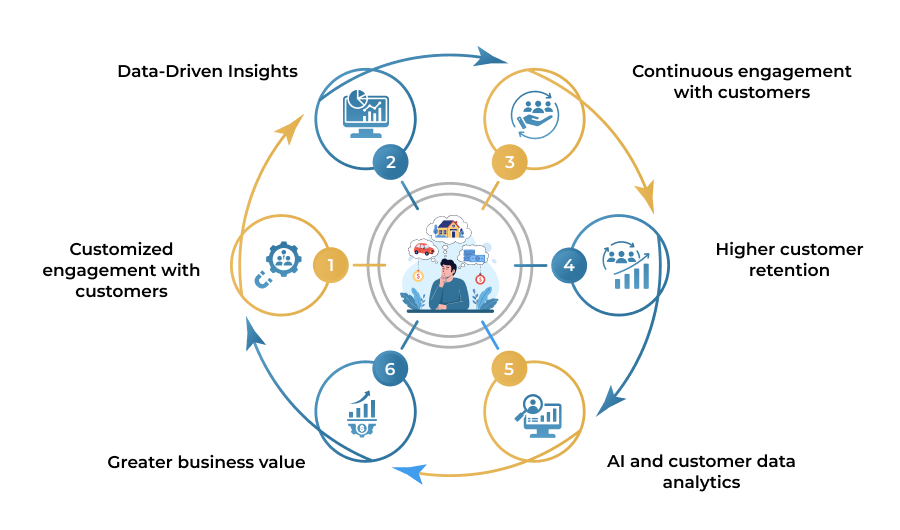
Insurers utilizing this service model to engage customers are able to retain more customers and reduce claims.
Not only does this type service model reduce operational costs, claim costs, and losses for the insurers, but it also builds and deepens the insurers’ trust and collaborative opportunities with their customers.
Such proactive approaches are becoming more the areas of emphasis for insurers.
Modern enterprises focus proportionately to the need and emphasis of their operations on the continuum and uninterrupted functioning of their business, to including operations efficacy business insurance trust.
Insurance systems of the future should employ intelligent automation, technological advancements, and a scalable infrastructure to decrease operating costs and enhance customer experience. Insurance systems of the future should employ intelligent automation, technological advancements, and scalable infrastructure to reduce operational costs and improve customer experience. According to McKinsey, insurers can reduce operational expenses by up to 40% through digital transformation and productivity improvements.
To achieve better performance, modern insurers are utilizing cloud-based systems, artificial intelligence, real-time analytics, and automatic technologies. Cloud-based systems shorten the timeframe required to introduce a new product to the market by up to 40% when compared to older methods, according to Capgemini.
AI technology, machine learning, and automation have also allowed insurers to enhance fraud detection and customer engagement. IBM reports that AI technology decreases claims processing time by as much as 50%, while increasing accuracy for the insurer.
Low-code platforms are becoming a foundation for building agile, scalable, and rapidly evolving enterprise systems. As the insurance ecosystem becomes more connected and reliant on data, the need for more sophisticated cybersecurity increases. To enable future digital transformation and cybersecurity safe growth, modern insurance systems should seamlessly connect with company systems, financial systems, affordable housing systems, healthcare, and third-party systems.
In today’s market, insurers leveraging intelligent technologies as part of a digital transformation are reaping significant competitive benefits. These technologies increase efficiency, engagement, and operational performance.
Automation and artificial intelligence simplify workflows by reducing processing and manual workloads. Evidence of this is shown in the speed of claims processing and improved underwriting accuracy. It is reported by McKinsey that businesses able to draft advanced digital capabilities see a reduction of operational costs by 20 to 40 percent.
With a combination of advanced analytical and predictive capabilities, businesses see improvements in the identification and management of fraud as well as in the assessment of potential risk. In addition, improved business decisions and decreased financial losses are key benefits of these enhancements. Insurers see improvements in the overall agility of the business/activity.
The evolving insurance ecosystem offers insurers avenues to satisfaction and loyalty through the personalization of digital experiences. Managers now see embedded insurance offerings as new opportunities for revenue both for the insurer and the consumption side.
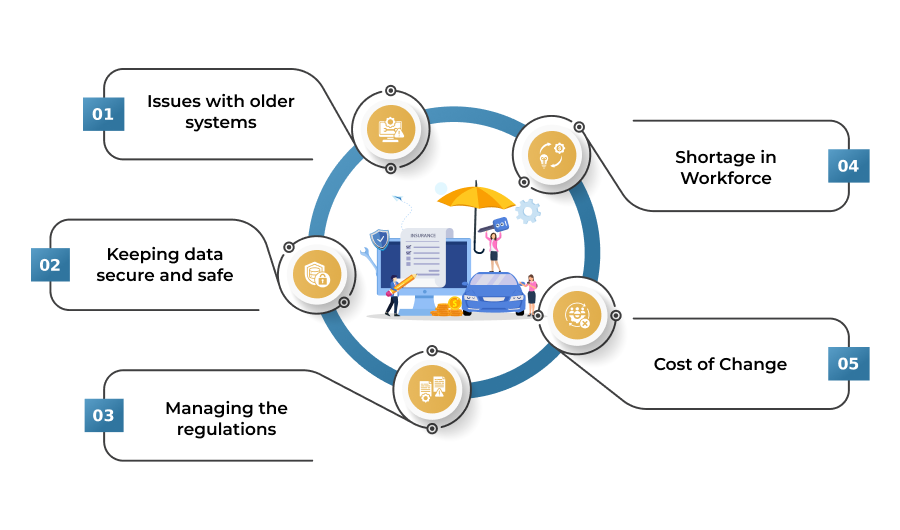
Issues with Older SystemsMost insurance companies currently work using older legacy systems which are not compatible with most digital technology. Older legacy systems decelerate innovations and result in high costs due to maintenance and lack of efficiency in operations.
Keeping Data Secure and SafeLegacy systems and their restrictions need to come to an end. As systems in insurance become more modular and integrated, protecting and securing data, especially customer data, becomes very difficult. Organizations need to build their cybersecurity and ensure that they adapt to new and evolving data security postures.
Managing the RegulationsAn insurance organization must continuously balance and manage new digital products against the strict and inflexible policies associated with the insurance industry. This balance becomes increasingly complex with the adoption of Artificial Intelligence (AI), automation, and real-time data technologies.
Shortage in WorkforceInnovation in the insurance industry requires neoteric skills and an up-to-date workforce. Naturally, this means that operators should be able to work with sophisticated systems that include the likes of AI and automation.
Cost of ChangeThere is a high cost associated with modernization and the costs are justified. A balance is required to successfully discharge that obligation.
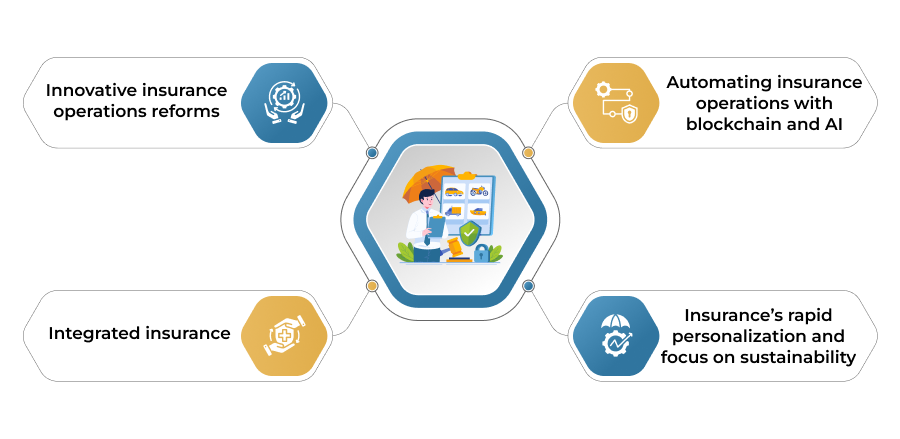
Innovative Insurance Operations ReformsModern insurance is putting greater demand on underwriting accuracy, faster claims processing, and fraud detection which AI is helping improve in this demanding field. AI is revolutionizing decision making and operational capability in the insurance industry. AI is helping organizations reduce uncertainty and turn high-risk decisions into more confident outcomes.
Integrated InsuranceA greater number of insurance products, especially embedded insurance products, are becoming integrated into the fabric of digital purchasing journeys. Additionally, insurance products are becoming integrated into Internet of Things (IoT) devices, self-service portals, and real-time behavioral data offered to develop more dynamic pricing models.
Automating Insurance Operations with Blockchain and AIUsing Blockchain technology, insurance companies are more transparent and secure in the processing and prevention of claims. AI also provides customer claims to be paid almost immediately and less manual processing of claims.
Insurance’s Rapid Personalization and Focus on SustainabilityInsurance is also rapidly changing in the personalization of products with integrated customer analytics. Additionally, Insurance companies recognize the importance of Sustainability and ESG-focused risk strategies.
To stay competitive, not only must traditional insurers today adopt the digital technologies of today, but they must develop technologies that are intelligent, predictive and customer centric. While traditional financial institutions have dealt with risk management systems, modern AI based technologies have driven risk ecosystems, enabling greater flexibility and rapid responses.
With an increasing number of technologies available, systems have been continuously undergoing transformation. Insurers have the important responsibility of balancing old systems with the latest technologies while enabling digital solutions with the flexibilities of system agility.
Insurers that manage to balance all priorities of the trust chain, engage customers and boost operational proficiency, will find new opportunities ahead in these transformative times and digital models will insulate systems for the greatest resilience.
The next great opportunity for intelligent insight driven insurances systems that modern enterprises need to stay resilient, long-lasting and competitive is in deeply integrated risk systems that not only interact and anticipate customer risks but also deliver continuous value to their customers.
12 Oct 2026
08 Oct 2026
05 Oct 2026