How insurance firms are closing compliance gaps using Power Apps?

InsuranceLow-codeWeb development
Aug 04, 2025
6 Min Read
How insurance firms are closing compliance gaps using Power Apps?

The increased regulatory complexity being faced by the insurance industry makes compliance gaps costly for the firms in millions of penalties and operational inefficiencies. Traditional manual methods and legacy systems just do not suffice for meeting emerging regulatory demands. Here enters the transformative approach of Microsoft Power Apps to have insurance companies automate compliance workflows and hence mitigate their risks and exposure to regulatory requirements through intelligent applications with a low code. This digital transformation approach is much in line with how insurers deal with these compliance challenges in an increasingly regulated environment.

The Compliance Challenge in Modern Insurance

Regulatory Complexity Reaches Breaking Point

Insurance companies operate within an intricate web of regulatory requirements continuing to expand and evolve. The U.S. insurance industry’s top market conduct compliance challenges encompass claims handling requirements, including timeliness of claims, disclosures, payments, and grievance processes.

Common Compliance Gaps in Insurance Operations

Modern insurers struggle with several critical compliance challenges that create significant operational risks:

  • Claims Processing Delays: failure to acknowledge claims, pay claims, investigate claims, or finally to deny claims within the timeframe specified.
  • Documentation Deficiencies: Lack of adequate documentation during claims processing and failing to provide required disclosures.
  • Rating and Underwriting Issues: Use of unapproved rates and rules, and rating errors that violate regulatory requirements.
  • Data Security Vulnerabilities: Since the NAIC Insurance Data Security Model Law requires insurers to adopt “an information security program,” many insurers find it difficult to comply with cybersecurity requirements.

Traditional Approaches: Where They Fall Short

Legacy System Limitations

Older insurance software systems present major hurdles concerning compliance management. The inherent inflexibility in these systems poses difficulty for the insurers to accommodate ever-changing regulatory requirements. Constraints refer to:

  • Inflexibility and Limited Customization: Legacy systems have a difficult time in adapting to new requirements and changes in business processes.
  • Integration Challenges: Compatibility issues between legacy systems and new-age compliance tools create data silos and inefficient processes.
  • Security Vulnerabilities: Legacy systems, having outdated security protocols, heighten the risks of cyberattacks for the insurer and also cause regulatory non-compliance.
  • Limited Analytics Capabilities: Legacy systems fail to provide advanced data-analytic features for monitoring and reporting compliance.
Manual Process Inefficiencies

Old-fashioned manual compliance processes consume excessive resources and create vulnerability to errors from its practitioners. The human monitoring aspect consumes time and effort and is inefficient in nature with human error rates being grossly elevated. These are some of such processes:
  • Time-Intensive Documentation: Manual document collection and audit preparation consume substantial staff hours.
  • Reactive Compliance Monitoring: Traditional approaches wait for issues to occur rather than preventing them proactively.
  • Inconsistent Process Execution: When done manually, compliance practices tend to differ between departments or even locations.
  • High Maintenance Costs: Manual compliance systems tend to require much bigger maintenance budgets arising just through upgrading, staff training, or error rectification.

How PowerApps Change the Game?

How PowerApps Change the Game?

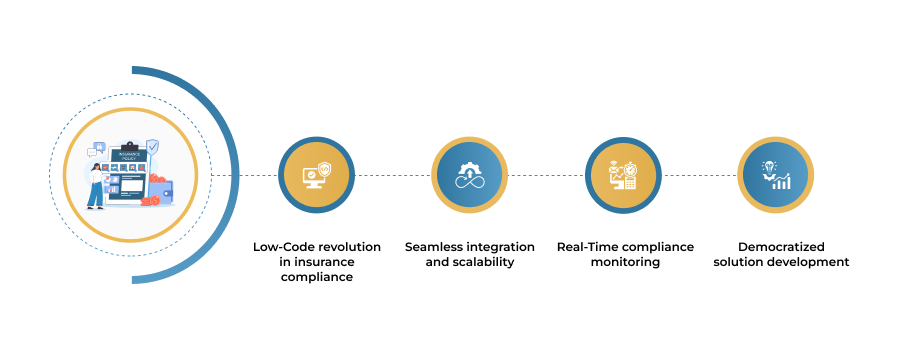
Low-Code Revolution in Insurance Compliance

In the realm of compliance management, Microsoft Power Apps has revolutionized processes with its nice low-code development platform for insurance companies to implement custom applications. The new approach allows business users to develop their own sets of compliance solutions to meet their specific regulatory needs.

Seamless Integration and Scalability

Power Apps excels in integrating with existing insurance systems and Microsoft ecosystem tools. The platform works seamlessly with SharePoint, Dynamics 365, Power BI, and other enterprise systems, eliminating data silos that plague traditional compliance approaches. Insurance firms can rapidly scale their compliance solutions across multiple business units and geographical locations without significant IT overhead.

Real-Time Compliance Monitoring

Unlike traditional reactive approaches, Power Apps allows one to monitor compliance in real time and have an automated alert system. The platform could automatically track changes to regulations, compliance metrics, and would immediately sound an alert when there might be a violation detected. This more proactive approach safeguards the organization from having a compliance gap and corrective action can be determined very early.

Democratized Solution Development

Before Power Apps came along, compliance solution development was a foreign concept for the business users and experts. But now it has provided them the ability to build apps with little to no technical know-how. It has accelerated digital transformation initiatives and eliminated a bottleneck effect on already overburdened IT departments. Insurance professionals can build solutions themselves to address their very own compliance challenges, resulting in applications that are higher in effectiveness and greater in usability.

Building Compliance Workflows with Power Apps AI

1. AI-Powered Risk Prediction and Analysis

It is transforming the entire compliance management, from being reactive to being predictive, with the help of AI powered by the Power Apps. The AI-driven compliance hub can foresee any possible compliance risks and offer solutions proactively so the enterprise is never put in a response mode to yet another regulatory challenge. Using AI Builder, Power Apps can spot evolving risks from the patterns that show up in compliance data before companies hit violations.

2. Automated Document Processing and Validation

Microsoft Power Apps can integrate with AI services for document-processing and validation workflows. Once in place, the software can extract relevant information from any insurance document, check against compliance requirements, and route the document onward for any pertinent approval processes.

3. Intelligent Workflow Orchestration

The Power Apps AI engine helps with the compliance workflow that is intelligent and responds to the changes in regulations and standards. Compliance workflows can be automatically adjusted by the platform itself whenever new regulations, policies, or risk assessments come into effect. This allows the compliance mechanism to remain as per current standards without manual intervention.

4. Natural Language Processing for Regulatory Monitoring

Another advanced capability for AI in Power Apps includes natural language processing to scan for regulatory updates and automatically highlight changes of concern to insurance operations. The entire process of monitoring regulatory change is avoided with help of this facility, as the compliance teams are immediately notified of the new requirements that impact their operations.

Embedded Governance: From Reactive to Proactive

Here’s How Power Apps facilitates this shift:

  • Policy-Driven Workflows: Build automation to the processes using embedded policies that reflect compliance standards, thereby limiting human interventions and inducting integrity, accountability, and expeditiousness in the decision-making process into every layer within the business functions.
  • Automated Controls and Alerts: Set smart triggers to detect anomaly conditions or policy infringements right away, keeping any risk at minimum, so real-time countermeasures might be implemented even before non-compliance adversely affects vital operations.
  • Centralized Compliance Dashboards: Take a panoramic view of all compliance metrics, statuses, and risks in a department, thus allowing leaders to act quickly, having full transparency among themselves, along with data-driven insight.
  • Streamlined Audit Preparation: Automate the collection of data and documentation-a little less scrambling at the last minute, as you will make sure every audit trail is accurate and up-to-date and is just about ready for the inspection.
  • Continuous Improvement Loops: Embed feedback loops and performance metrics into governance systems to continuously improve workflows, identify bottlenecks, and update policies as a result of real-world outcomes.
  • Empowering Front-Line Employees: Equip teams with easy-to-use tools and guided workflows embedding compliance at the point of action so that they can take ownership of the value chain instead of relying on back-office governance.
  • Adaptive Regulatory Response: Changes in regulations must be adapted to rapid modular policy updates to remain resilient against compliance so as not to aggravate operations anymore or slow down innovations within.

Strategic Benefits for Insurance Executives

Strategic Benefits for Insurance Executives
These strategic advantages include:

  • Reduced Operational Costs: Automation and streamlined workflows reduce administrative overhead and operating costs. They also improve efficiency across underwriting, claims processing, and policy servicing.
  • Enhanced Risk Mitigation: Real-time data and predictive analytics help organizations identify, assess, and respond to emerging risks more quickly. As a result, they reduce financial exposure and minimize potential losses.
  • Improved Decision-Making: Data analytics and centralized dashboards provide actionable insights. These insights enable executives to make timely, informed, and strategic decisions.
  • Increased Agility and Responsiveness: Built-in governance enables organizations to respond quickly to market changes and evolving regulations. Consequently, businesses remain compliant and prepared for future challenges.
  • Stronger Reputation and Trust: Continuous compliance, operational transparency, and proactive governance strengthen policyholder confidence. These practices also enhance brand reputation in competitive insurance markets.
  • Competitive Advantage: Technology-enabled governance helps insurers deliver faster services and improve risk management. At the same time, it increases operational efficiency and supports long-term business growth.
  • Optimized Resource Allocation: Organizations can prioritize high-impact initiatives by aligning resources with strategic business goals. This approach maximizes ROI and improves productivity across departments.
Conclusion

Insurance firms that still rely on traditional compliance tools are at risk, not just of fines but of falling behind in operational agility. Power Apps provides a modern, scalable way to close compliance gaps, embed governance, and transform regulatory management from a liability to a strength. With low-code tools, AI integration, and real-time visibility, Power Apps is helping insurance leaders build resilient, future-ready compliance ecosystems.

Ready to modernize your compliance approach? Contact us today and explore how Power Apps can redefine your regulatory strategy.
FAQs

How does Power Apps help close compliance gaps in insurance?

What security features does Power Apps offer for insurance data?

How does Power Apps ensure regulatory compliance for insurance firms?

How does Power Apps support insurance agent management and licensing?

How does Power Apps handle insurance document generation and management?

Related Posts