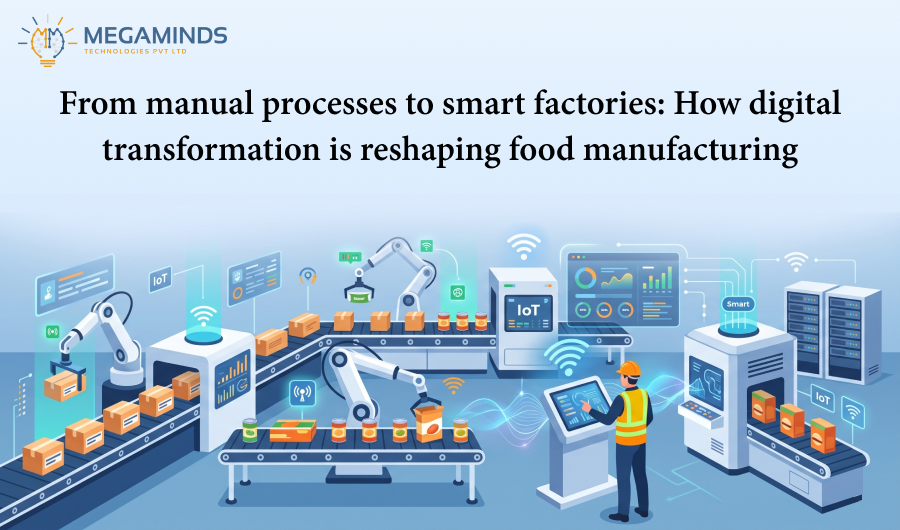
From Manual Processes to Smart...
22 Oct 2026

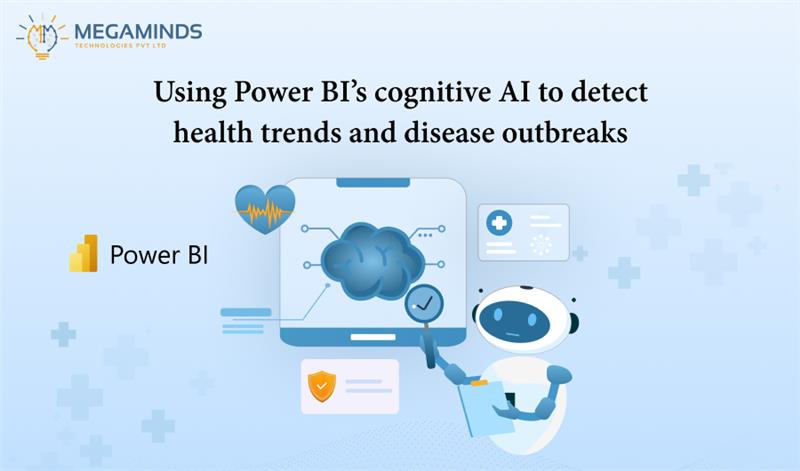
The merging of Cognitive AI in Power BI technologies is changing the way the healthcare industry interprets data for action. AI-powered tools such as Power BI help in identifying health trends at an early stage and offer preventive solutions for possible outbreaks. With real-time insights from exceedingly large datasets currently being unlocked by these tools, public health agencies and healthcare enterprises can now act with preventive data behind their decisions. This article thus looks at how businesses and institutions can leverage AI to predict health events, improve resource allocation, and enhance the quality of life of communities through Power BI.
Cognitive AI in Power BI transfers and integrates AI services that comprehend, reason, and learn from data to carry on with descriptive analytics. Whereas Power BI utilizes Azure Cognitive Services for Text Analytics (sentiment analysis, key phrase extraction, language detection) and Vision (image tagging), Cognitive AI-based implementation would allow processing of unstructured data like patient notes or social media feeds and discovering hidden patterns. This gives the ability for such integration to convert complex data into usable information for strategic decision-making.
Detecting health trends and disease outbreaks requires diverse data. Power BI integrates various data streams, including:
Combining these sources within Power BI provides a holistic view of health trends, enabling accurate predictions and targeted interventions.
Through the integration with Azure Machine Learning and Cognitive Services, Power BI enables companies to develop sophisticated models for predicting trends in health. These models do not simply forecast events on the basis of history but, by employing AI, they recognize intricate patterns and predict events.
If we must capitalize on Azure Machine Learning Integration for Power BI, we can get predictive analytics into operational mode. Under this integration, custom Azure Machine learning models projects (might be, incidence of diseases, readmission rates) plug straight into the Power BI dashboards and make live predictions to the business users. This allows:
Power BI offers built-in AI for trend prediction and anomaly detection:
These features take raw health data-and turn it into a set of predictive-actionable insights for informed decisions and, eventually, better public health outcomes.
Predictive analytics trigger alerts that can be acted on timely in a hospital setting and by public health units, together facilitating quick response. These essential alert systems operate in Power BI, alongside other Microsoft services, thereby converting insights into actions.
Power BI dashboards provide real-time health indicator views. When thresholds are crossed (e.g., increased ER visits for respiratory illnesses), automated alerts are triggered via:
Power BI offers dynamic, interactive dashboards for operational response:
These systems empower swift, effective responses to health threats, saving lives and mitigating outbreak impact.
Cognitive AI within Power BI plays a strategic role in long-term public health planning by providing insights for data-driven decisions on policy, resource allocation, and less resilient health systems.
Power BI facilitates strategic planning by:
Power BI contributes to resilience by:
Power BI empowers proactive, preventative health strategies, leading to healthier communities and sustainable healthcare systems.
Some limitations and ethical nuances exist on the Power BI Cognitive AI for health prediction. Responsible usage may give rise to fair decisions.
The quality of data is of paramount importance for AI models. Predictions that hinge upon defective and biased data will inevitably be flawed. Potential risks include:
Businesses must invest in robust data governance, validation, and diverse data sources.
Health information is confidential, demanding observance of laws like HIPAA and GDPR. Among main considerations:
Ethical responsibilities do come with predictive power:
Responsible use thus requires a multidisciplinary approach along with continuous monitoring, ethical frameworks, and transparent communication.
As the healthcare landscape becomes more data-driven, leveraging Power BI’s Cognitive AI empowers organizations to detect health trends early, respond to disease outbreaks faster, and plan public health strategies with confidence. From predictive insights to real-time alerting, the potential to protect communities and optimize healthcare delivery is massive. Businesses that invest in AI-powered analytics today are preparing for a healthier, smarter tomorrow.
Ready to transform your public health strategy with intelligent BI? Contact us today and explore how we can implement data-driven solutions tailored to your organization’s needs.
05 Oct 2026
21 Sep 2026
10 Sep 2026