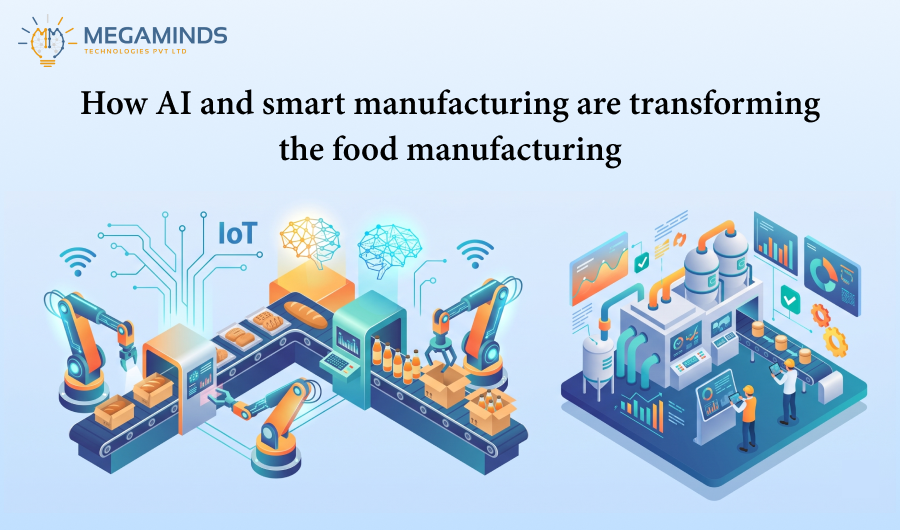
How AI and Smart Manufacturing...
19 Oct 2026

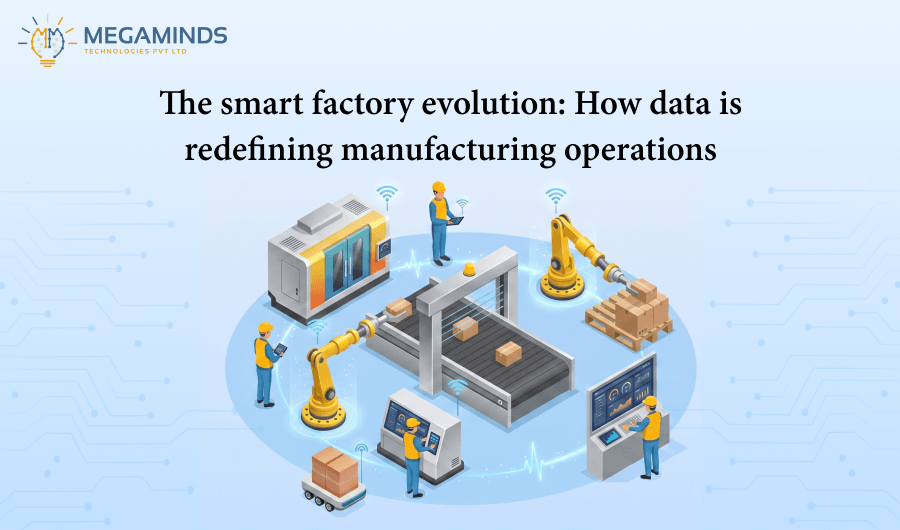
A smart factory is defined by its digital connectivity throughout its manufacturing process. Many types of equipment deployed in smart factories use data collected in real time to optimize and enhance the work flow of the smart factory. The digital connectivity of a smart factory leverages the Internet of Things and Artificial Intelligence to make the manufacturing process more efficient and ultimately gives smart factories the ability to make nearly all of the process improvements they need. Beyond the Internet of Things and Artificial Intelligence, smart factories use advanced data analytics to achieve efficiency, reduce downtime, and manufacture higher quality products. The manufacturing improvements brought by smart factories shift the manufacturing processes of all types of products to predictive and intelligent manufacturing, away from the traditional and mostly reactive processes.
Before the advent of smart factories, the manufacturing industry relied on automated manual tasks, separate systems, and decisions that were made after the fact. These inefficiencies are still seen by OEMs and factories of today. The top challenges are:
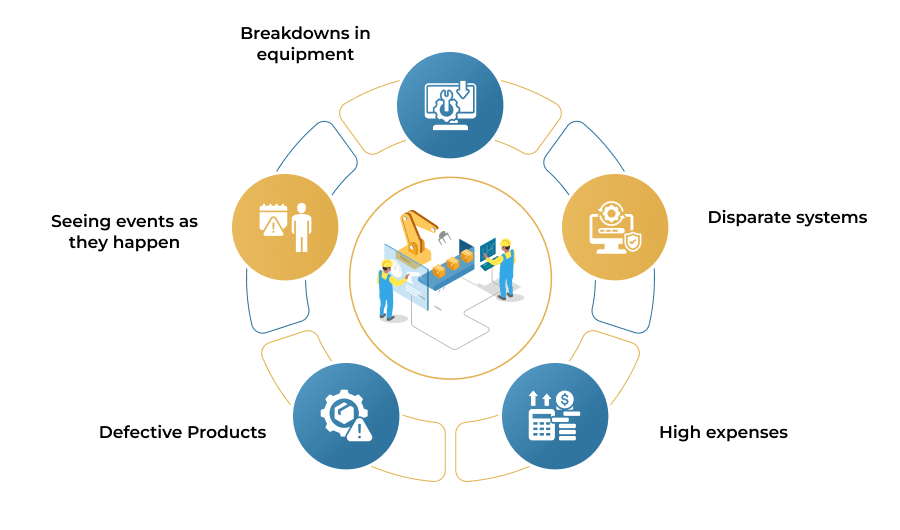
These challenges reveal a bigger problem, that legacy systems can no longer accommodate the needs of the manufacturing sector. Many organizations are beginning to understand that, without intelligent systems and visibility, automation alone is not the answer to the inefficiencies occurring within manufacturing.
Connectivity is the driving force behind smart factories. Through the integration of machines, sensors, and production systems, manufacturers establish a cohesive data ecosystem.
With the Industrial Internet of Things, devices can gather, analyze, and share real-time data on the factory floor. Factory machines can include sensors for temperature, vibration, performance, and other factory operations.
Some of the advantages of a connected system include:
The connected systems of a factory turn it into a smart factory, self-optimizing, and self-monitoring all at once.
Data is the crux of modern manufacturing. It allows factories to transcend from manual decision-making to a precision-informing approach that results in more efficient, less costly, and more productive operations.
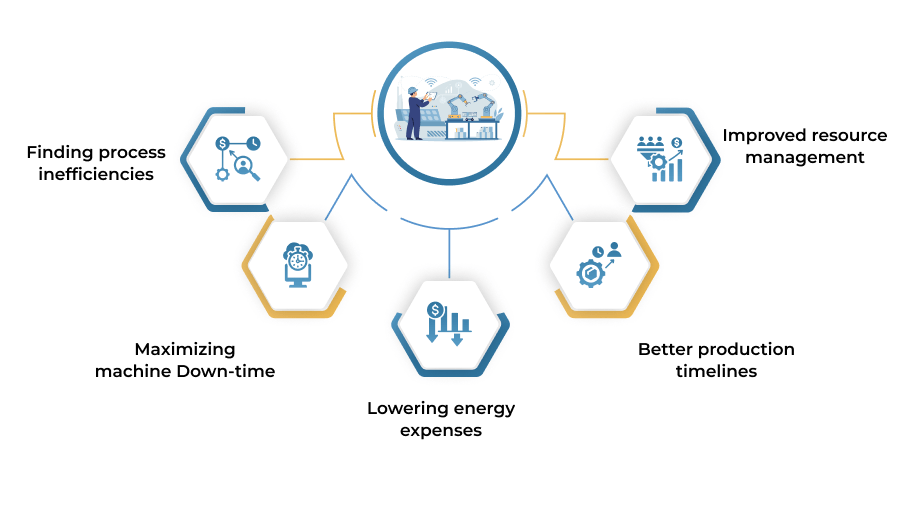
Smart factories are founded on the ability to conduct real-time monitoring and visualization of production processes through live dashboards and analytics, improving the precision and speed of decision making by the factory management. Production line visualization keeps the production value stream aligned with the organization’s goals and objectives, as well as the operational efficiency targets.
OEE, production and downtime are key performance metrics of the production line. Letting manufacturers take smart and operationally agile control of their processes through factory dashboards can reduce inefficiencies as cited by Deloitte, improving efficiency by as much as 10 to 15 percent.
Visibility of production processes in real-time, can help improve the production processes in the short term.
With Jackson and Associates, production targets can be easily achieved by quickly responding to on-line productivity disruptions and maintaining productivity performance to avoid operational losses.
Smart and real-time decision making by factory management is becoming even more difficult as the production processes get more complex and are highly automated. These technologies give the factory control and allow them to maintain continuous production flow.
Conventional maintenance strategies are reactive. Machines that fail are repaired when they are down. This causes unplanned shutdowns and loss of productivity. It also increases risk.
Smart factories have resolved this problem with the use of AI and machine learning for Predictive Maintenance. Such systems analyze both historical and real-time data for the machines and identify trends to detect failures that may occur.
Manufacturers now are able to Identify the signs of wear to plan maintenance and avoid the possibility of breakage. The Predictive Maintenance strategies of Deloitte are able to afford reductions for maintenance by 10-20% and 30-50% of down-time for repair.
Transitioning to predictive maintenance also improves the reliability of systems, improves the asset lifespan, and avoids unplanned production loss by great margins, which has driven the method become the standard for all modern manufacturing.
Quality is paramount in manufacturing. Advances in data intelligence and AI technologies allows Smart Factories to constantly monitor every step of production in order to identify defects at an early stage of production. This way, Smart Factories ensure quality throughout every stage of production and make proactive quality management control possible.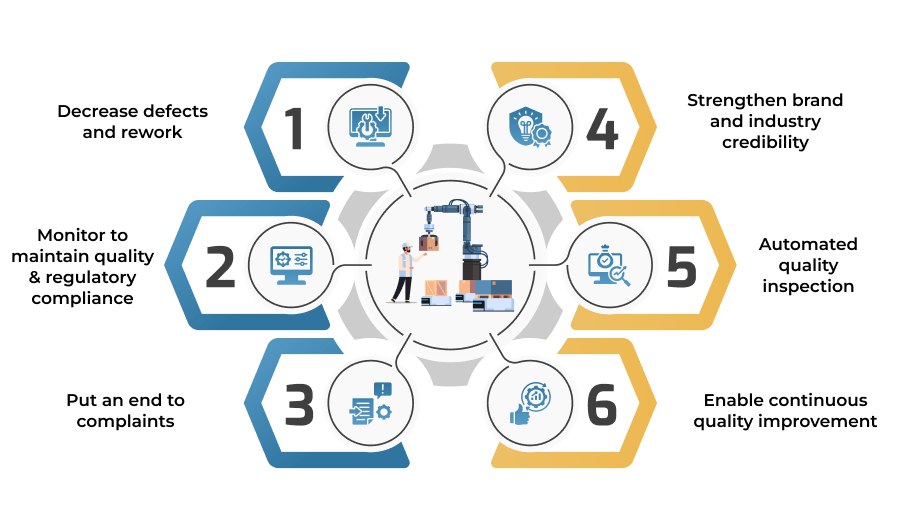
Fragmented systems can lead to significant inefficiencies in manufacturing operations. For example, managing production, inventory, and supply chain services with separate approaches results in data silos across functions, and the overall operation cannot be viewed from a holistic perspective. In the absence of an integrated system, performance measurement and rectifying operational issues becomes infeasible.
Smart factories integrate Enterprise Resource Planning (ERP), Manufacturing Execution Systems (MES), and Supervisory Control and Data Acquisition (SCADA) systems. Consequently, systems and data and information flow are integrated across all levels of the organization.
When systems are integrated, manufacturers can keep track of all aspects of their business in a way that is cohesive and seamlessly flows. This is inclusive, but not limited to, production from raw input materials to the finished product, real-time inventory levels, and better coordination between the supply chain and production. Unlike the results of the coupled systems, a report by Deloitte found that system integration resulted in an elimination of data silos and unalignment of disparate systems, resulting in a 10 to 20 percent increase in operational efficiency.
This increased level of visibility enables better decision-making with real data when responding and improving operational efficiency. Coupled systems result in better cross departmental collaboration, as production strives to meet the business requirement for production as a whole.
System fragmentation is a major roadblock for operational efficiency. For instance, a lot of manufacturers depend upon a myriad of disconnected systems for production, inventory, and supply chain management.
Smart factories are able to surpass this obstruction by means of system integration for:
System integration allows for maintaining a singular source of truth, and for providing end to end operational transparency.
Once systems are unified, companies are able to:
Smart factories combine data, automation, and intelligent decision making, and offer a remarkable advantage to OEMs. Businesses that succeed in smart factory implementations ahead of the competition, realize enhanced operational effectiveness, and gain the agility to respond to market and customer shifts. The below outlines the potential benefits of smart factories.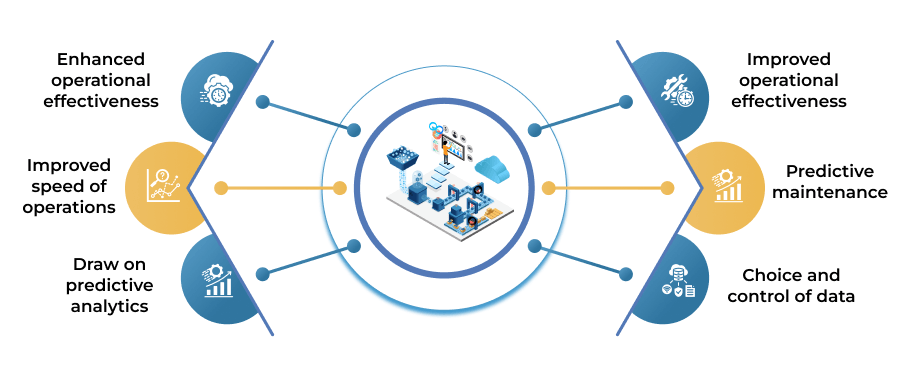
Smart factories bring many benefits, but transitioning to a smart factory model also has its challenges. Data-driven operations instead of traditional operations can create technical, financial, and organizational barriers for many manufacturers.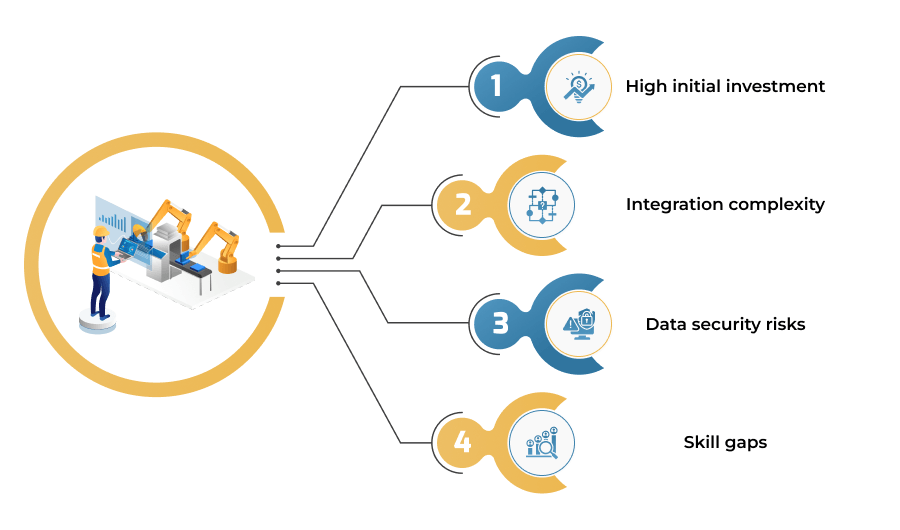
A strategic, longer-term focused, and balanced plan is the best answer to this problem. Difficulties of introducing a new and smart factory can be minimized by concentrating on the development of training programs, new infrastructure, and advanced security measures.
More intelligent data systems are the driving force behind efficient autonomous operations. Factories are becoming intelligent ecosystems, and real time data and AI optimization are helping them decide and produce at the highest quality.
New changes are already underway thanks to AI technology, digital twins, and edge. PwC claims AI has the potential to increase productivity in the manufacturing sector by up to 40%. Edge computing has the potential to add 15–25% efficiency to operations on sensors and devices needing data because of reduced latency.
Encouraging sustainability is another aim. According to the International Energy Agency, intelligent manufacturing can potentially reduce energy consumption by 10–20%. Beneficial cost and target meeting.
Reactive manufacturing techniques will become a thing of the past. All of the changes will motivate manufacturers to build factories that are predictive, nimble, future-ready, and more efficient.
Manufacturing has been fundamentally changed by digital factories, with data at the forefront as the source of productivity, innovation, and growth rather than as a byproduct of the process. Data, which is produced by digital systems, is the foremost source of productivity, innovation, and growth.
Disconnected systems present obstacles in utilizing business operations’ potential, while integrated approaches and real-time analytic and predictive framework enable the transition of businesses.
Smart factories integrate sophisticated technologies to give a competitive edge. Data-driven transformation is the focus for businesses to maintain a competitive edge in the future of Industry 4.0.
19 Oct 2026
15 Oct 2026

12 Oct 2026