How Can AI Help Fintech...
08 Oct 2026

The Internet’s constant availability attracts patients who want to embark on their own journeys to care and self-educate on personal symptoms, conditions, and treatments. This phenomenon has gained traction, and the extent is alarming. The U.S. Centers for Disease Control and Prevention (CDC) reported that 58.5% of American adults searched for health and medical information online between July and December in 2022.
Many choose to self-diagnose and discover treatment options given the lack of time for appointments, long waits to get into the office, and the limited time providers have to meet with patients.
The rise in the use of smart health phone apps and online health-related resources has shown the desire of patients to manage their own health. Many of these patients opt to use the personal accounts of others, whether that be in the form of feedback, testimonials, or community forums.
The Internet is an essential source of information that helps patients learn about their possible treatment options, costs, and if seeing a doctor is worth it. Digital health resources are a fundamental aspect of the health care system that helps patients research and make informed decisions about their health care.
Healthcare professionals are a trusted source of medical information. Unfortunately, many organizations struggle to communicate with patients effectively in digital environments. Technology cannot solve this problem; a culture focused on communication and patient experience is critical.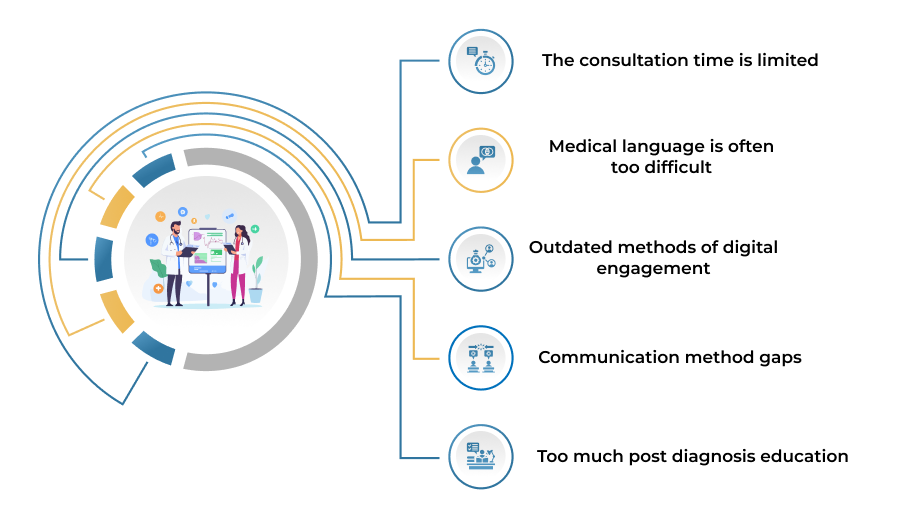
Online information significantly influences healthcare decision-making throughout the patient journey. Modern organizations are moving beyond data collection toward decision intelligence that supports faster and smarter actions.
Before booking appointments, patients frequently search for:
Digital reputation can often create first impressions before any face-to-face interactions.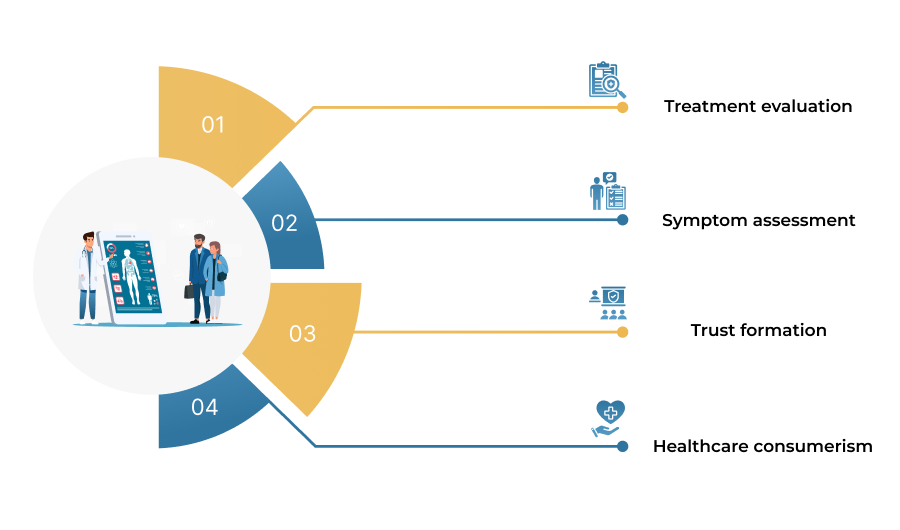
Treatment Evaluation
Patients will often research treatments before even considering the physician’s recommendation. They tend to compare different procedures, medications, costs, recovery times, and various therapy options.
Symptom Assessment
Lots of people first turn to the internet to check out their symptoms even before they see a doctor. Close to 35 percent of adults in the United States say they have searched the web for medical conditions they or others might be suffering from. This might encourage better health management; Still, it can also open the door to self, diagnosing and cause unnecessary worries.
Trust Formation
The amount of information available online and how consistent that information is, directly impact how much patients trust your organization. Organizations that have a digital outreach that is educational, clear, and consistent tend to be seen as more trustworthy. As previously stated, trust and relationships are built through clear and consistent communication, as well as transparency, at every engagement.
Healthcare Consumerism
Patients are becoming more like consumers. They use the same techniques to research and judge the healthcare being offered that they would for any other product.
The importance of sound and effective digital communication strategies increases with the growing healthcare consumerism that is being experienced by many healthcare organizations.
As patients depend more on the Internet for information, healthcare organizations must implement new strategies to strengthen the relationship with their patients. One of these strategies is implementing clear communication. The future of patient care depends on combining medical expertise with intelligent technologies that support better clinical decisions.
Building trust by providing health information through evidence based material, blogs, FAQ’s, videos, and patient guides is one way to improve the overall relationship with a patient. This also reduces the reliance on incorrect information on the Internet.
Even communication of the simpler things, such as clear explanations of the health condition, of an illness, or even of the rest of the care that the patient is going to get will also strengthen the relationship.Trust can also be improved by providing the credentials of the staff, in this case the doctors, so that your patients know the type of care that they can expect.
The more transparent their communication gets, the more accountability they will show, and trust will keep on growing.
Healthcare organizations that decide to educate throughout will win patients’ trust and deepen their ties with them. It will also raise the quality of treatment that patients receive generally.
Healthcare organizations can implement several practical strategies to strengthen trust and reduce dependence on potentially unreliable online sources.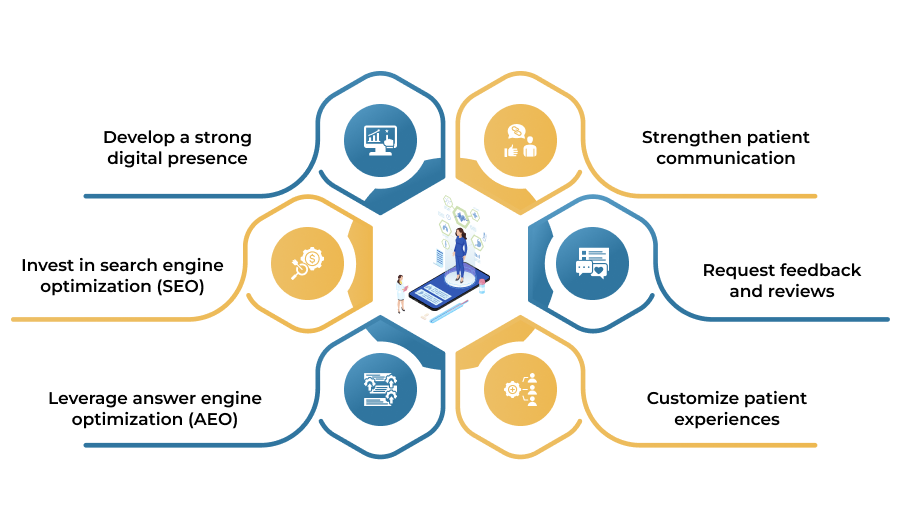
Develop a Strong Digital Presence
Healthcare organizations are increasingly using low-code platforms to build patient-centric digital experiences faster. A professional website should serve as a reliable health information hub containing:
Invest in Search Engine Optimization (SEO)
Nowadays, almost everyone googles their questions to kick off their health journey. It is imperative for health services as part of their marketing strategy to create online content that is not only informative and accurate but also tackles the most frequently asked questions.
Leverage Answer Engine Optimization (AEO)
With voice search and AI in search engines becoming the norm, it is essential that content answers questions and queries in a natural, conversational and straightforward way.
Examples include:
Strengthen Patient Communication
Effective communication throughout the entire appointment process minimizes guesswork and builds confidence.
Request Feedback and Reviews
Patient feedback and reviews are crucial for continuous improvement and help patients see that the provider is responsible and ready to improve.
Customize Patient Experiences
Active and devoted patients prefer differentiated communication and specialized recommendations. Maintaining personalized treatment increases satisfaction and helps retain patients.
The combination of digital communication, kind treatment, and devoted assistance will create reliable information for patients.
It is evident that trust and relations build towards a growing organization, loyal clients, and effective, improved health results. Doctor-patient relations of trust lead to vital engagement, satisfaction, and clinical results.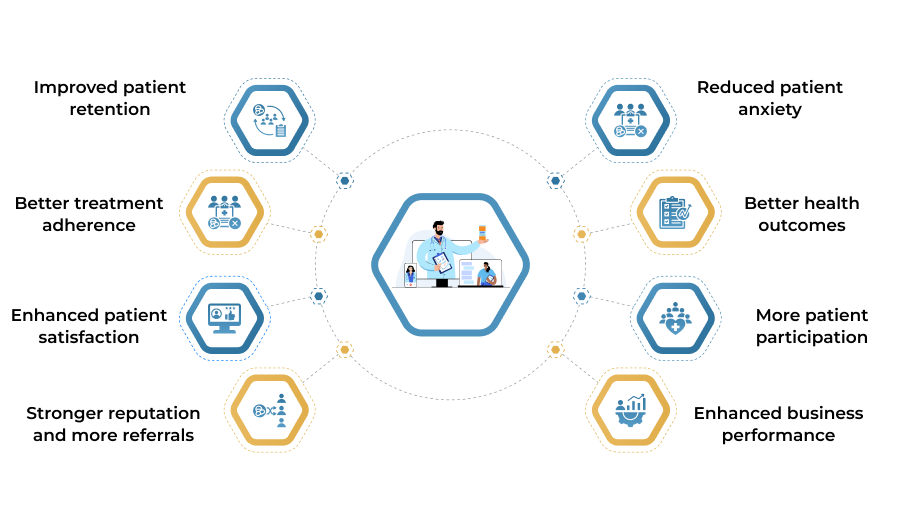
Healthcare trust in the future will largely rely on digital experiences. Connected healthcare environments are creating safer, smarter, and more patient-centric care experiences. 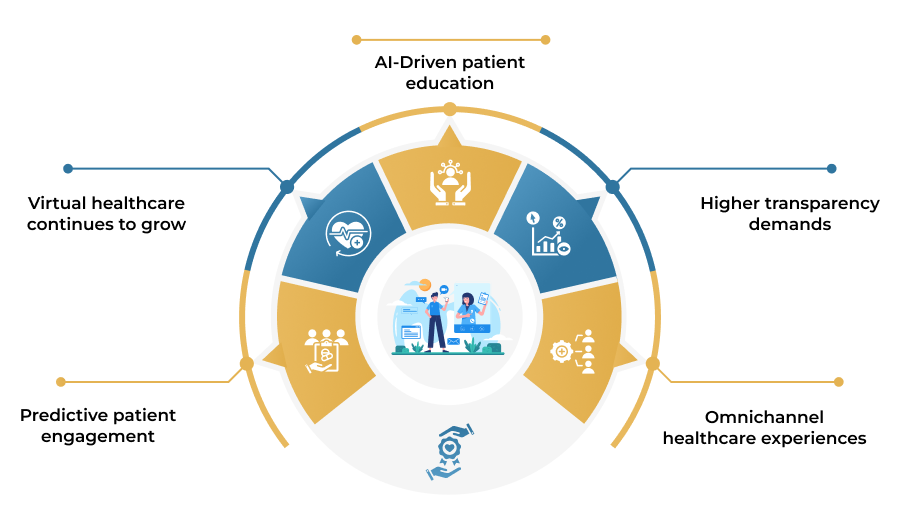
AI-Driven Patient Education
AI will play a huge role in creating the right patient education resources to meet the diverse needs of patients.
Virtual Healthcare Is Here to Stay
Digital doctor visits and health consults are here to stay. Healthcare providers must find a way to build models of trust during virtual interactions.
Predictive Patient Engagement
Healthcare organizations will use advanced analytics to predict patient problems and provide the needed resources to meet proactive needs.
Higher Transparency Demands
Patient demand for transparency in discussing treatment plans, possible results, and healthcare prices will continue to rise.
Omnichannel Healthcare Experiences
Patients will have the option to communicate with their doctors not only through websites and apps but also through portals, chatbots, and in, person visits. Providing the same level of communication across all these channels will become a must.
Companies adopting these changes will find themselves more capable of earning credibility and sustaining patient trust in a digital world.
Today, digital information is a major factor in healthcare decisions. Trust is no longer created only in the doctor’s office. Patients develop opinions through websites, search results, educational material, reviews, and digital engagement. Transparency, education and patient-centered communication can go a long way toward rebuilding trust, especially for organizations that make them a priority. These efforts foster stronger relationships with patients and improved health outcomes. They also help healthcare providers to stay competitive in an ever-changing healthcare environment.
08 Oct 2026
05 Oct 2026
01 Oct 2026